KRX lengthens sessions to lure foreign capital, but liquidity concerns remain
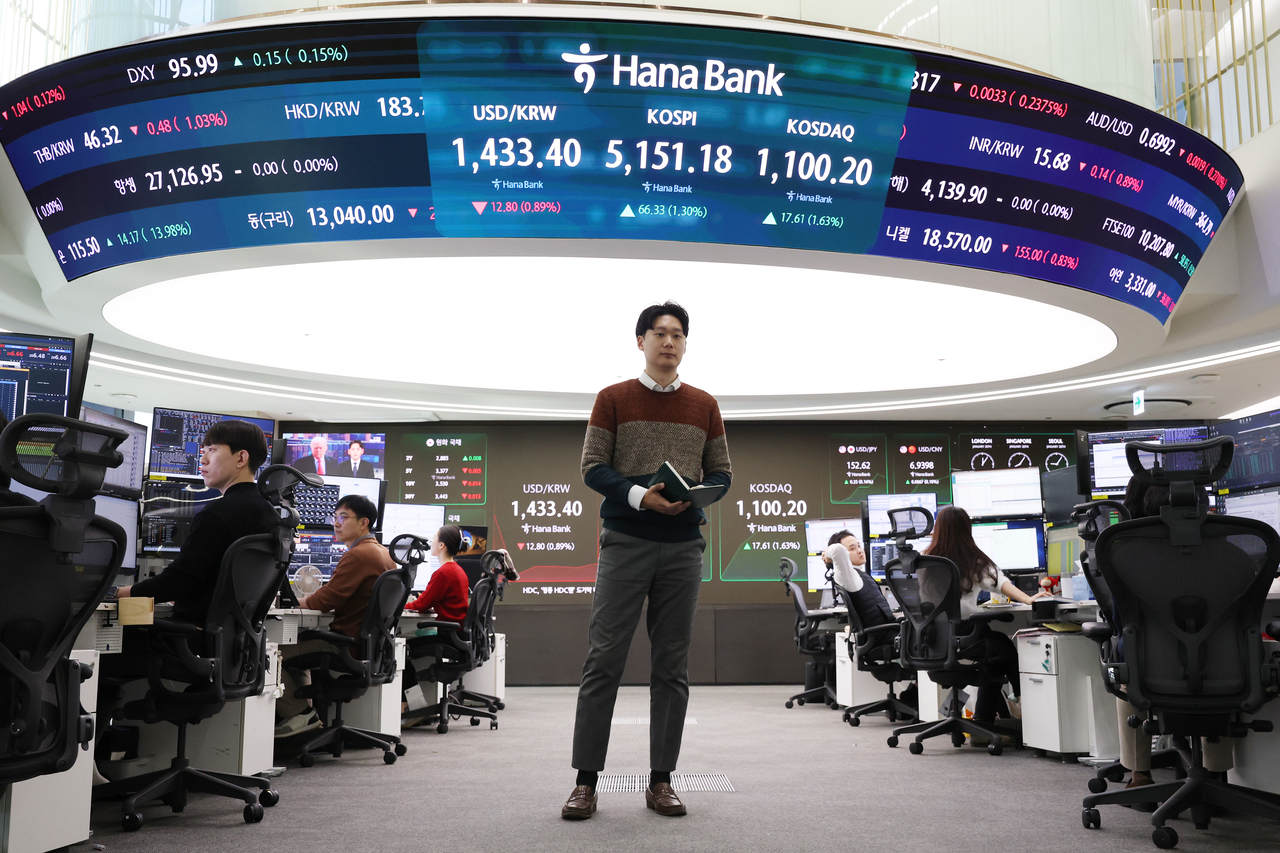
Amid an unprecedented stock market rally, South Korea is moving to lengthen stock trading hours as part of a broader push to attract more foreign investors — though questions remain over how much the change will actually move offshore capital.
The Korea Exchange said Monday it will extend trading hours for the benchmark Kospi and the secondary Kosdaq starting June 29, introducing premarket and after-hours sessions that will expand daily trading to roughly 12 hours.
Under the plan, premarket trading will run from 7 a.m. to 8 a.m., while after-hours trading will operate from 4 p.m. to 8 p.m. The regular session will remain unchanged, from 9 a.m. to 3:30 p.m.
The move marks the first phase of the KRX’s longer-term plan to introduce round-the-clock stock trading by December 2027. With the change, the KRX will open trading one hour earlier than Nextrade — an alternative trading system that currently operates a premarket session from 8 a.m. — while closing at the same time, 8 p.m.
The exchange said longer trading hours are intended to help both domestic and foreign investors respond more quickly to global market developments.
“The decision reflects growing demand from investors to react promptly to overseas market events and manage portfolios more flexibly,” the KRX said.
Market officials say the shift, combined with the government’s plan to extend foreign-exchange trading to 24 hours from July, could make Korean equities more accessible to global investors and support additional capital inflows.
The experience of Nextrade has fueled that expectation. Foreign investors accounted for about 14 percent of trading volume on the platform in January, up sharply from less than 5 percent in April shortly after its launch. While Nextrade does not disclose foreign participation during pre- and after-hours sessions, the overall increase has drawn attention.
Given that Nextrade offers a far narrower stock lineup and thinner liquidity than the KRX, some see the rise as a signal that longer hours at the main bourse could draw greater foreign participation.
Others are more cautious.
“Foreign institutional investors care most about liquidity and tight bid-ask spreads,” said an industry official. “Those conditions are likely to be weaker during extended hours, making it hard to expect a meaningful jump in offshore trading simply by lengthening the session.”
Skeptics also note that many global funds already execute Korean trades through regional hubs such as Hong Kong or Singapore, or via local Seoul branches, limiting the marginal benefit of longer hours.
Still, proponents argue that the move is increasingly unavoidable as global exchanges push toward continuous trading. Nasdaq plans to introduce 24-hour stock trading in the second half of 2026, while exchanges in London and Hong Kong are also reviewing similar initiatives.
“If US shares begin trading around the clock, the Korean market risks losing its role as a proxy for global risk sentiment,” said an official at a local brokerage firm. “Capital could simply bypass Korea.”
Extended trading could also allow foreign investors to trade Korean stocks alongside real-time currency transactions, potentially helping to dampen won volatility. The currency has seen sharp swings in recent weeks, strengthening into the 1,420 won-per-dollar range for the first time since late December.
The plan has faced resistance from labor unions, which cite heavier workloads and insufficient operational support. Even so, market officials say the direction is set.
“Extended hours will inevitably increase operational burdens,” a KRX official said. “But aligning with global trading practices is necessary if the Korean market is to remain competitive.”
silverstar@heraldcorp.com