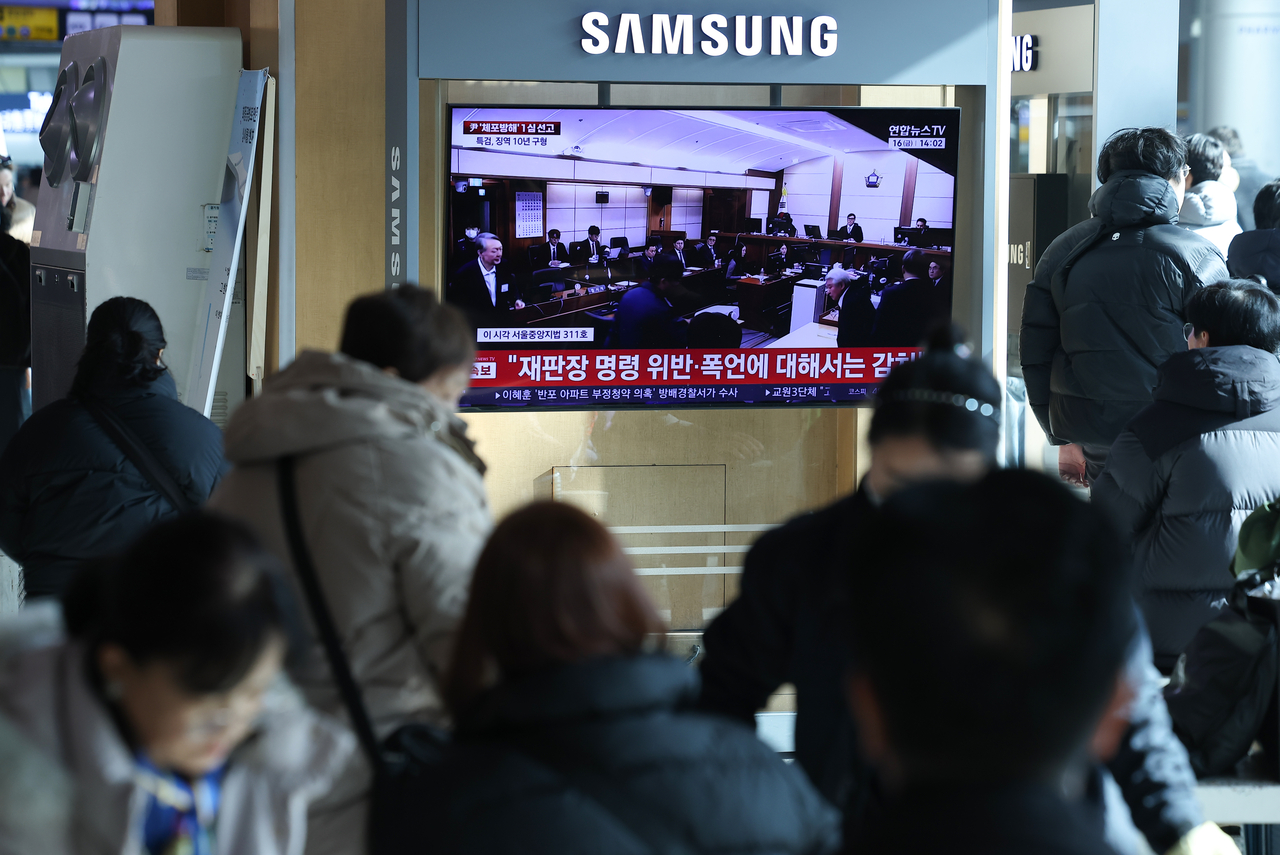
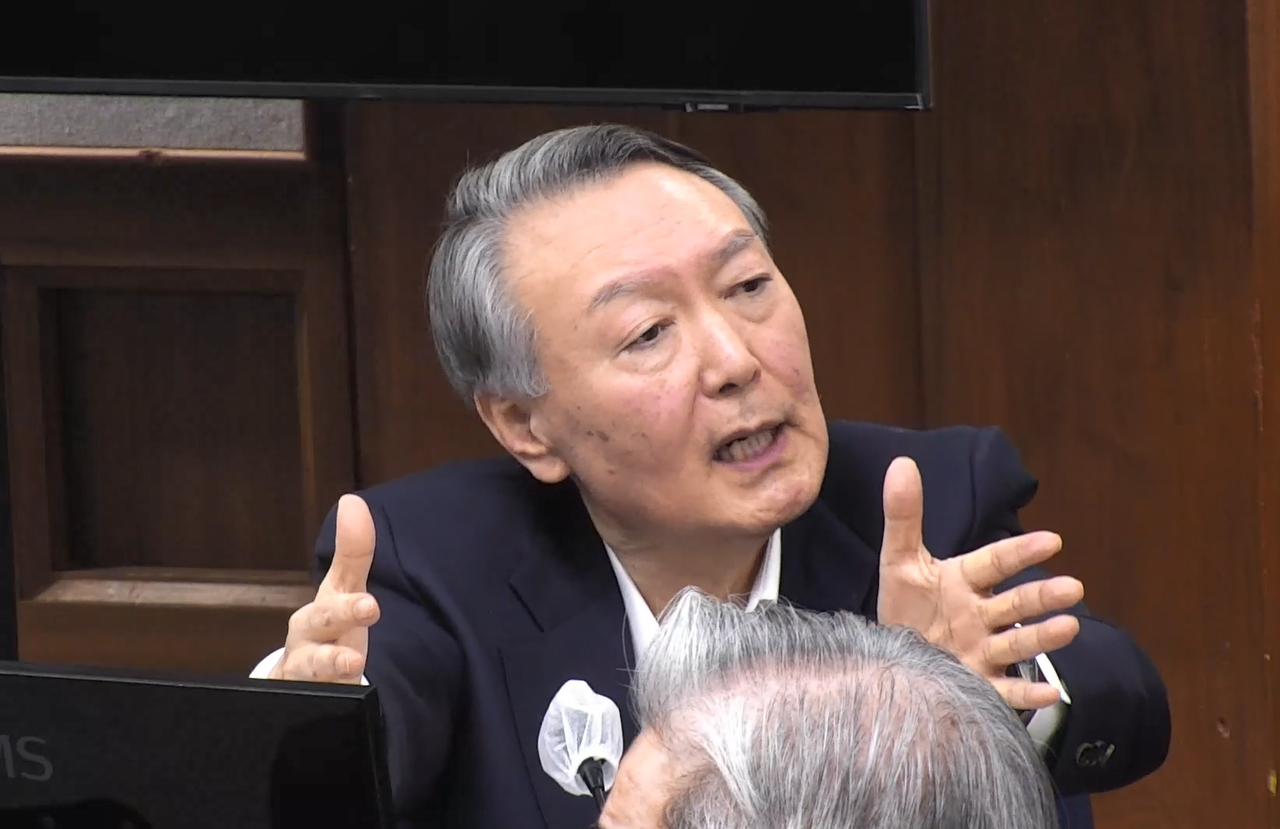
The Seoul Central District Court on Friday sentenced former President Yoon Suk Yeol to a five-year prison term for multiple charges, including obstruction of investigators' attempt to detain him last year, marking the first verdict on cases stemming from his 2024 failed declaration of martial law.
Special counsel Cho Eun-suk had sought a combined sentence of 10 years for Yoon, including five years for resisting arrest, two years for revising the martial law decree after the fact and three years for infringing on Cabinet members' deliberation rights, spreading false information to foreign media and destroying evidence.
"A heavy sentence is necessary, as the nature of the defendant's crime is bad and the defendant continues to make excuses that are difficult to understand, without showing any remorse," said sitting Judge Baek Dae-hyun during the sentencing.
Obstructing arrest
Following Yoon’s martial law declaration, officials of the Corruption Investigation Office for High-ranking Officials attempted to arrest him in January 2025. Yoon subsequently mobilized the Presidential Security Service and police to block access to his residence, thwarting the initial arrest attempt until the warrant issued by the Seoul Western District Court expired on Jan. 6.
He was ultimately arrested on Jan. 15, under the authority of the second arrest warrant issued by the same court.
Yoon claimed the CIO lacked jurisdiction to investigate insurrection charges. Judge Baek ruled, however, that the CIO acted under a valid arrest and search warrant.
The court further ruled that abuse of power resulting in obstruction of rights falls within the CIO’s investigative jurisdiction, and that its probe into insurrection was justified as part of the process.
It also ruled that a president’s immunity from prosecution does not prevent investigations.
The court dismissed Yoon’s argument that the CIO improperly sought an arrest warrant from the Seoul Western District Court rather than the Seoul Central District Court, noting that Yoon was then living at the presidential residence in Yongsang-gu, which falls under the former’s jurisdiction.
It added that Yoon illegally turned the Security Service into "a private army," obstructing due investigation processes, including search and arrest.
Infringement of Cabinet members' deliberation rights
Friday’s ruling also upheld most of the charges pressed against the former South Korean leader, including his violation of the clause that stipulates that a Cabinet meeting must be convened before the president declares martial law.
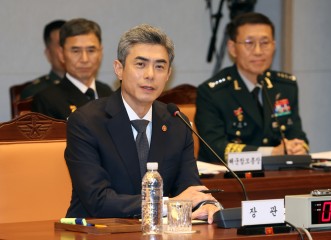
On Dec. 3, 2024, Yoon called six Cabinet members — then Defense Minister Kim Yong-hyun, Interior Minister Lee Sang-min, Prime Minister Han Duck-soo, Foreign Minister Cho Tae-yul, Unification Minister Lee Young-ho and Justice Minister Park Seong-jae — to inform them of his plan to declare martial law.
Yoon later summoned six additional Cabinet members to secure the quorum required to open the meeting. He began the meeting after four of the six arrived at the Presidential Office, while two — former Agriculture Minister Kim Moon-soo and Industry Minister Ahn Duk-geun — failed to arrive in time.
The court on Friday ruled that Yoon’s failure to notify the remaining seven Cabinet members constituted an infringement on their deliberation rights.
Yoon and his attorneys had argued that he declared martial law amid an urgent national crisis, making it difficult to notify all Cabinet members in time.
However, the court stressed that South Korean law contains no “exemption clauses,” adding that even if Yoon’s stated reasons for declaring martial law were true, they would not constitute an urgent situation that prevented him from contacting other Cabinet members.
Yoon has repeatedly claimed that he declared martial law to alert the public to what he called the “legislative dictatorship” of the opposition-led National Assembly and alleged election meddling in the 2024 general elections, which resulted in the then-opposition Democratic Party of Korea securing a legislative majority.
The police investigated the supposed election fraud but concluded in August 2024 — four months before martial law was imposed — that there was no evidence to suggest that officials of the National Election Commission had rigged the votes as accused.
Meanwhile, the court said Yoon did not infringe on the deliberation rights of the two Cabinet members who were notified but failed to arrive.
“If martial law is declared, there is a high likelihood that citizens’ rights will be affected, as well as multiple aspects of society,” Judge Baek said. “This makes it all the more important that Cabinet members, who advise the president on different areas of society, are consulted.”
Forging an official document
Yoon also signed a martial law decree on Dec. 7, 2024 — four days after he had already declared martial law. The document, signed after the fact, was created on Dec. 6 and signed by Defense Minister Kim and Prime Minister Han before being handed to Yoon.
The court said Yoon signed the document to fabricate evidence suggesting that the martial law declaration had followed due process.
Under Korean law, martial law can be declared only after the prime minister relays the defense minister’s recommendation to the president. The newly signed decree was delivered to former presidential secretary Kang Eui-gu, who kept it in his desk drawer before Han ordered it destroyed.
The court found that Yoon’s signing of the document constituted forgery of an official document and a violation of the Management of Presidential Records Act. However, it acquitted Yoon of charges that he used the forged document, noting that it was never made public and was destroyed shortly thereafter.
Spreading false information to foreign press
The special counsel also charged Yoon with abusing his authority by spreading false information to foreign media, alleging that he ordered the presidential international press secretary to draft a press guidance asserting the legality of his martial law decree. Prosecutors claimed Yoon forced the secretary to disseminate false information and prevented her from refusing an unjust order.
The court acquitted Yoon of the charge, ruling that no law relieves presidential secretaries of their duties when a president’s instructions are based on false information.
“The international press secretary has a duty to promptly convey the president’s views and does not have the authority or obligation to judge the factual accuracy of the president’s statements,” the court said.
Ordering the deletion of secure phone records
Prosecutors alleged that Yoon ordered senior officials in the Presidential Security Service to delete call records from secure phones out of concern over post-martial law investigations.
The court rejected Yoon’s claim that the investigators' seizure of the secure phones constituted illegal evidence collection, stating that while the phones contained military secrets, current law does not prohibit investigators from seizing such materials, regulating only their handling afterward.
The court ruled that Yoon’s instruction to delete the records and prevent investigators from accessing them was intended to protect his personal interests as a defendant charged with insurrection. It found him guilty of obstructing official duties and ordering subordinates to perform acts beyond their legal obligations.
After the ruling was read and Yoon was dismissed, the former president appeared calm. He walked across the courtroom aisle, briefly stopping at its center to bow toward the judge before leaving.
Friday’s ruling is expected to serve as a precedent regarding the legality of the initial investigation into Yoon’s alleged insurrection.
Yoon faces seven additional trials, with sentencing on the insurrection charge scheduled for Feb. 19.
seungku99@heraldcorp.com

![[Graphic News] Korea’s marine waste up 20% in 4 years](https://wimg.heraldcorp.com/news/cms/2026/10/27/news-p.v1.20261027.091c35e4ae1a4bb2a598a9138e673a7b_T1.gif?type=h&h=800)