Special counsel calls for harsher punishment than actual military dictatorship to prevent reoccurrences
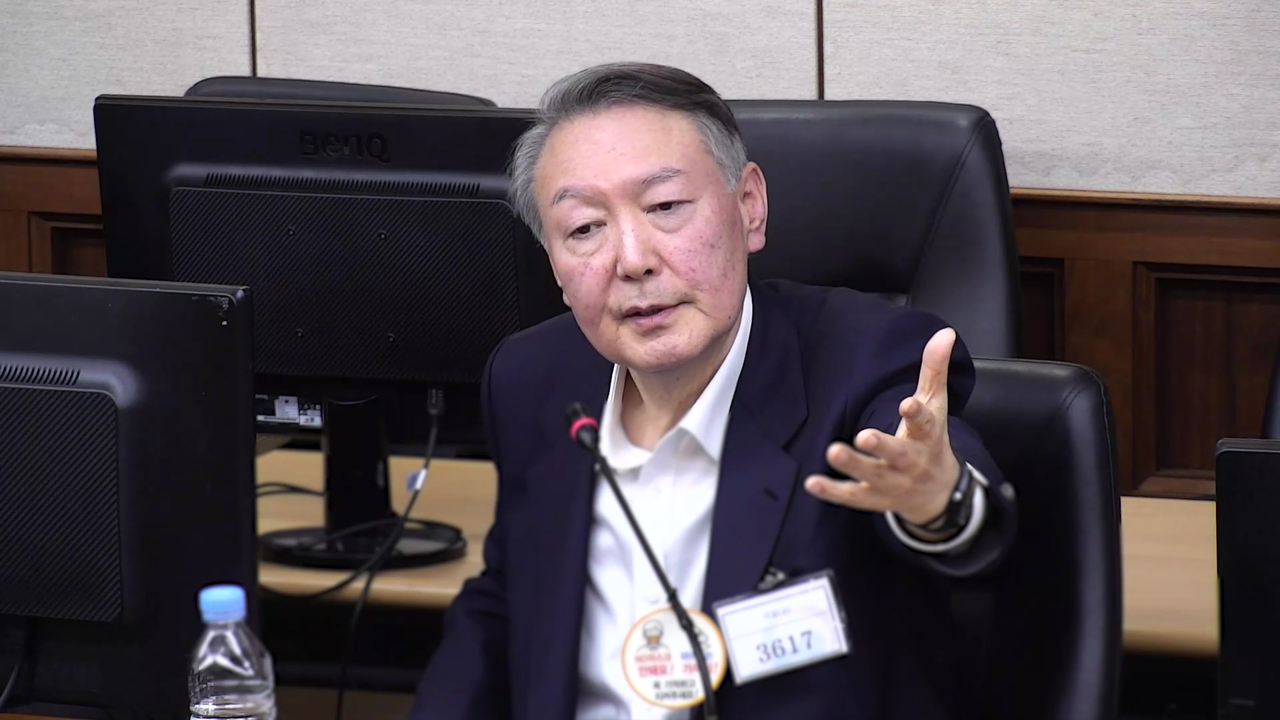
At the heart of prosecutors’ call for the harshest possible punishment for former President Yoon Suk Yeol is a claim that his short-lived declaration of martial law was not a misjudgment, but a failed attempt to dismantle constitutional order from within.
Yoon has said his imposition of martial law, which lasted only a few hours, resulted in no deaths and caused no lasting damage to Korea’s state system.
He has repeatedly argued that the episode cannot be compared with past military coups that plunged the country into dictatorship and bloodshed.
During the sentencing hearing on Tuesday, prosecutors do not dispute that no casualties occurred. Instead, they argue that the gravity of the crime lies in intent and preparation rather than outcome.
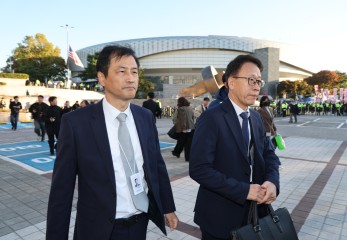
More than four decades ago, Army Maj. Gen. Chun Doo-hwan seized power through a military coup in 1979. He was joined by Gen. Roh Tae-woo, who played a key role in consolidating military control.
The following year saw another coup and a bloody crackdown on pro-democracy demonstrators in Gwangju, resulting in hundreds of civilian casualties and the establishment of a de facto military junta.
Both Chun and Roh were later convicted of insurrection, as well as other offences, including the murder of subordinates and superior officers. Prosecutors at the time sought the death penalty for Chun and life imprisonment for Roh, sentences that reflected the catastrophic consequences of their actions.
Yoon’s case, prosecutors argue, is smaller in scale but his actions had the same dictatorial purpose.
The special counsel team led by Cho Eun-seok has said Yoon’s declaration of martial law amounted to preparation for dictatorship, arguing that the strongest possible penalty is necessary to prevent what it called a recurrence of “tragic history.”
“It is clear that the defendant declared emergency martial law in order to seize all state power and maintain it for a long period, in other words, to establish dictatorship and long-term rule,” the special counsel said in court, adding that Yoon’s pursuit of power was the driving force behind the move.
Prosecutors pointed to provisions in Yoon’s martial law decree that banned parliamentary activities, noting that such restrictions had no legal basis. They alleged that Yoon ordered security forces to block access to the National Assembly in an attempt to prevent lawmakers from voting to lift the martial law.
“These actions by elite public officials show that the danger of a self-coup through martial law and the disruption of the constitutional order remains significant, despite having punished the insurrection led by Chun and Roh,” the special counsel said.
“Through this trial, Korea must demonstrate that it can safeguard the constitutional order through the legal system, by imposing stricter punishment on constitutional violations committed by elite public officials than those imposed on the forces led by Chun and Roh.”
minsikyoon@heraldcorp.com

![[Graphic News] Korea’s marine waste up 20% in 4 years](https://wimg.heraldcorp.com/news/cms/2026/10/27/news-p.v1.20261027.091c35e4ae1a4bb2a598a9138e673a7b_T1.gif?type=h&h=800)