Higher fees, tougher screening and even questions about divorce now feature in US visa applications
It was a freezing morning when I lined up outside the US Embassy in Seoul on Nov. 17.
Despite having a visa agency staffer hold a place for me, I waited more than 30 minutes just to enter the building, followed by another hour and a half for my interview — all to apply for an I-visa ahead of the upcoming Consumer Electronics Show in Las Vegas.
This marked the first time Korean reporters were required to obtain an I-visa. In previous years, journalists had traveled under the Electronic System for Travel Authorization, or ESTA, which generally allows attendance at events such as CES.
The difference was not trivial. While an ESTA costs $40, the I-visa application fee is about 450,000 won ($310). Applicants were also required to show proof of at least 7 million won in savings — a hurdle for many journalists who tend to keep limited cash on hand due to investments or irregular income.
The process also raised privacy concerns. Applicants were asked to disclose personal details such as marital history, reasons for divorce, and information about current and former employers, including supervisors’ names. They were also required to list all social media accounts and associated email addresses.
With phones prohibited inside the embassy, applicants sat in silence, leafing through thick application packets while others underwent lengthy interviews at open counters.
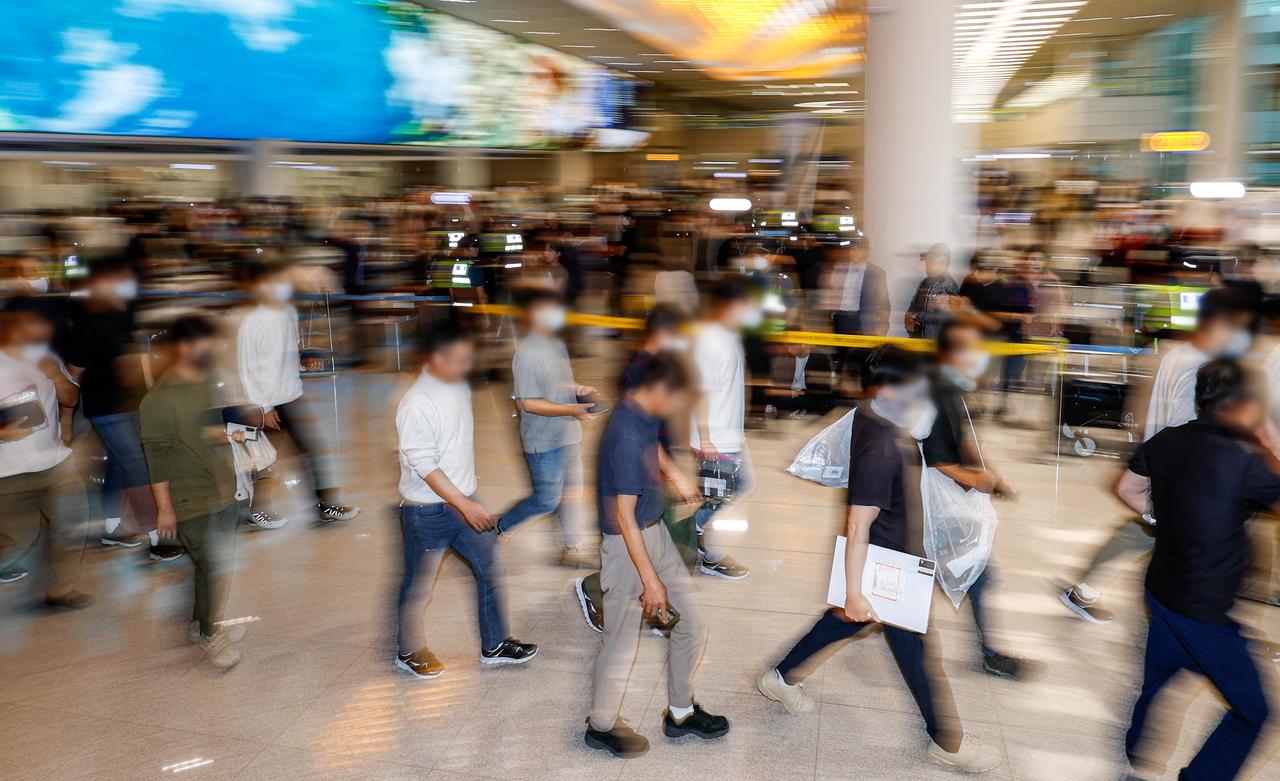
The heightened scrutiny came months after US authorities raided a Hyundai Motor–LG Energy Solution battery plant in Georgia, detaining hundreds of Korean workers in one of the largest immigration enforcement actions in recent years. Many of those affected later sought to return to the US on business, only to face tighter screening and, in some cases, visa denials.
Against that backdrop, the requirement for journalists to obtain I-visas appeared to reflect a more cautious approach — one shaped by the reality that even minor technicalities can carry serious consequences.
Formally, ESTA does not permit journalistic activity. While foreign reporters are not employed or paid by US entities, interviews and reporting conducted on US soil still fall under the definition of work. In practice, however, ESTA had long been used for such visits without issue.
Korean companies, particularly those with significant US investments, have learned that precedent offers little protection. Despite Hyundai’s more than $26 billion commitment to US manufacturing, immigration enforcement operates independently of economic ties.
The episode underscores a broader reality: as Korean companies deepen their presence in the US, the margin for procedural error is shrinking. Even routine business activity now carries heightened regulatory risk.
hyejin2@heraldcorp.com
![[Graphic News] 6 in 10 people living alone feel lonely](https://wimg.heraldcorp.com/news/cms/2026/10/13/news-p.v1.20261013.78692699312346e2a2817fabedf14bb6_T1.gif?type=h&h=800)