Igis’ W1.1tr sale puts autonomy, global strategy to test
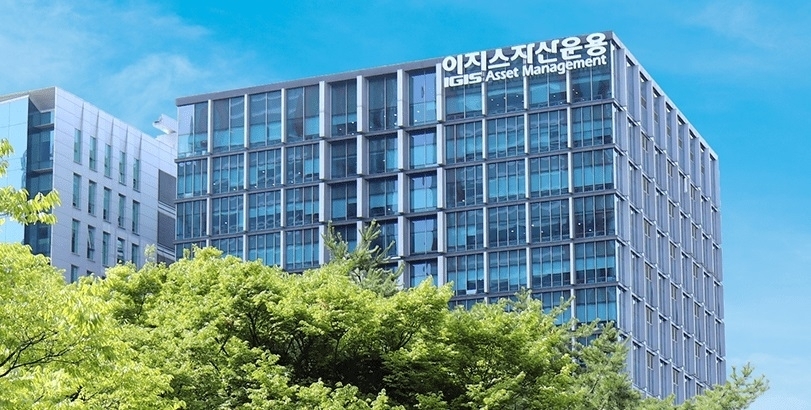
Igis Asset Management, Korea’s largest real estate asset manager, is facing a pivotal test as it searches for a new owner: Can it preserve the operational autonomy that has defined its investment style under a change in ownership?
Scale meets ownership test
Igis is the undisputed leader in the nation's real estate fund market. As of the end of June, the firm held 66.8 trillion won ($45 billion) in assets under management, or AUM, ranking No. 1 domestically.
Its scale and track record have been further reinforced by strong recent earnings. In the first half of this year, Igis posted 1.53 trillion won in revenue and 556 billion won in operating profit, boosting its appeal as an acquisition target amid a difficult global property market.
Over the years, Igis has built its reputation on bold and flexible investment decisions, a trait widely attributed to its status as an independent asset manager, free from the constraints of conglomerate-backed ownership. As takeover talks progress, the question of whether that autonomy can be maintained has emerged as a central issue — especially after the firm moved to dispel market speculation about tensions with the National Pension Service, one of its key investors.
Earlier this month, Singapore-based alternative investment firm Hillhouse Investment was selected as the preferred bidder to acquire 98.8 percent of Igis for 1.1 trillion won.
The deal, however, has encountered an unusual complication. Heungkuk Life, the second-highest bidder, has publicly claimed that the transaction was structured in Hillhouse’s favor. The insurer, part of Taekwang Group, was narrowly outbid by 50 billion won.
Global push pays off
A key pillar of Igis’ strategy has been its aggressive push overseas, reflecting the view that growth opportunities at home are increasingly limited.
After establishing subsidiaries in New York and London in 2019, the firm set up a Singapore unit in 2020. In 2024, it launched Igis Global Properties, a US-focused development arm aimed at deepening its presence in the American market.
While some overseas investments have faced setbacks, including defaults at office properties in Frankfurt and New York, Igis has continued to deploy capital abroad to meet limited partners’ demand for geographic diversification.
The shift is evident in its portfolio. Overseas assets accounted for 21 percent of total AUM in 2022, rising to around 30 percent last year. Although domestic AUM declined in 2024, Igis’ total AUM still grew by 1 trillion won, indicating that growth was driven entirely by overseas holdings.
Strategic fit in focus
Industry officials say Hillhouse could offer strategic advantages as Igis deepens its global push.
Hillhouse is well known in Korea for its early investments in leading technology and platform companies, including Kurly, Woowa Brothers — the operator of Baemin — and Krafton. It has also expanded into large-cap industrial investments, backing companies such as SK On and SK Ecoprime.
In real estate, Hillhouse scaled up its Asia-Pacific footprint through its real estate arm Rava Partners, which acquired Japanese property developer Samty Holdings in 2024. With Igis also expanding its multifamily housing investments in Japan, a combination could strengthen its presence in the country’s residential market.
Leveraging Hillhouse’s global network, Igis could gain access to assets such as data centers and logistics facilities, which are often difficult for domestic investors to source independently. Hillhouse’s limited partner base — largely composed of sovereign wealth funds and university endowments in North America, Europe and the Middle East — could also help Igis diversify its investor pool.
By contrast, industry officials say Igis’ growth could be more constrained under Heungkuk Life. As a domestic insurer operating within a traditional conglomerate structure, Heungkuk Life has a more limited overseas network and is subject to heavier regulatory oversight.
“Igis has demonstrated strong performance through bold and flexible decision-making,” said an official at a real estate consulting firm. “Being absorbed into a domestic insurer within a heavily regulated conglomerate could limit its autonomy and slow execution.”
Scrutiny intensifies
For Hillhouse, regulatory approval remains a key hurdle. Any entity seeking to become a major shareholder in a Korean financial investment company must obtain approval from the Financial Services Commission. Hillhouse had initially aimed to file for review within the year, but delays now appear likely amid the dispute raised by Heungkuk Life.
Hillhouse also faces lingering skepticism in Korea over foreign private equity ownership, particularly concerns about a so-called dine-and-dash approach focused on short-term returns.
Such concerns were amplified after Hillhouse extracted a 70 billion won dividend from SK Ecoprime in 2024, the first year after acquiring the biodiesel producer, more than four times the company’s 16 billion won net profit that year.
“In buyout deals, large dividends shortly after acquisition are not uncommon and are often priced in,” said an official at a local private equity firm. “The issue would arise only if such payouts continue regardless of a company’s financial health. At this stage, it is too early to draw conclusions.”
silverstar@heraldcorp.com