President Lee Jae Myung vowed to introduce the concept of a "social and solidarity economy" to South Korea, calling for the benefits of economic growth to be shared among all stakeholders as a way to address inequality in the country.
As the liberal president was briefed Tuesday by Interior Minister Yun Ho-jung on the government’s plan to enact a law defining the social and solidarity economy and establishing legal grounds to support related entities, Lee said that building a nationwide ecosystem to strengthen community solidarity for shared economic growth could be a game-changer.
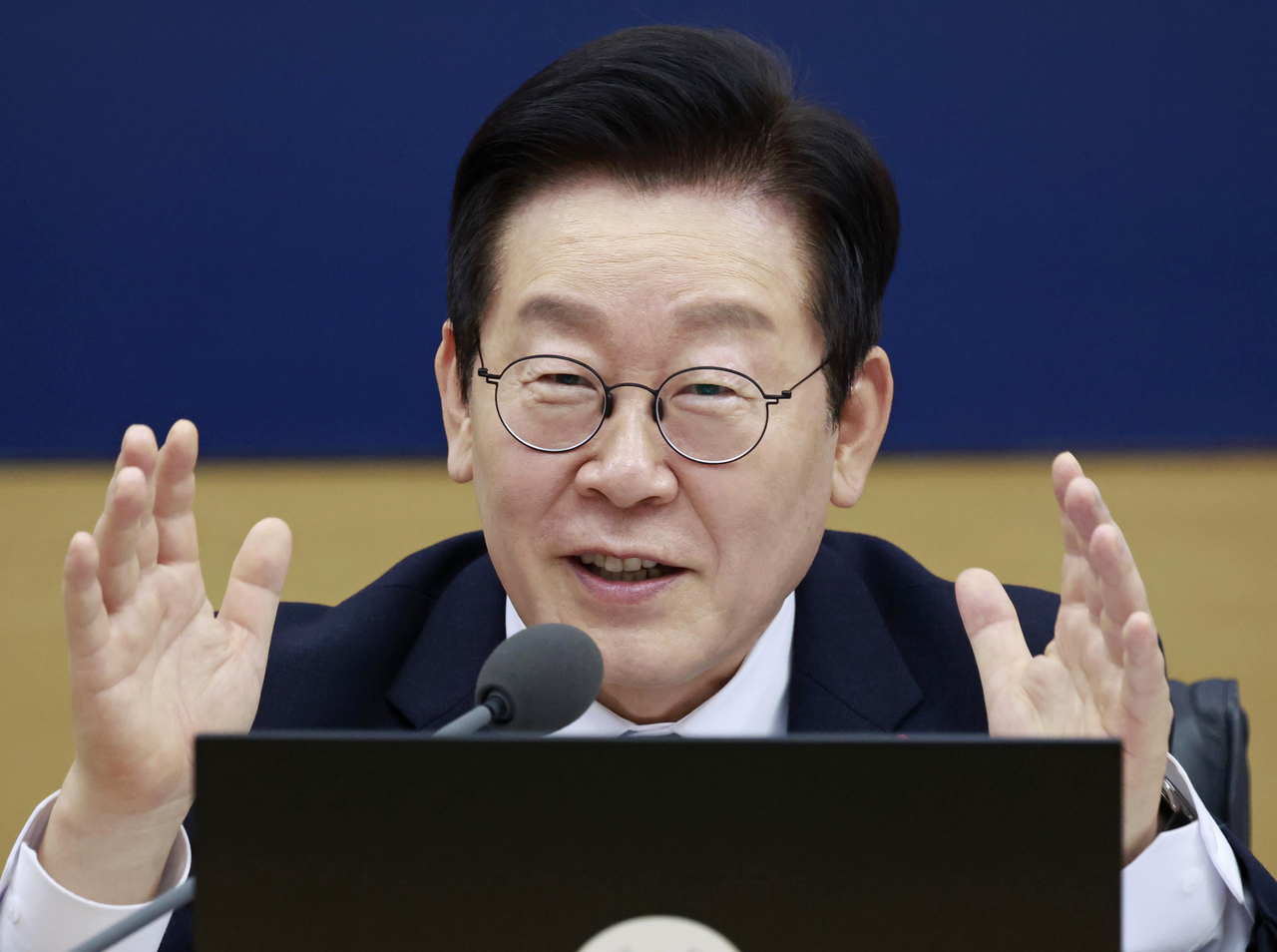
“In order to alleviate inequality across political, social and economic sectors, we must look beyond quantitative growth,” Lee said during a Cabinet meeting in Sejong on Tuesday. “We must boldly shift our policy paradigm to equitable and sustainable growth.”
Introducing legislation on the social and solidarity economy is one of the 123 objectives outlined in the Lee administration’s five-year policy blueprint.
During the meeting, the Cabinet presented examples of profit-sharing among individual members of cooperatives involved in public-sector projects, illustrating how the social and solidarity economy could take shape in Asia’s fourth-largest economy, which has long relied on large business groups for its rapid economic growth over the past decades.
In one case, participants in a solar panel project in Sinan, South Jeolla Province, are eligible to receive profit distributions from the company leading the project. In another case, a cooperative dedicated to street cleaners — who are also shareholders — spurs them to take greater ownership of their work.
“Wouldn’t it benefit everyone if we delegated public service areas to cooperatives or social enterprises instead of specific individuals?” Lee said, adding that swift policy decisions and legislative action are needed to ensure the success of benefit-sharing models.
consnow@heraldcorp.com