Myongji Hospital Chair Lee Wang-jun targets 2026 launch of global medical AI body
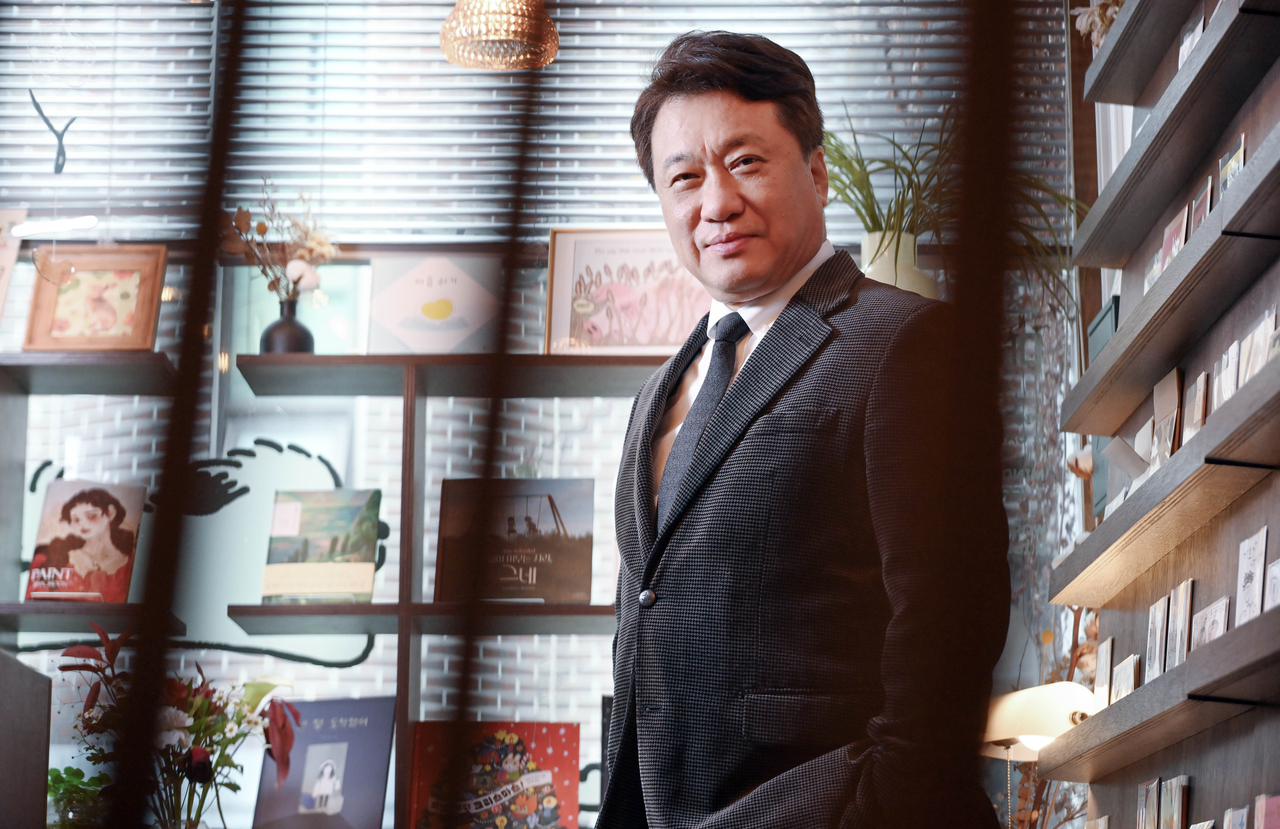
After leading South Korea’s hospital sector through multiple public health crises, Lee Wang-jun is now focused on another structural challenge confronting global health care: how to govern the use of artificial intelligence in hospitals.
Lee, president-elect of the International Hospital Federation, said hospitals around the world are rapidly adopting AI across diagnosis, treatment and operations. But discussions on accountability, ethics and global standards have yet to catch up.
“New technologies are changing every paradigm for medical treatment and hospitals,” said Lee, who doubles as chair and president of Myongji Hospital and Myongji Medical Foundation, in an interview with The Korea Herald in Seoul on Wednesday.
“We used to say digital transformation but now we add the phrase ‘AI-based’ in front of that. Making smart hospitals is not enough. We have to lead such changes in a much more proactive manner.”
He raised questions such as who would be held responsible for decisions made based on an AI-determined diagnosis between the hospital, the doctor and the solution developer.
“If a humanoid robot conducts a surgery and ends up with a bad result, who takes responsibility then?” said Lee.
“Who can lead the discussions on such matters? Will (the World Health Organization) or (the United Nations) take charge? Or will big tech companies do it? With the United States and China going head-to-head in a hegemonic competition when it comes to AI technology, we need a moderator that can lead the talks in order to collaboratively draft relevant standards and regulations. The IHF has to play that role.”
Lee became the second Korean to lead the IHF, a non-profit membership organization founded in 1929, which now has more than 170 members representing some 30,000 hospitals in more than 70 countries. He was elected to the post during the 48th World Hospital Congress in Geneva, Switzerland, last month.
The Korean doctor-turned-entrepreneur will serve a two-year term as IHF president from 2027 to 2029, but his work will begin right away as the IHF relies on a six-year executive leadership cycle that allows the international organization’s current president, past president and future president to work together with the IHF Secretariat to make decisions.
“If big tech firms, and even small tech dark horses, try to enter the health care sector with AI, they are going to have to conduct clinical trials, like when we test new drugs,” said Lee.
“The IHF can be a facilitator for them. So I’m trying to establish a new body under the IHF that can serve both the moderator and facilitator roles. … For instance, if we try to bring together stakeholders in the AI health care field such as Google, OpenAI, heads of hospitals and health ministers to discuss the ethics of AI technology in the medical sector, the IHF should be the host of the talks.”
Lee said Seoul’s hosting of the 49th World Hospital Congress next October provides an opportunity to launch a global AI health care initiative.
“I would like to declare an AI health care initiative at the congress,” he said. “The idea is to establish a global network, with several regional hubs working together.”
According to Lee, potential locations for these hubs include Australia, Brazil, Canada, Egypt, Finland, Ireland, Luxembourg, Saudi Arabia, Singapore, South Africa, the United Arab Emirates and the US.
As for securing financial backing to launch a new body at the IHF, Lee pointed to Korea’s full-scale investment in AI. President Lee Jae Myung said the Korean government drew up an AI budget for next year worth 10 trillion won ($6.7 billion), which is three times this year’s number.
“If the Korean government supports this kind of initiative, it can help position Korea as a contributor to global discussions on AI in health care,” Lee said, adding that it could also open opportunities for Korean technology companies such as Naver and Kakao.
Beyond AI, Lee said he also aims to broaden the IHF’s membership base. While the federation has historically been centered on Europe and North America, he said greater participation is needed from Asia, Africa and developing countries.
“Expanding diversity within the organization is important,” Lee said. “It strengthens the IHF and enhances its ability to serve as a truly global platform.”
Lee is a graduate of Seoul National University College of Medicine and previously played a leading role in coordinating hospital responses during major infectious disease outbreaks in Korea, including the 2009 H1N1 flu, the 2015 Middle East respiratory syndrome outbreak and the COVID-19 pandemic in 2020.
- - -
The Top 100 Global Innovators series spotlights the trailblazers shaping Korea’s future across a range of industries — from bold entrepreneurs and tech pioneers to research leaders — whose innovations are making a global impact beyond Korea. More than a celebration of success, the series offers a deeper exploration of the ideas, breakthroughs and strategies driving their achievements. — Ed.
hwkan@heraldcorp.com








