With HMM now valued at W8–10tr, potential suitors assess strategic fit amid industry pushback
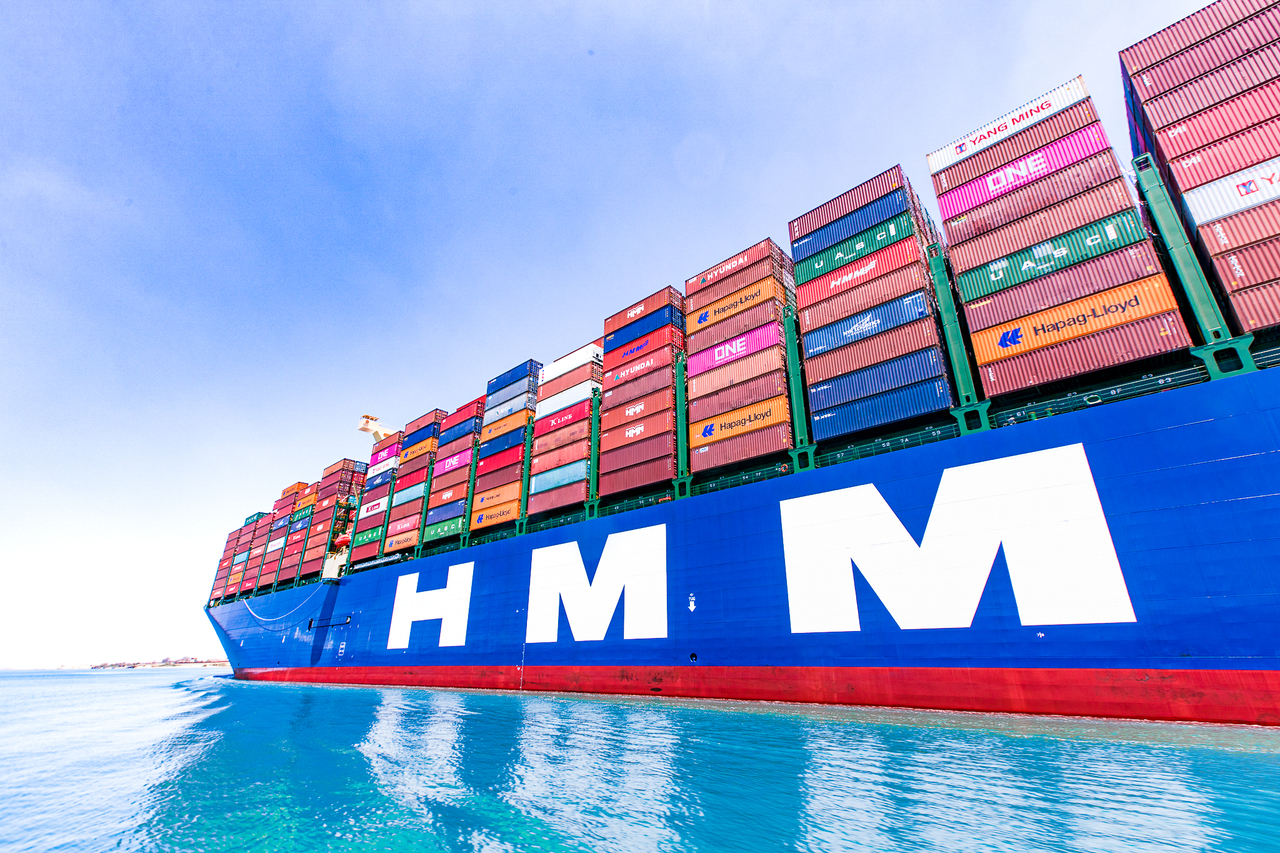
As South Korea readies to reopen the sale of HMM after last year’s collapse, steel maker Posco Group and fisheries giant Dongwon Group are weighing whether to join a renewed bidding war for the country’s largest container carrier.
The state-run Korea Development Bank, HMM’s largest shareholder with a 35.42 percent stake, recently sent out a request for proposals to local accounting firms to conduct a fair-value assessment, according to industry sources. Market watchers see the move as part of the state lender’s preparation to resume the sale, which broke down last year due to differences over terms with a local consortium formed by agri-food giant Harim and private equity firm JKL Partners.
HMM, previously known as Hyundai Merchant Marine, has been under state control since 2016 following a government bailout that rescued the company from near-bankruptcy. KDB is the largest shareholder with 35.42 percent, followed by state-run Korea Ocean Business Corp., which holds 35.08 percent.
Following HMM’s financial turnaround, government entities are seeking to return the carrier to private ownership. This would allow KDB to strengthen its finances and refocus investments on advanced technologies, while also boosting HMM’s global competitiveness.
Industry observers estimate HMM’s acquisition at 8 to 10 trillion won, up from the 6.4 trillion won initially agreed upon in the failed 2023 deal, reflecting the rise in the company's share price and the added control premium.
KDB’s Chair and CEO Park Sang-jin, who took office in September, has also repeatedly said that HMM’s privatization is necessary and that the government intends to move quickly with the sale.
Posco eyes shipping entry
Posco Group has been exploring a potential bid since early fall, in what is widely seen as an attempt to enter the shipping sector and diversify beyond its traditional steel and battery materials operations.
In September, Posco reportedly hired an advisory team that includes Samil PwC, Boston Consulting Group and a law firm to assess the business feasibility of acquiring HMM.
Asked whether Posco is joining the race, an official at Posco Holdings, the group's parent company, said no decision has been made. "We are reviewing whether strategic synergies with existing business can be created,” the official said, reiterating the company's earlier position.
Industry observers say acquiring HMM would allow the steel giant to break into the long-sought shipping sector and reduce its hefty logistics expenses.
The group imports coal, steel products and battery raw materials, spending roughly 3 trillion won annually on logistics. With HMM under its wing, Posco would gain a more reliable pipeline for raw material imports and product shipments, even in the face of external uncertainties. Additional synergies could emerge by linking HMM’s operations with Posco International’s LNG terminal business.
Moreover, Posco has also been seeking new growth engines amid sluggish steel demand and steep tariffs under the US Donald Trump administration. Its secondary battery materials business has been weighed down by the so-called “EV chasm." Posco Chair Chang In-hwa stressed this urgency in his New Year’s address, pledging to “nurture future businesses that can create synergy with steel and secondary battery materials” and form a new pillar of the group’s portfolio.
Posco has the ambition and sufficient financial capacity for acquisition. But the biggest obstacle could be fierce pushback from the maritime sector. Shipping groups warn that allowing a major cargo owner to control a national carrier could distort competition and weaken small and midsize shippers. In October, the Korea Shipowners’ Association formally urged Posco to withdraw its review of the sale amid such concerns.
Second time is the charm?
Dongwon Group, the food and logistics conglomerate best known for its canned tuna brand, is also renewing its push to acquire HMM, after falling just short in the scrapped 2023 sale.
The company recently established a special task force to reconsider a bid, according to local media reports.
Following the report, Dongwon Industries said in a regulatory filing that while the company “is interested in HMM, nothing has been specifically decided.” The company said it would provide an update when decisions are made or within one month.
Taking over HMM would allow the group, already active in fisheries, logistics and port operations, to become a major logistics powerhouse. After acquiring logistics firm Dongbu Express in 2017, now Dongwon Loex, the company opened Korea’s first fully automated container terminal, the Dongwon Global Terminal in Busan. With capabilities spanning land and port operations, the missing piece for Dongwon is a container shipping line.
Founder and honorary Chair Kim Jae-chul previously described HMM as the “pinnacle of a dream,” adding that, as a company that has grown alongside the sea, Dongwon is well-suited to operate HMM
The main question is whether Dongwon has enough financial resources to fund the purchase that now requires more capital than during its initial bid. In the 2023 bidding round, Dongwon reportedly offered around 6.2 trillion won, falling 200 billion won short of Harim-JKL Partners' bid. Even then, the group was considered financially weaker than rival candidates, with smaller cash reserves and a more limited asset base. Dongwon had reviewed various measures, including leveraging its overseas subsidiary StarKist and exploring asset-liquidation options, while insisting it would not pursue excessive borrowing.
Some analysts argue that Dongwon's overall financial health has improved, but a higher acquisition pricetag could still push the group's financial limits.
Relocation dispute, labor tensions cloud HMM sale
However, substantial challenges persist despite growing business interest. The Ministry of Oceans and Fisheries began relocating its headquarters from Sejong to Busan on Monday, aligning with the government's initiative to establish the coastal city as an international maritime center — a campaign pledge of President Lee Jae Myung.
Two mid-sized bulk shipping companies, SK Shipping and H-Line Shipping, have announced plans to move their headquarters to Busan in 2026, but the country’s largest carrier, HMM, remains contentious.
Oceans Minister Chun Jae-soo said he will announce a roadmap for HMM’s relocation in January, which was met with fierce protest from the company’s labor union that believes the relocation could hurt competitiveness. Adding to the uncertainty, Chun offered to resign on Thursday amid allegations he accepted bribes from the Unification Church. If the ministerial vacancy is prolonged, observers say the momentum for relocation could weaken.
“There are a lot of uncertainties regarding the HMM. If conflict between the labor and the company intensifies, which company would be willing to purchase HMM with such risks?" an industry official said.
sahn@heraldcorp.com