CEO's renewed term to push bigger capacity, new drug modalities, deeper big-pharma partnerships
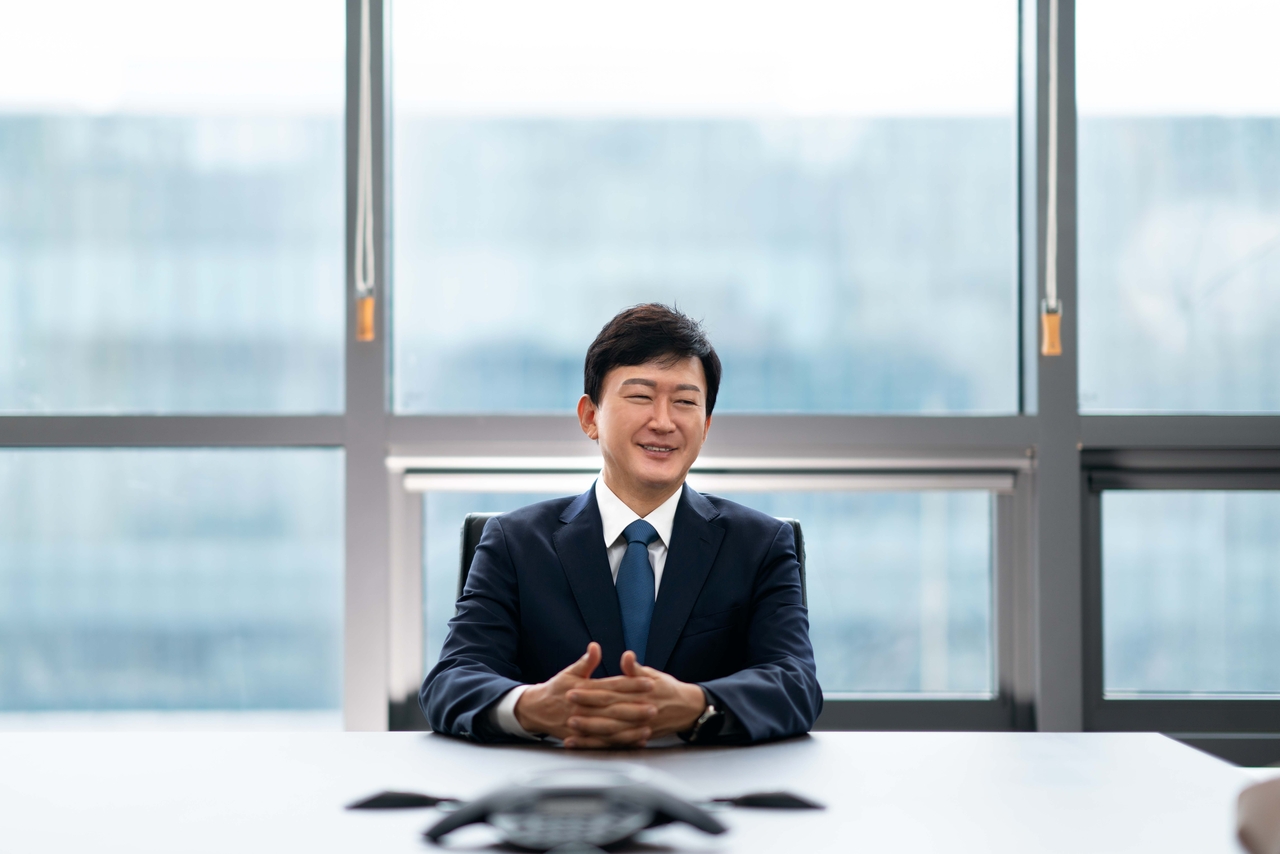
Samsung Biologics CEO John Rim is doubling down on his ambition to further strengthen the Korean biomanufacturing powerhouse’s global leadership, after securing a second consecutive two-year term as chief of the world’s largest contract development and manufacturing organization.
Since taking the helm in December 2020, Rim has led Samsung Biologics to new record-high revenues every year. Leveraging more than 30 years of experience in the global pharmaceutical and biologics industry, he has emphasized a three-pillar expansion strategy — unmatched production capacity, a diversified modality portfolio and a broader global footprint.
Samsung Biologics posted 1.57 trillion won ($1.1 billion) in revenue in 2021, Rim’s first full year in charge. The figure doubled to 3 trillion won in 2022 and surged to 4.5 trillion won last year. Revenue is expected to top 5.68 trillion won in 2025, setting yet another all-time high.
Rim is widely credited with landing multibillion-won orders from top global drugmakers. When he joined Samsung Biologics as executive vice president in 2018, the company counted only three of the world’s top 20 pharmaceutical companies as clients. It now serves 17 of them — including GSK, Eli Lilly, AstraZeneca, Moderna, Novartis and Pfizer.
To prepare for increasing worldwide demand for biopharmaceuticals, the Samsung Biologics CEO first focused on expanding production capacity and laid out a plan to build a second bio campus composed of four plants with a 7.5 trillion won investment. As the first plant of the second bio campus began operation in April this year, Samsung Biologics secured the world’s largest production capacity of 784,000 liters. The company plans to build three more plants through 2032 to secure a total production capacity of 1.32 million liters.
Rim has also underlined the importance of expanding the company's portfolio to meet the various demands of the market by going beyond a business model centered on monoclonal antibody drugs.
He pushed for investments in antibody-drug conjugate, or ADC -- in the limelight as a next-generation anticancer treatment -- which led to the opening of Samsung Biologics’ ADC-dedicated production facility in March this year. The company in June launched Samsung Organoids, an organoids-based drug screening service, offering end-to-end contract research, development and manufacturing support.
Last month, Samsung Biologics inked a deal with the Incheon Free Economic Zone Authority to acquire 187,000 square meters of industrial land in Songdo to set up a third bio campus and build various modality production facilities for cell-and-gene therapy, antibody vaccines and peptides with a 7 trillion won investment.
According to Samsung Biologics, Rim proposed the idea of spinning off Samsung Bioepis from the CDMO unit to Samsung Group with the goal of increasing the parent firm’s value by focusing on its CDMO business and Samsung Bioepis solely working on biosimilar development.
As Samsung Biologics completed Samsung Bioepis’ spinoff last month, the company underscored that it will be able to resolve concerns over possible conflicts of interest from some clients regarding the two companies as one entity.
To increase customer satisfaction and trust, Rim has taken active measures for thorough quality management. The number of certifications received by Samsung Biologics from global good manufacturing practice authorities stood at 94 in 2020. The figure skyrocketed to 400 as of this month, including 49 approvals from the US Food and Drug Administration and 46 from the European Medicines Agency.
As Rim continues to reiterate the leadership philosophy dubbed 4E — customer excellence, operational excellence, quality excellence and people excellence — to encourage his colleagues, the Samsung Biologics CEO plans to continue leading the company’s global competitiveness with the 3S campaign — simplification, standardization and scalability.
hwkan@heraldcorp.com

![[Graphic News] Seoul rises to 7th in global financial hub ranking](https://wimg.heraldcorp.com/news/cms/2026/10/15/news-p.v1.20261015.d4dd881eab584b4e8ce6ec52a672b278_T1.gif?type=h&h=800)