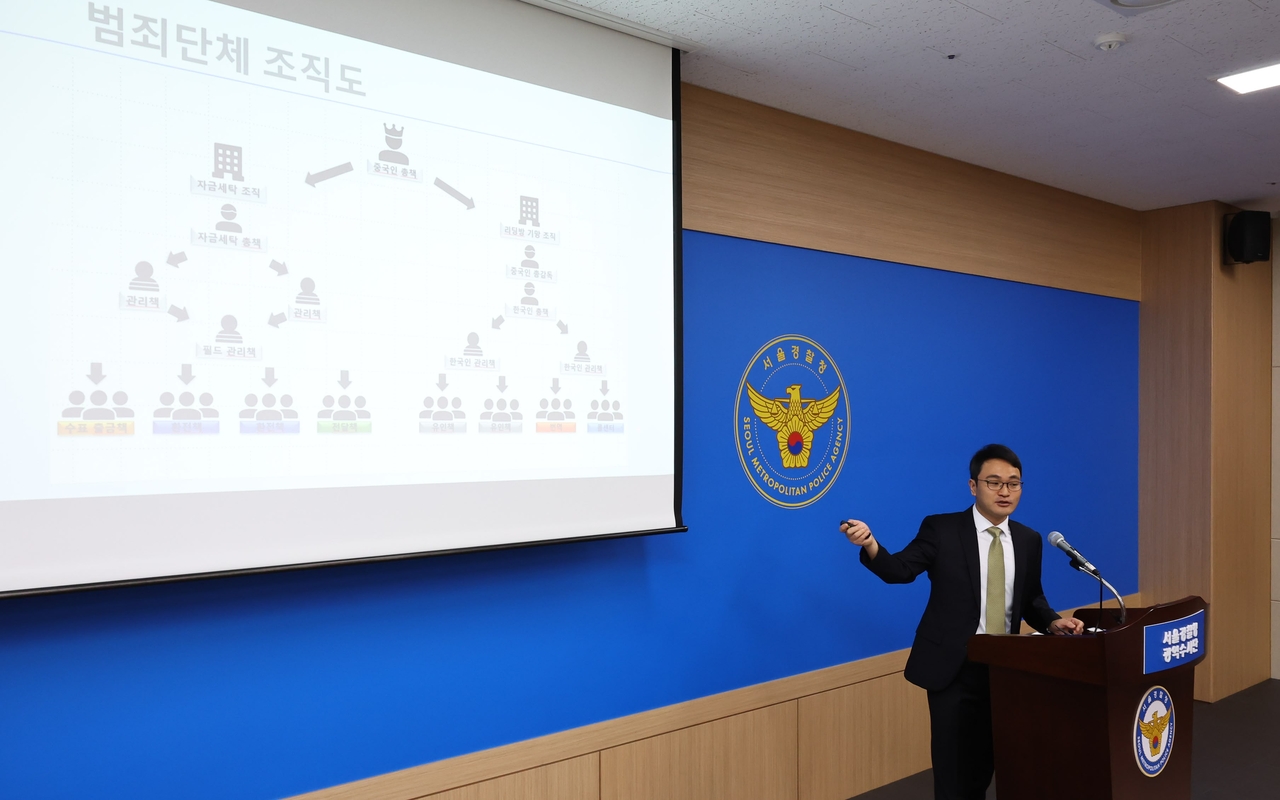
For the first time, members of South Korean gangs are being arrested more for online scams than crimes such as assault or extortion as organized crime rapidly migrates to cyberspace.
According to figures released by the Korean National Police Agency this week, 2,363 organized crime members were arrested in 2024. Among those, 56.3 percent — 1,330 individuals — were tied to digital crimes such as voice phishing, romance scams and illegal online gambling.
The data was obtained by Rep. Suh Bum-soo of the People Power Party, a former president of the Korean National Police University, and shared on Wednesday.
This marks the first time cybercrime has overtaken other criminal activities commonly linked to organized crime groups in South Korea. Arrests for conventional offenses like assault, intimidation and extortion accounted for 645 individuals (27.3 percent), while those linked to illegal moneylending and underground lending schemes stood at 388 (16.4 percent).
Combined, these two categories (43.7 percent) were outpaced by digital offenses (56.3 percent).
In 2021, digital crimes accounted for just 5.1 percent (84 arrests) of all gang-related arrests. That figure more than tripled by 2023, then surged to 1,330 arrests by 2024. In the first half of this year, cybercrime already accounted for 34.9 percent (466 arrests) of all gang-related detentions.
Police say younger gang members in their 20s and 30s are driving this change, turning to phishing and online scams as other income sources, such as extortion of local businesses or loan sharking, become less profitable.
In South Korea, “organized crimes," or "jopok," refer to networks officially tracked under the country’s Performance of Duties by Police Officers Act. These groups have identifiable hierarchies, are often known by their clan names, and are led by senior figures who collect profits from lower-tier members. Police say these networks now apply this same structure to running phishing rings, allowing them to operate at a larger and more coordinated scale than typical fraud syndicates.
The trend is also extending beyond national borders. On Nov. 20, Gangwon Provincial Police arrested 59 people linked to a voice phishing ring based in Cambodia. Eleven of those arrested were confirmed members of four South Korean gangs, with ties spanning Gangwon Province, Gwangju, Daejeon and Ulsan. All were in their 20s and 30s and had built inter-gang alliances while serving prison time.
mjh@heraldcorp.com