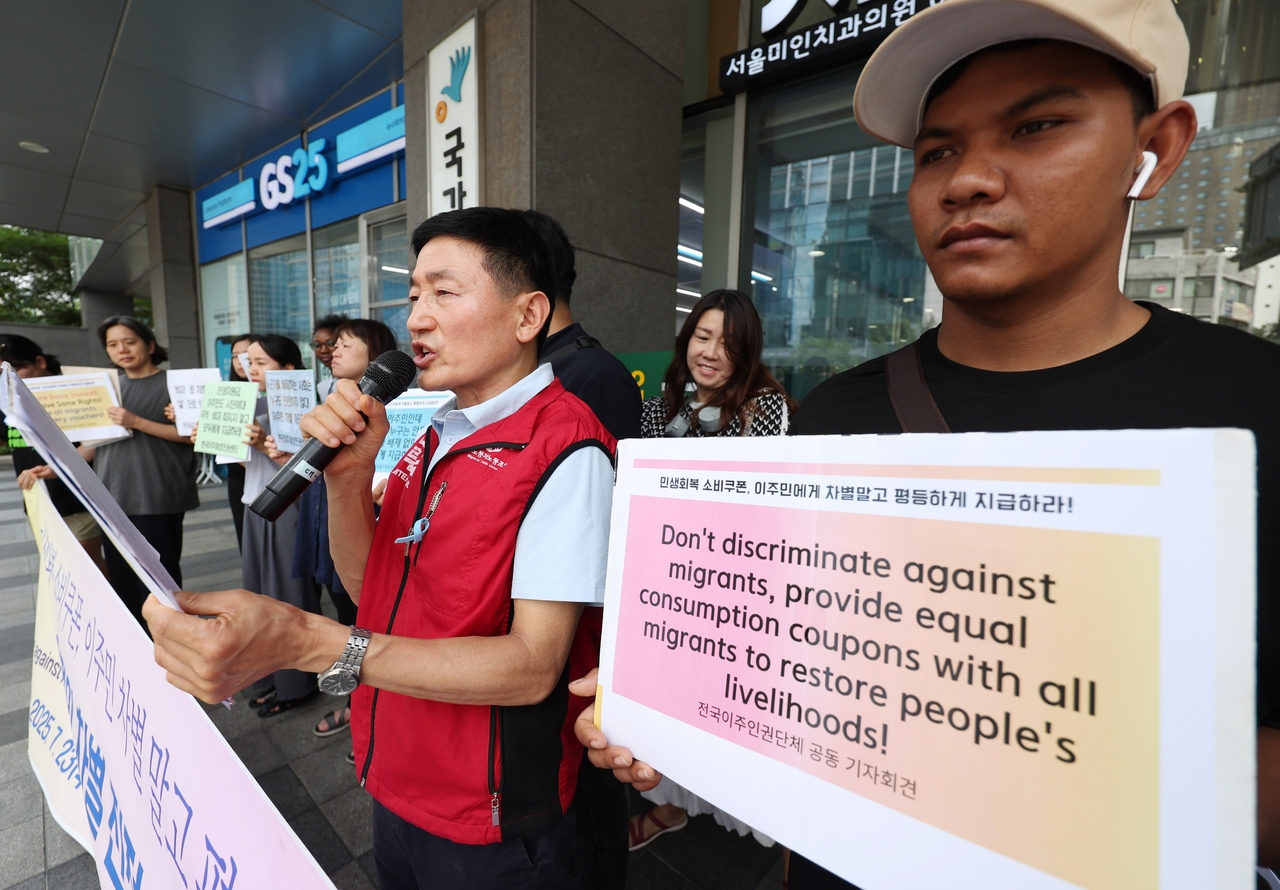
A majority of South Koreans believe that migrants who pay taxes should be included in the country’s social welfare system, according to new national survey data released this week.
The 2025 Human Rights Awareness Survey, published by Korea’s National Human Rights Commission on Tuesday, found that nearly 75 percent (74.7 percent) of respondents supported allowing taxpaying migrants to access the same social benefits as Korean citizens, a level of support that has remained largely unchanged from previous years.
The survey was conducted nationwide between July and August and gathered responses from over 17,000 South Korean adults aged 18 or older. It is considered the country’s most comprehensive annual study on public perceptions of human rights, discrimination and inclusion.
The survey also revealed that migrants remain widely perceived as marginalized in South Korean society. Only 38.8 percent of respondents said they believe migrants’ rights are respected, which was the lowest of all population groups covered in the survey.
In contrast, nearly 90 percent said women’s rights are respected, followed by those of youth (87.1 percent) and children (85.2 percent). Migrants were also listed among the most vulnerable to discrimination, along with economically disadvantaged groups and persons with disabilities.
Limited welfare access for migrants
The survey results come months after the South Korean government implemented its 2025 Livelihood Recovery Consumption Coupons program, a large-scale stimulus measure intended to boost domestic consumption. While the program issued cash-equivalent vouchers to most citizens, including additional support for low-income groups, most foreign residents were excluded.
Under the government’s eligibility rules, only foreign residents holding visas for permanent residence, marriage or refugee status qualified to receive the vouchers. Others could apply only if they were registered on the same resident record as a Korean national and enrolled in the national health insurance system.
Migrant workers and most temporary visa holders were not eligible, even if they had lived in the country for years and paid taxes throughout that time.
South Korea is home to more than 2.6 million foreign residents as of the 2024 census, who now make up over 5 percent of the population. Many participate in the workforce and contribute to social insurance and taxes, but remain excluded from various government programs tied to nationality or visa status.
Earlier data from the Ministry of Gender Equality and Family released in June also indicated that public support for migrant inclusion is growing. In that survey, 73.5 percent of South Korean adults agreed that promoting migrant integration is a necessary long-term investment, while just over half believed the government was doing enough in that area.
mjh@heraldcorp.com