Polarization concerns rise over heavyweights’ plans to favor royalists in candidate selections

South Korea’s two major political parties are each racing to rewrite their primary rules ahead of next June’s local elections, igniting fierce internal battles over who should hold greater sway in deciding their candidate slates.
In Korean politics, primary rules involve complicated political math that is recalibrated every major election cycle — tilting the electoral landscape and decide a race’s winner.
This time, both the ruling Democratic Party of Korea and main opposition People Power Party are seeking to shift that architecture by giving greater influence to ordinary, dues-paying members, albeit through different approaches.
The key architects of such changes — Democratic Party leader Rep. Jung Chung-rae and People Power Party heavyweight Rep. Na Kyung-won — are widely seen as having the most to gain, prompting accusations that the reforms are tailored with their own political fortunes in mind.
Critics warn that boosting the weight of party-member votes risks further empowering hard-line loyalists in both camps, widening the gap between the party base and the broader electorate, particularly moderates.
Rules that favor whom?
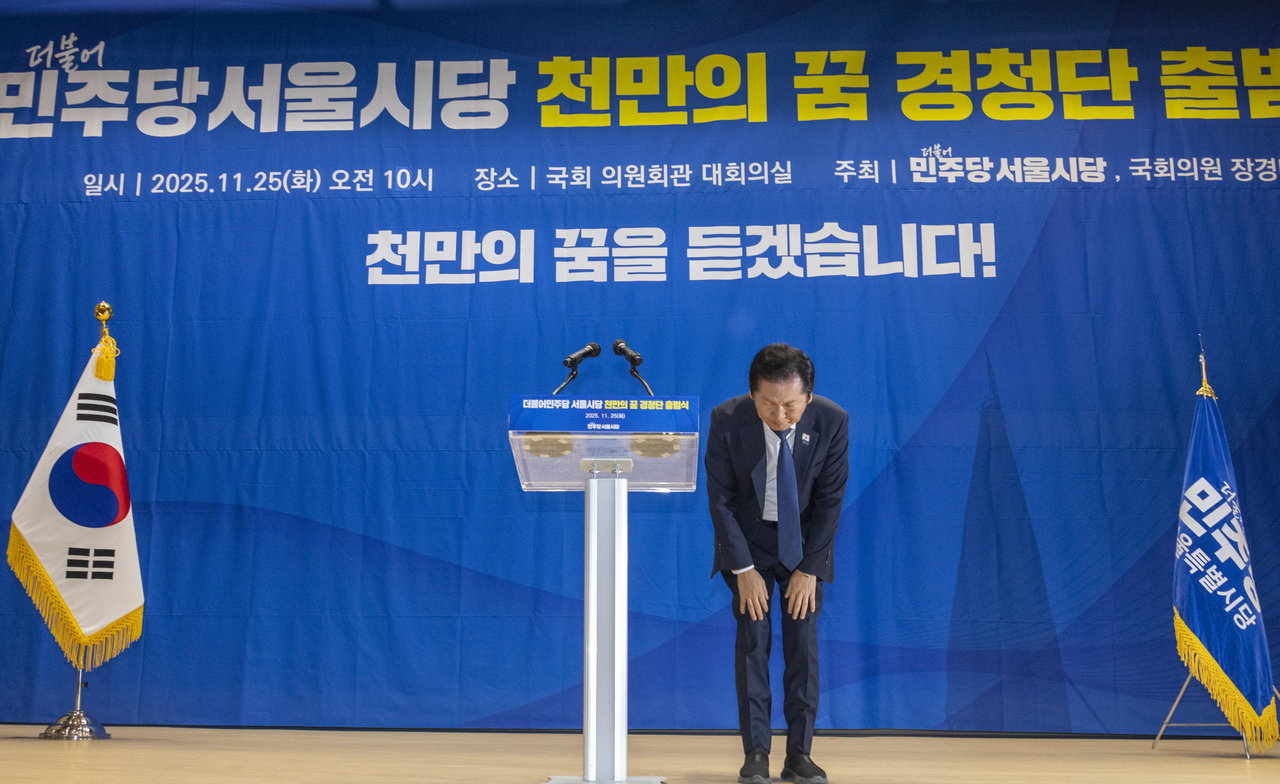
Within the Democratic Party, Chung has faced criticism for introducing what he calls a “one-member, one-vote” rule. The proposal would give ordinary, dues-paying party members the same voting power as party delegates — including lawmakers, regional chairs and senior officials — in internal party elections such as leadership contests and candidate primaries.
A delegate’s vote must already carry less than 20 times the weight of a rank-and-file party member. But in the previous party convention in August, one delegate’s vote was equivalent to 17.5 votes from ordinary dues-paying members.
Chung is now facing accusations that he is reshaping the rules to strengthen the loyalist base that helped elect him — and potentially secure his own reappointment. He won the party chair position by a landslide among dues-paying members, despite losing the delegate vote.
The People Power Party, meanwhile, is moving to raise the combined weighting of dues-paying members’ votes in next June’s local-election primaries from 50 percent to 70 percent, correspondingly reducing the share allocated to public polling.
Similar criticisms have emerged in the party, where Na — who heads the party’s task force for local elections — is seen as a possible beneficiary in future primaries, including for the Seoul mayoral race.
In the 2021 Seoul mayoral primary, Na lost in the final round — which was determined entirely by public polling — to incumbent Mayor Oh Se-hoon, despite placing first among party members in the preliminary primary.
Against this backdrop, the shift proposed by Na toward heavier party-member weighting could alter the dynamics of a potential rematch in her favor.
However, Rep. Cho Ji-yeon, spokesperson for the party’s task force for the local elections, on Tuesday dismissed the notion, saying that “there is no scenario in which we would tailor the rules to benefit a particular individual."
Fears of regional marginalization
The parties' respective internal feuds are being driven by different factors.
For the Democratic Party, the concern is twofold: a lack of sufficient deliberation before pushing through such a major overhaul and, more importantly, a fear that a mechanical application of the new system would marginalize voices from the party’s weaker regions.
Some Democratic Party lawmakers have openly warned that such an outcome would undercut the party’s stated goal of broadening its footing across the country.
Regions such as Yeongnam, which includes the North and South Gyeongsang provinces, and Gangwon Province — where the party has historically struggled — would see their influence virtually erased.
Most of the Democratic Party’s dues-paying members are concentrated in Seoul, the broader capital area and Honam, which comprises the North and South Jeolla provinces and Gwangju.
“Many argued internally that a strict ‘one-member, one-vote’ system would in practice fail to reflect the preferences of party members in regions where the Democratic Party is weak, particularly in the Yeongnam area,” Rep. Jeon Hyun-heui said Tuesday in an interview with local broadcaster Channel A.
“For that reason, some said the party needs a more deliberative process to build a structure that can better capture the voices of members in these underrepresented regions and ensure their preferences are meaningfully incorporated.”
Echoing the sentiment, Rep. Yoon Jong-kun said Tuesday that the proposed system ignores the existing imbalance between population and party-member distribution in his interview with state-run broadcaster KBS.
Yoon noted that while the Honam region accounts for only about 10 percent of the national population, it makes up roughly 35 percent of dues-paying members, whereas Yeongnam holds about a quarter of the population but less than 10 percent of the party's membership.
Backlash over member-heavy rules
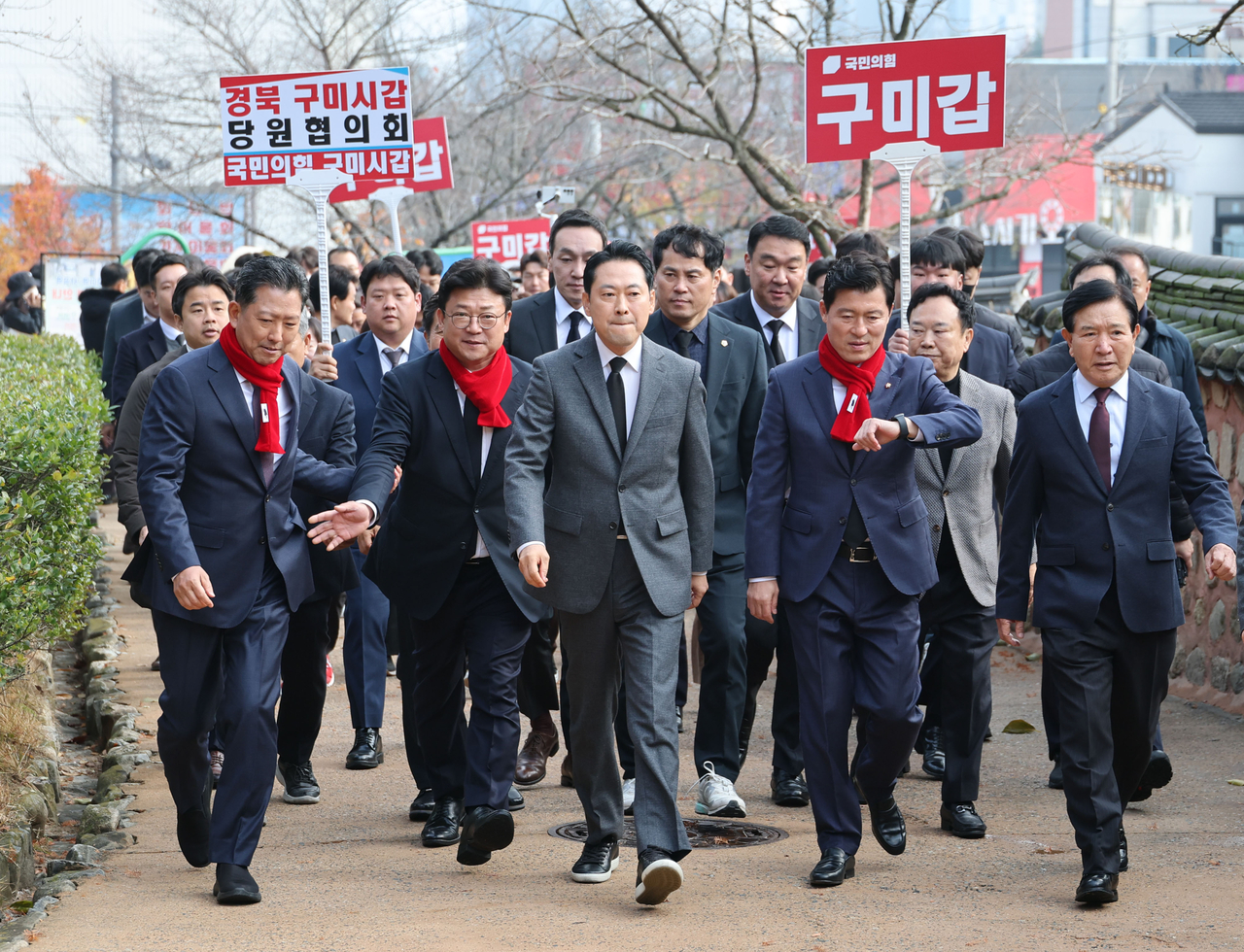
In the People Power Party, internal resistance is rising against the proposal to increase the weight of party-member votes in next year’s primaries for local elections, raising concerns that the party is turning inward.
“Local elections are not contests to choose a party leader. They are arenas where the public directly casts ballots," Rep. Yoon Sang-hyun said Tuesday in denouncing the plan on Facebook. "Reducing the weight of public opinion while increasing the share of party-member votes runs counter to the will of the electorate and risks making the party look closed and insular.”
Addressing the party's struggles with low popularity, Yoon underscored, “Party sentiment matters, but if we lose sight of the direction and balance provided by public sentiment, our party will fall into a deep and narrow pit.”
Rep. Kim Yong-tae of the main opposition party pointed out that “both the People Power Party and the Democratic Party are once again sliding toward politics that caters primarily to their most hard-line supporters.”
“I worry that if the Democratic Party moves toward becoming a more closed party — and the People Power Party gravitates in the same direction — it will only deepen public disillusionment with politics,” Kim said in an interview with KBS.
“To become parties that reflect the public’s common sense and broadly shared expectations, they cannot keep governing with an eye only on their core supporters. They need to move toward being more open and accessible political parties.”
dagyumji@heraldcorp.com