Korean auto giant's first Middle East plant to begin operations in 2026 with capacity for 50,000 vehicles
Hyundai Motor Group Executive Chair Chung Euisun met with Saudi Crown Prince and Prime Minister Mohammed bin Salman in Riyadh to discuss expanding cooperation across mobility and energy sectors, the Korean automaker said Tuesday.
The talks, held Monday at the Ritz-Carlton hotel, marked Chung’s first one-on-one meeting with Saudi Arabia’s de facto leader. The two exchanged views on collaboration in automotive manufacturing, smart city development and next-generation energy, as Hyundai seeks to strengthen its foothold and partnerships in the Middle East.
“Hyundai Motor Group is building a regionally customized factory, which is applied with specialized equipment to meet the industrial demand and customer needs in Saudi Arabia,” Chung was quoted as saying during the meeting. “We will consider expanding the production capacity in regard to market circumstances in the future.”
The Hyundai Motor chief also noted the importance of Saudi Arabia’s Vision 2030, the country’s strategy to reduce dependence on oil, diversify its economy and develop smart cities, as the Korean auto conglomerate is taking part in the project.
“Hyundai Motor Group expects multifaceted business cooperation in next-generation energy sectors such as new renewable energy, hydrogen, small-modular reactors and nuclear power,” Chung added.
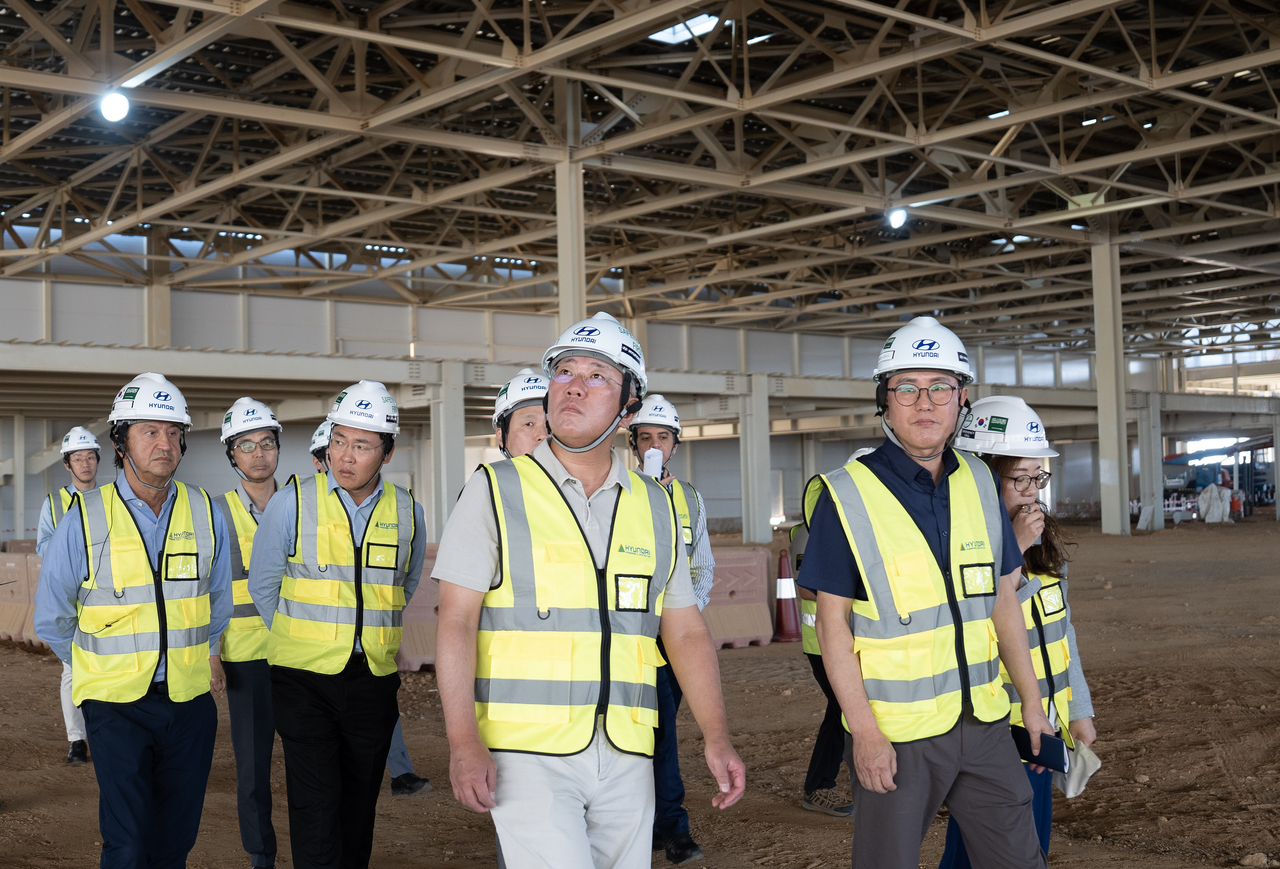
Prior to the sit-down with bin Salman, Chung inspected the construction site of Hyundai Motor Manufacturing Middle East, a 30-70 joint venture between the Korean automaker and Saudi Arabia’s Public Investment Fund. It is Hyundai Motor’s first production site in the Middle East.
The plant, which broke ground in May this year and is expected to begin operation in the fourth quarter of 2026, will roll out both internal combustion engine-powered and electric vehicles with an annual production capacity of 50,000.
Chung underlined that the establishment of HMMME marks Hyundai Motor tackling a new challenge in the Middle Eastern region.
“Under a new environment that is different from other footholds due to high temperatures and the desert, we have to thoroughly prepare in all aspects to provide mobility that can exceed customers’ expectations,” he said.
Hyundai Motor plans to launch Saudi-only editions, expand the lineup of sport utility vehicles favored by customers and roll out eco-friendly cars such as extended-range EVs and hybrid vehicles.
Hyundai Motor’s sister automaker Kia will expand the supply of EVs and hybrid vehicles while promoting the Kia Tasman, a pickup truck launched this year, as a flagship model. Kia also will focus on taking the lead in the purpose-built vehicle market in accordance with Saudi’s smart city project.
The Korean auto group sold 149,604 vehicles in the first nine months of this year, up 8.5 percent from the same period last year. Saudi Arabia accounts for about 34 percent of the Middle Eastern automotive market.
hwkan@heraldcorp.com