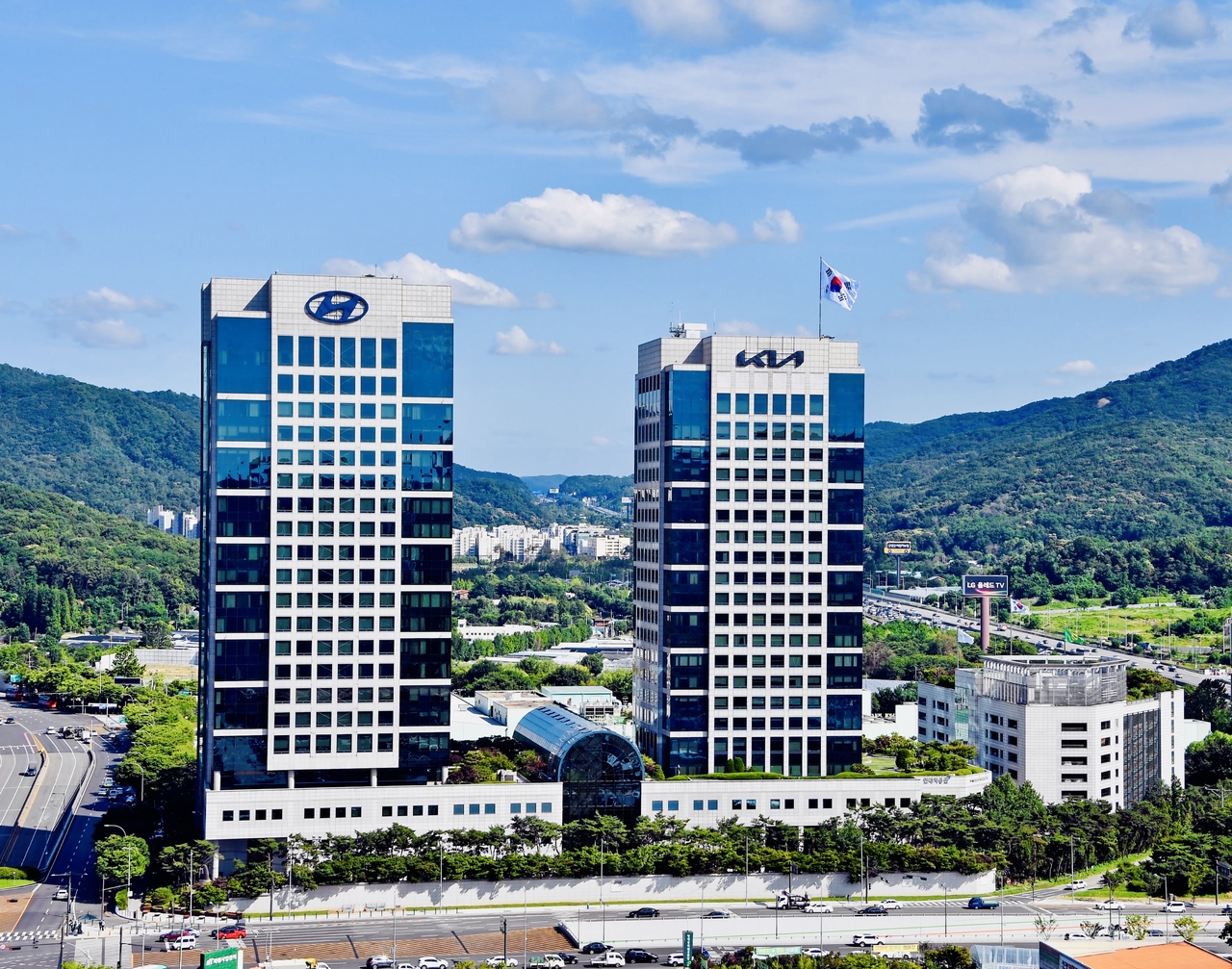
Hyundai Motor Group could face an annual tariff burden of around 8.4 trillion won ($5.9 billion) if the US maintains its current 25 percent import duty on Korean automobiles, according to a report released Wednesday by NICE Investors Service.
The report estimated that Hyundai would shoulder the largest tariff cost among global carmakers, paying over 8 trillion won compared to Toyota’s 6.2 trillion won, General Motors’ 7 trillion won and Volkswagen’s 4.6 trillion won, as Korea remains excluded from the lower 15 percent tariff rate granted to the EU and Japan.
If tariffs remain unchanged, Hyundai Motor Group’s operating profit margin could fall from 9.7 percent to 6.3 percent, a sharper drop than peers such as Toyota (down 1.6 percentage points to 8.1 percent), GM (down 3 points to 5 percent) and Volkswagen (down 1.2 points to 4.8 percent).
GM Korea, which exported about 420,000 vehicles to the US last year, would see the second-largest hit among Korean automakers.
NICE said that if Korea secured the same 15 percent tariff rate as Japan and the EU, Hyundai’s tariff cost would fall to 5.3 trillion won, improving its margin to 7.5 percent, while GM’s burden would drop to 5.1 trillion won.
Although Seoul and Washington reached a tentative deal in July to lower the rate, implementation has stalled amid disputes over Korea’s $350 billion investment package, including how much qualifies as new investment and when it is to be delivered.
“Hyundai Motor Group may absorb some tariff pressure thanks to its strong profitability, but rivals with lower duties could gain pricing leverage in the US market,” NICE said, adding that any further delay could worsen profitability if auto demand weakens next year.
hyejin2@heraldcorp.com