Apartment prices in Gangnam mark 23% on-year hike
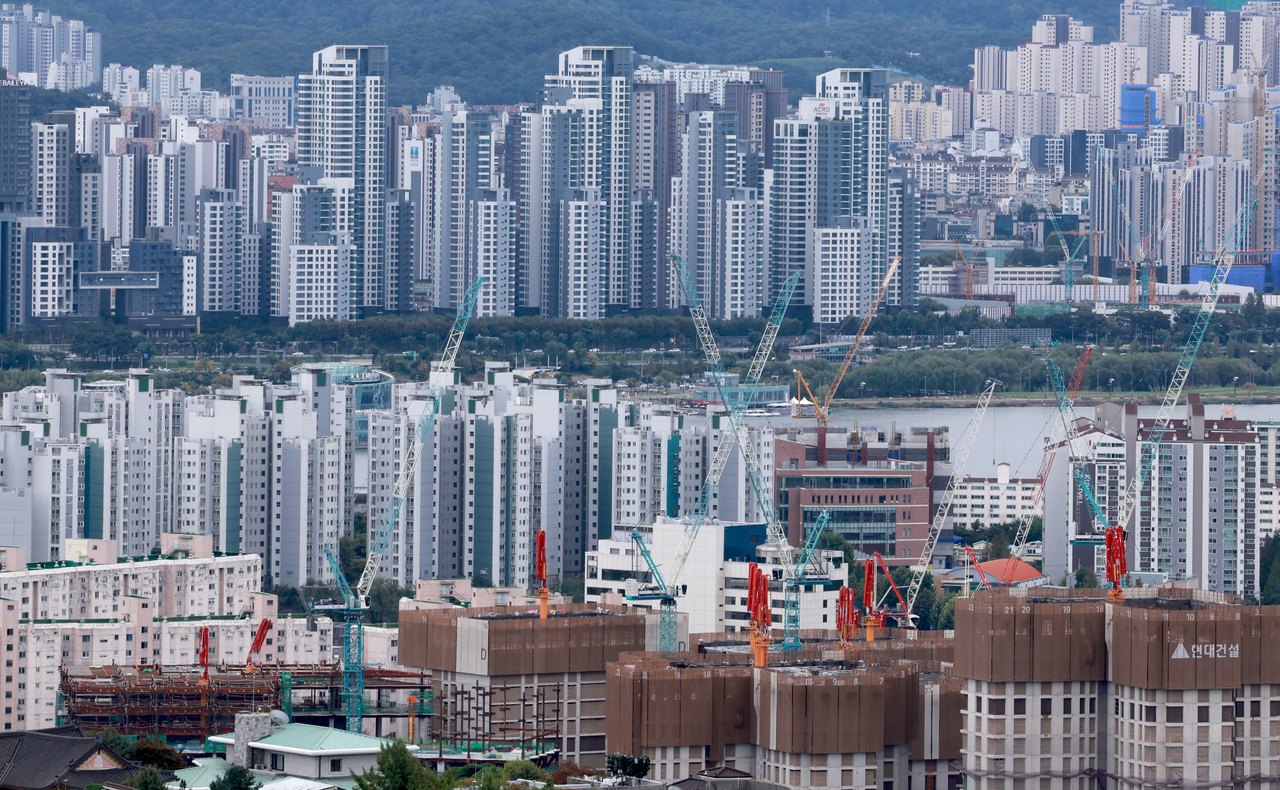
Apartment prices in Seoul's affluent Gangnam region have jumped by as much as over 20 percent compared to 2024 prices, while some areas in the greater Seoul area saw decreases.
An analysis by real-estate broker Ziptoss found that the average price for a home in an apartment block in Gangnam-gu rose 622.9 million won ($436,000), or 22.8 percent, in the third quarter, compared to average prices for the whole of 2024.
Gangnam-gu is one of the three affluent "Gangnam districts" alongside Songpa-gu, and Seocho-gu, where prices increased 21.2 percent.
Apartments in Gwacheon, in Gyeonggi Province, logged the highest percentage increase over the period, jumping by 27.6 percent.
While under governance of different administrative bodies, Seoul, Incheon and the surrounding Gyeonggi Province are often linked together. This area of Greater Seoul, leadis the country in terms of population and most economic indexes.
Bank of Korea data released earlier this month showed that apartment prices in the greater Seoul area were 44 percent more expensive than the average for other regions, the biggest gap since August 2008, when it reached 45 percent.
But the latest Ziptoss data showed that despite the overall rise, the changes in Greater Seoul home prices was extremely uneven.
High-rise apartments in Pyeongtaek, around 65 kilometers south of Seoul, traded 8 percent lower than in 2024, and prices fell 8.6 percent in Icheon, another Gyeonggi Province city.
Every district in Seoul saw apartment prices increase over the period, ranging from steep price hikes in the aforementioned regions, 18.3 percent in Songpa-gu, 21.1 percent in Seongdong-gu, to increases of 1.3 percent in Geumcheon-gu and 1.7 percent in Gangbuk-gu and Dobong-gu at the lower end.
The report showed that apartment prices in Gyeonggi cities closer to Seoul generally tended to increase at a greater rate compared to other regions. It was also found that the price for apartments that are 50-square-meters in size and bigger increased at over 12 percent, while that for smaller apartments rose by 4 percent on average.
"While the overall market for apartments in the capital region is trending up, there is an extreme polarization among the increase, among each region, how old the building is, and how big it is. ... As the cash value declines and investment centers on quality assets (apartments), such multifaceted polarization (of apartment prices) could lead to an increasing gap in assets (for the people)," Ziptoss CEO Lee Jae-yun was quoted as saying.
minsikyoon@heraldcorp.com