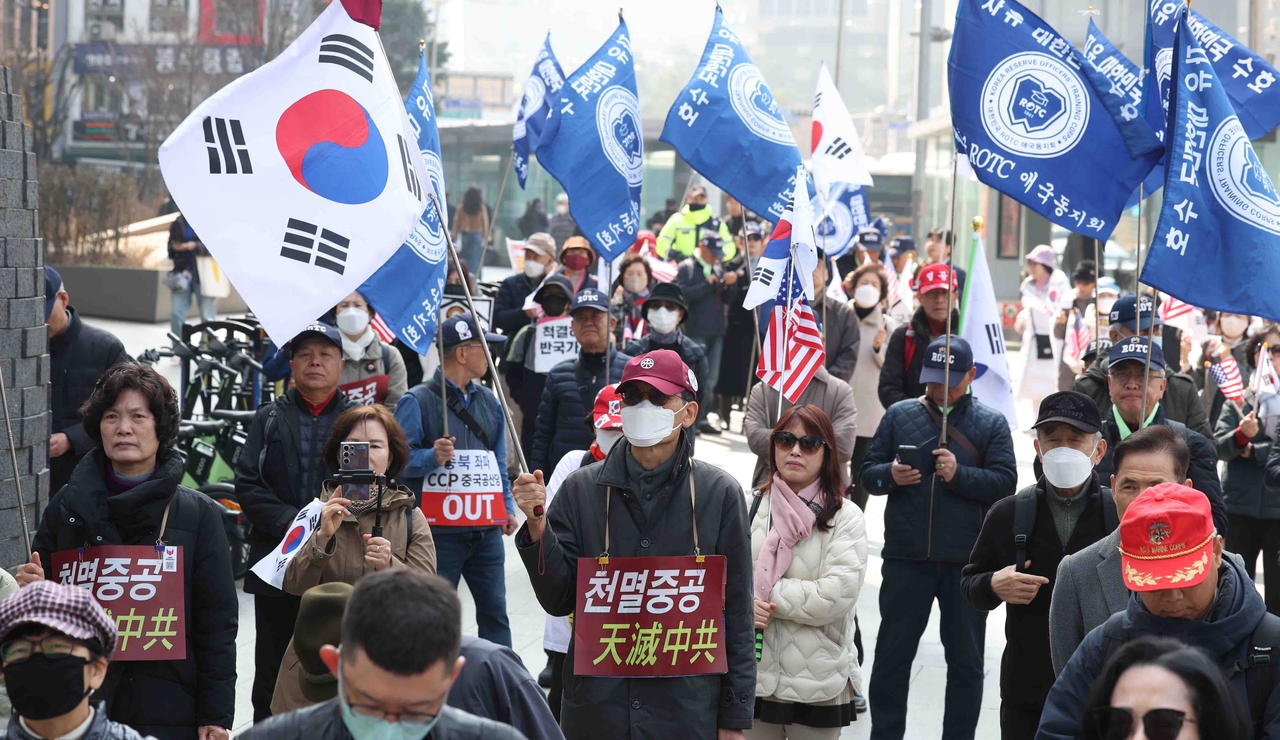
Rep. Kim Tae-nyeon of the ruling Democratic Party of Korea has proposed a revision to the Assembly and Demonstration Act that would ban rallies inciting hatred or violence against specific groups, the lawmaker's office said Friday, amid growing concerns over anti-China sentiment in the country.
The proposal, submitted Thursday, would add rallies “organized primarily to incite or promote discrimination, hatred or violence against specific groups such as races, nationalities or people with disabilities” to the category of prohibited protests.
The current law stipulates that rallies may be banned if they threaten public order or take place at restricted locations and times, but it does not include provisions against demonstrations aimed at a particular group.
Kim said he was proposing the bill as he was concerned over anti-China protests taking places following the government’s decision to allow visa-free entry for Chinese tourists earlier this week.
“Past anti-China protests have revolved around far-right conspiracy theories, such as alleged Chinese involvement in national elections, and have caused serious disturbances across society. But recent rallies have been even more severe,” Kim said.
“Especially after the implementation of a visa waiver program for Chinese tourists earlier this week, such rallies have intensified.”
While acknowledging the importance of freedom of expression, he said such a freedom could not be protected if it spread hatred and hostility toward others.
South Korea has witnessed a sharp increase in rallies targeting China this year, largely among conservative groups claiming Chinese interference in national elections. At least 110 such protests have taken place nationwide over the past year, according to the Korean National Police Agency.
While only one or two anti-China demonstrations were reported each month between September 2024 and February, the number rose to 10 in March, just before the Constitutional Court upheld the Assembly’s impeachment motion against former President Yoon Suk Yeol.
The rallies dipped slightly to nine in April, climbed again to 11 in May, 12 each in June and July, and then surged to 26 in August.
“If our citizens were to encounter hate rallies abroad, they would feel great anxiety and fear,” Kim said. “We must respond firmly to such displays of hatred.”
A five-term lawmaker, Kim also serves as chair of the Korea-China Parliamentary Friendship Association, which includes 102 lawmakers across party lines.
flylikekite@heraldcorp.com