LG bets on optimized training, industry-tailored applications to give Korea competitive AI edge

As artificial intelligence rewrites the rules of global competition, South Korea faces a moment of truth. At the center of this race is LG AI Research, led by two of the country’s top AI strategists, determined to secure Korea’s place among the world’s technological powers.
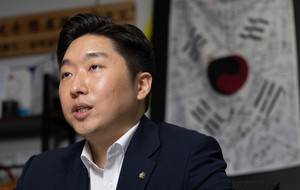
“It’s not just a lofty ambition,” says Lim Woo-hyung, co-head of LG AI Research, in a recent interview with The Korea Herald. “It’s a national mandate.”
Seated next to him, co-head Lee Hong-lak adds, “This isn’t a game where second place is good enough. Korea must achieve technical sovereignty to survive and then scale to compete.”
What they’re describing is more than a corporate agenda. It is, in essence, a geopolitical strategy — one defined by semiconductors, algorithms and the global flow of data.
Sovereign AI: Not just buzzword
Terms such as “sovereign AI,” “Korean-style AI” and “vertical AI” have become frequent fixtures at conferences and in policy documents. But few articulate their real-world implications as clearly as Lim and Lee.
“Sovereign AI doesn’t mean isolationism,” Lim emphasizes. “It means having the freedom to control, modify and evolve our AI systems without foreign dependence.”
In other words, sovereignty in AI equates to technological self-determination — a concept that gains critical importance as AI increasingly permeates areas such as national defense, education, culture and health care.
“The risk isn’t limited to licensing or vendor lock-in,” Lee adds. “It’s about data dependence. When key operations rely on external (application programming interfaces), like ChatGPT, the very data that powers AI, arguably the most valuable national asset of the 21st century, could flow overseas.”
Exaone: Korea’s answer to global LLMs
At the core of LG’s strategy is Exaone, the company’s flagship large language model. Since its launch in 2021, Exaone has undergone rapid development, now standing at version 4.0. While its size and performance match global peers, LG’s unique approach to model training and deployment distinguishes it.
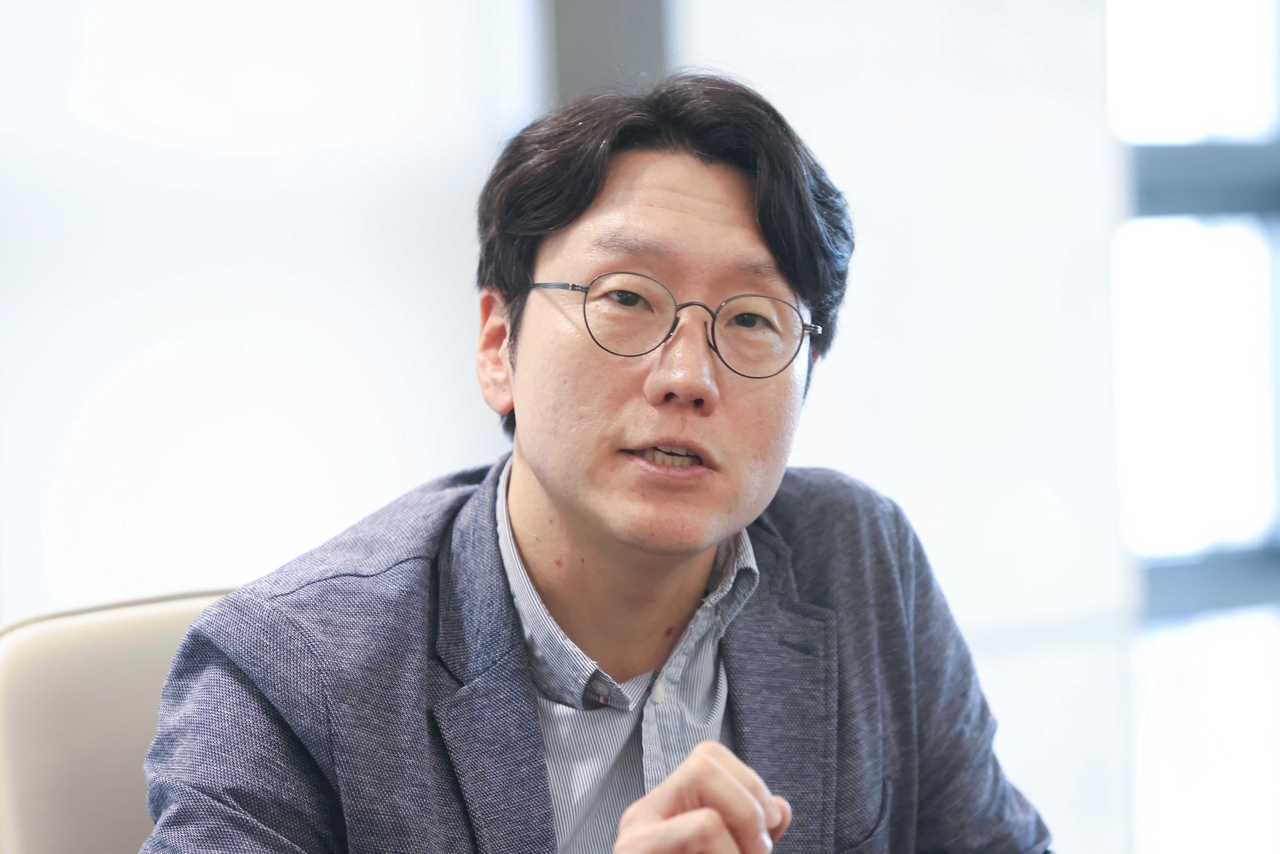
“We knew early on that we couldn’t match the GPU scale of hyperscalers in the US or China,” Lim explains. “So we optimized for efficiency. We invested heavily in data quality, synthetic data generation and cost-effective training methods.”
Exaone is now embedded across various LG Group affiliates, supporting document Q&A systems, intelligent customer service centers and industry-specific use cases.
“This isn’t AI for AI’s sake,” says Lee. “This is vertical AI, solutions tailored to Korea’s industrial backbone: manufacturing, electronics and telecom.”
Multilingual challenge
One of Korea’s enduring challenges in AI is linguistic. The imbalance between English and Korean training data remains stark, limiting Korean language model performance.
But rather than seeing this as a handicap, LG sees opportunity.
“Training Korean in conjunction with multiple languages actually improves Korean-language performance,” Lee notes. “It’s not about creating Korean-only AI. It’s about building a globally competitive AI that also excels in Korean contexts.”
To that end, Exaone 4.0 supports Korean, English and Spanish, with the latter added to align with LG’s growing footprint in North and Latin America.
From underdog to contender
Can Korea realistically join the US and China as an AI superpower?
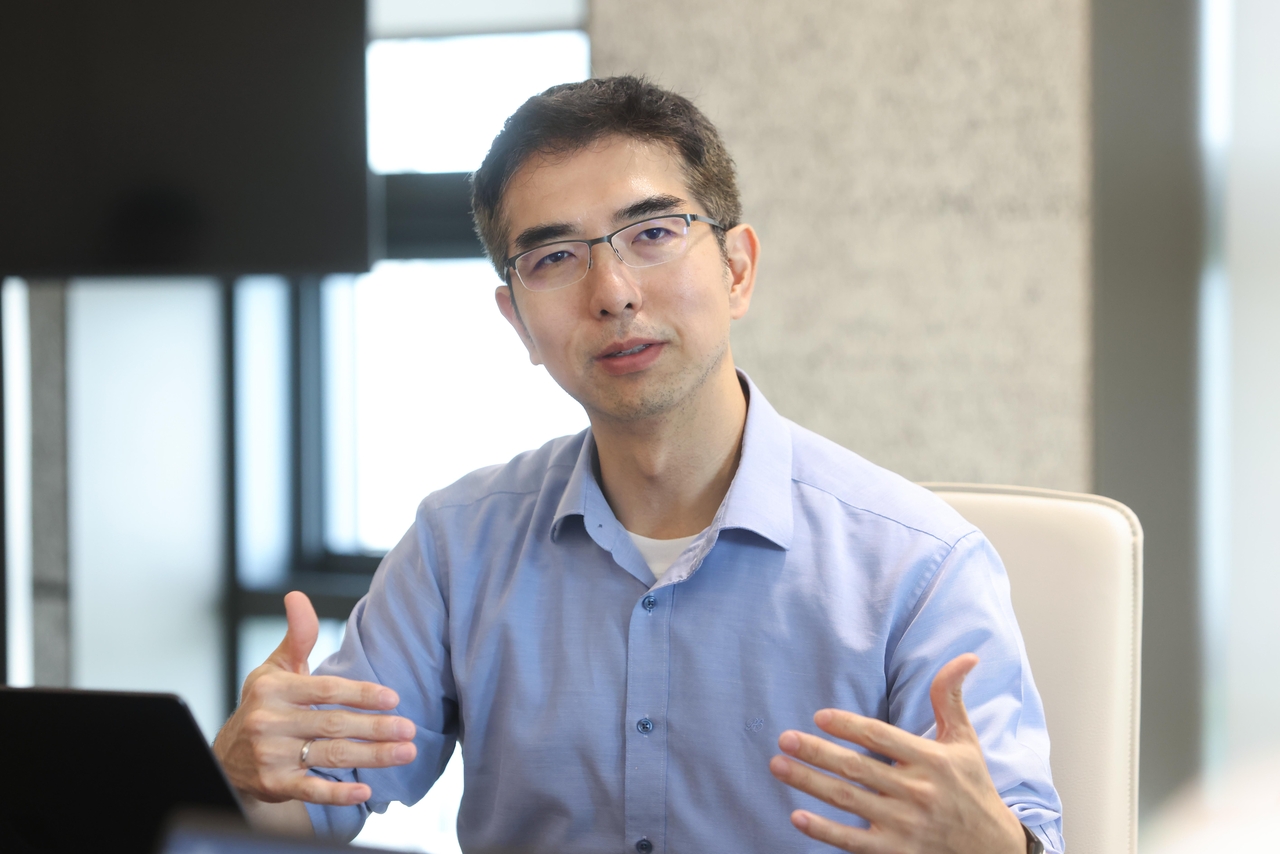
“We must. And we can,” Lee says without hesitation. “If you look just beyond the top two, that’s where Korea can lead.”
Lim is more direct. “This isn’t about ambition. It’s about survival.”
Still, the duo is acutely aware of Korea’s limitations. “Chinese firms such as Alibaba operate with tens of thousands of GPUs,” Lim says. “We don’t have that kind of infrastructure. But we compensate with sharp focus and efficient execution.”
Another hurdle is talent. To address this, LG launched its own AI graduate school, the first corporate-run AI school in Korea with government accreditation.
“We’re not just building talent,” says Lim. “We’re building a strategic moat. Some call it that. We call it nation-building.”
Korea’s AI moment
South Korea has historically missed major industrial revolutions, be it early search engines or global platform businesses. With AI, there’s a sense that the stakes are different.
“This may be Korea’s last (and) best chance to lead, not follow,” Lee says.
“Global trust in AI is still up for grabs,” he adds. “Korea, with its technological depth and industrial discipline, can build an AI ecosystem that is not only powerful but principled.”
From sovereignty to scalability, and from constraint to strategy, LG’s quiet yet determined AI push is more than a corporate initiative. It is a national test — a question of whether a small but ambitious nation can define the digital rules of the 21st century.
The race for sovereign AI is intensifying, with countries rushing to build their own large language models to secure technological independence. Korea is no exception. The government has tapped five leading companies to spearhead the creation of homegrown models tailored to national priorities. In this high-stakes contest, The Korea Herald launches a special series exploring Korea’s AI industry, its standing in the global arena, and the rise of Korean-language-focused systems. This third installment explores Korea’s pursuit of AI sovereignty and its survival strategies in the face of global competition through an in-depth interview with leading AI experts. – Ed.
yeeun@heraldcorp.com