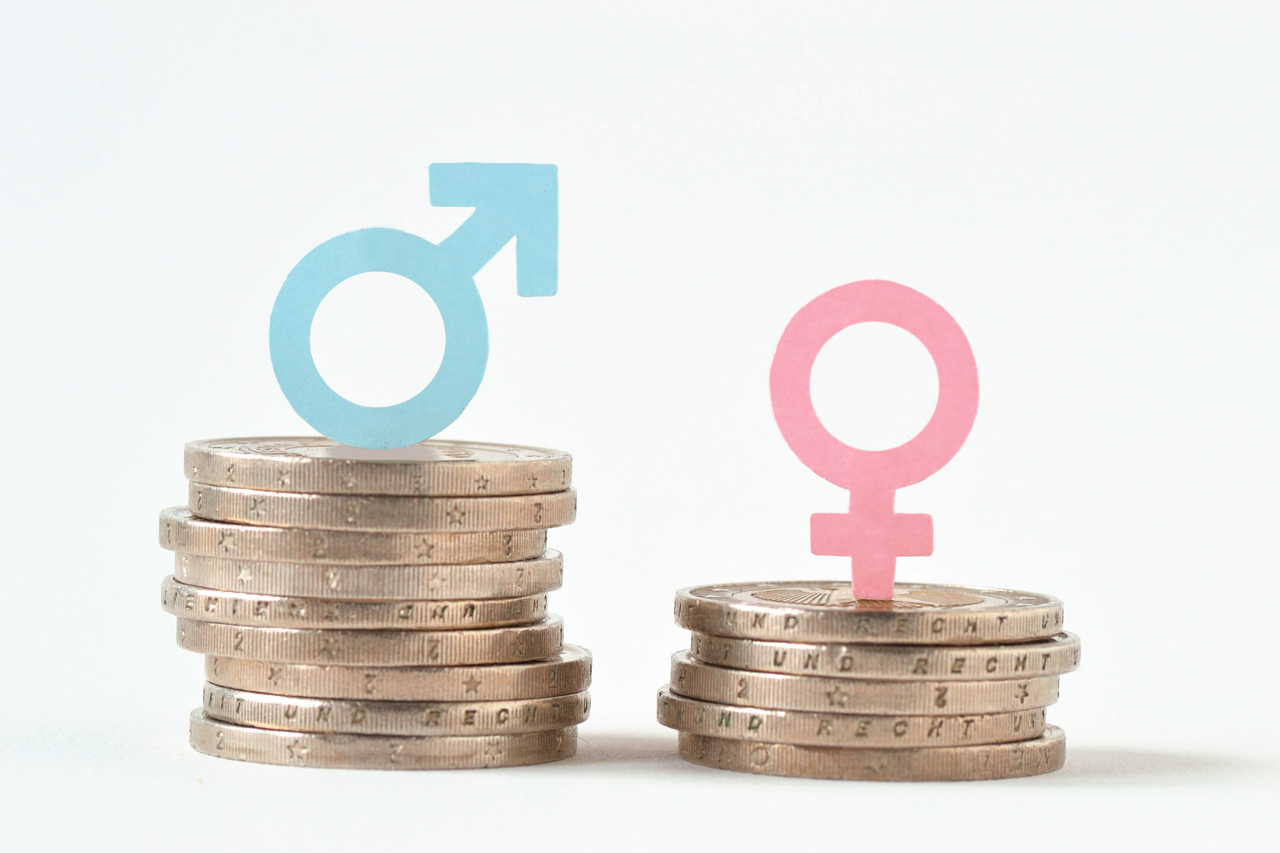
The gender wage gap in South Korean companies widened in 2024, with women earning nearly a third less than men on average, government data showed Friday.
According to the Ministry of Gender Equality and Family, an analysis of 2,980 corporate reports filed with the Financial Supervisory Service’s Data Analysis, Retrieval and Transfer System found that male employees earned an average of 97.8 million won ($70,317) in 2024, compared to the 67.7 million won for women.
As a result, the wage gap stood at 30.7 percent, up 4.4 percentage points from 2023’s 26.3 percent.
While both men and women saw declines in average wages compared to 2023, wages for women fell far more steeply, showing a 6.7 percent drop compared to men at 0.8 percent.
In its official report, the Gender Ministry stated that the sharper drop in women’s earnings, particularly in industries with large workforces such as manufacturing, finance, insurance, and information and communications, widened the overall gap.
By sector, the largest disparities were recorded in wholesale and retail at 44.1 percent, followed by construction at 41.6 percent and information and communications at 34.6 percent.
Smaller gaps were seen in arts, sports and leisure services at 15.8 percent, accommodation and food services at 17.7 percent, and electricity, gas and steam supply at 22.5 percent.
The ministry’s data also showed differences in job tenure.
While male employees at listed companies worked for an average of 11.8 years, women worked an average of 9.4 years — a 20.9 percent gap.
“Generally, smaller differences in tenure are associated with narrower pay gaps,” the ministry stated in its official press release. “However, in the private sector, the gender pay gap widened despite shorter tenure differences, showing that factors such as rank, job type and employment status also play critical roles.”
Such trends showed visible differences in public institutions.
An analysis of 344 state-run organizations showed male workers earning 72.7 million won and female workers 58.2 million won on average, reflecting a wage gap of 20 percent, a decrease from 22.7 percent in 2023.
The tenure gap in public institutions also fell sharply in 2024, from 29 percent to 19.9 percent.
In accordance with the data, the ministry stated that it plans to refine future gender wage analyses to include additional variables such as age, position, employment type, career breaks and job characteristics to improve reliability and accuracy.
The Gender Ministry added that it also plans to push for a mandatory wage disclosure system, requiring companies to publish pay data by gender to improve transparency and accountability.
lee.jungjoo@heraldcorp.com