Chae Hwi-young stresses urgent need for funding, legal updates and global collaboration
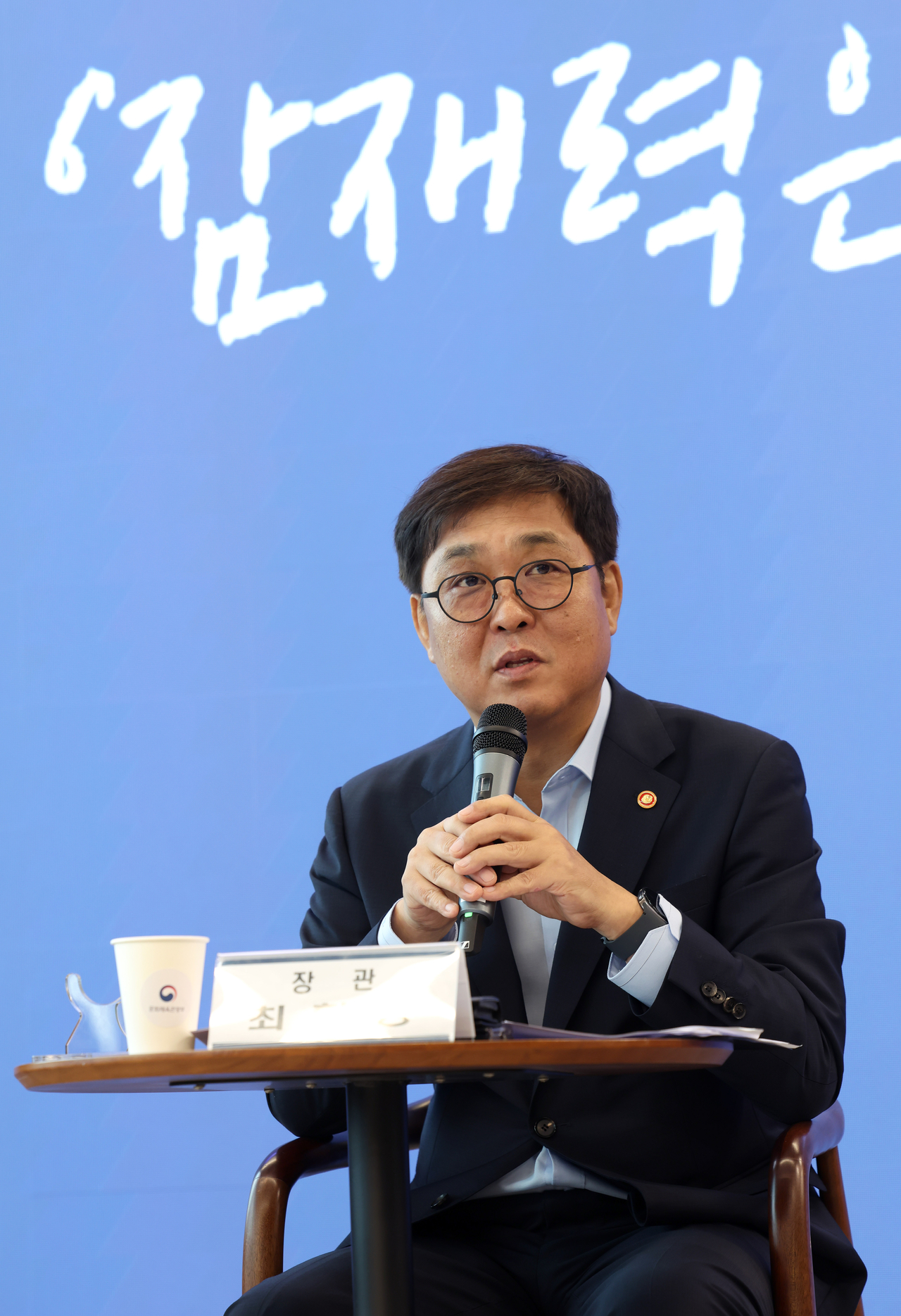
South Korea’s new Minister of Culture, Sports and Tourism, Chae Hwi-young, on Thursday called for an increase in government funding and a revamp of outdated laws to sustain the momentum of Korean culture and revive the country’s struggling film industry.
Marking one month in office, Chae met the press in Seoul, where he voiced alarm about the fragility behind K-culture’s global success.
“What I saw and heard on sites was far different from the glamorous image — the reality was dismal,” Chae said. “While enormous opportunities have opened up, there are also widespread concerns that ‘this is the peak.’ If we simply revel in the current festival-like mood, we risk falling into a pit in the near future.”
Chae highlighted the domestic film industry as his top priority, noting that fewer than 20 local films with budgets of over 3 billion won are being made this year, as investment has nearly dried up.
“With less than 20 films produced annually, film industry professionals cannot make a stable living. The entire ecosystem is collapsing,” he said. Citing a recent case of director Lee Chang-dong, Chae explained that Lee was forced to return government funding for a new film after failing to secure additional investment, ultimately taking his project to Netflix instead. Lee directed the 2018 film “Burning,” the first Korean movie to reach the final nine-film shortlist for Best Foreign Language Film at the 91st Academy Awards.
He also stressed the need to revise the Promotion of the Motion Pictures and Video Products Act, which recognizes films only if they are screened in theaters.
“Even if a production goes through the same script and filming process, it is not legally considered a ‘film’ unless shown in theaters. (Streaming platform) releases are not recognized as films under the current law, which no longer reflects today’s reality,” Chae said.
On international collaboration, Chae said that while foreign production companies are increasingly seeking joint projects with Korea, the government lacks any budget to support them.
“K-culture doesn’t have to be ‘Made in Korea.’ It can also be ‘Made with Korea.’ But we don’t have funds for a ‘with Korea’ program,” he said.
The minister also addressed the chronic shortage of concert venues for K-pop.
“Many overseas fans travel to Korea, the mecca of K-pop, but often cannot attend concerts because of the lack of venues,” he said.
While Japan has 30 indoor venues with over 10,000 seats and five domes, Korea currently has just eight venues of that size and no domes at all.
“BTS once performed in Busan, generating an estimated economic impact of 1.2 trillion won. But without the infrastructure to hold such concerts regularly, we are missing out on opportunities,” he added.
Chae further criticized the limited share of the culture budget in the government’s spending plan. Although the culture budget will rise 9.2 percent from 8.8 trillion won this year to 9.6 trillion won next year, its proportion in the government’s total budget will inch up only from 1.31 percent to 1.32 percent.
“South Korea’s culture budget ratio ranks in the mid-to-lower tier among OECD countries. There are too many urgent tasks, which makes this all the more regrettable,” he said, adding that the culture budget should account for at least 2 percent of total spending in the long run.
jaaykim@heraldcorp.com