Data shows baked goods prices have risen faster than average, but issue more complex than simply placing blame on bakers
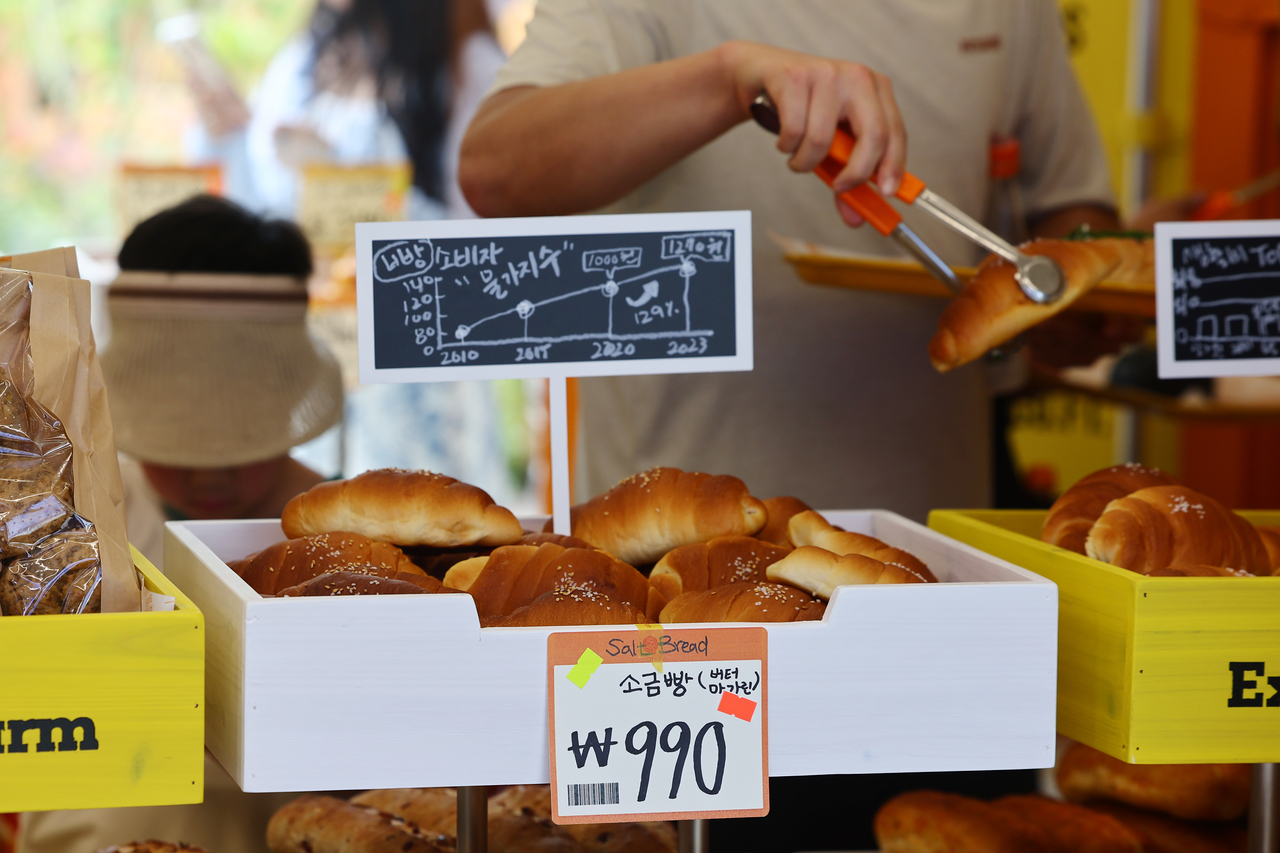
Recently, the prices of baked goods have become a hot topic in South Korea, with many criticizing them as unreasonably high. Industry insiders push back against the criticism, calling it unfair and citing broader price hikes that have driven up production costs.
According to the latest data from Statistics Korea, the price of bread in August rose by 6.5 percent on-year, rising much faster than the overall increase in the consumer price index for the same period, which increased by just 1.7 percent.
The price index for August marked 138.61, with 2020 as the base year at 100. This means the price of bread is 38.61 percent higher now compared to the baseline set in 2020.
The 6.5 percent rise in August marks the steepest on-year increase since July 2023, when bread prices jumped by 8.6 percent from the previous year.
In comparison, the on-year increase for the country's consumer price index was 1.7 percent. The CPI as of August was 116.45, marking a 16.45 percent increase from the 2020 baseline.
Are baked goods too expensive in Korea?
A pop-up store run by a popular YouTuber recently sparked debate about whether baked goods in South Korea are overpriced. Syuka World’s store sold salt butter rolls, bagels and baguettes for just 990 won (71 cents), roughly a third the price of similar items at local bakeries.
Local bakery owners cried foul, arguing that the one-off store was able to charge such low prices because it bypassed the conventional supply chain. In light of the controversy, the YouTuber issued a public apology and said he never intended to criticize local suppliers.
The Korea Fair Trade Commission's recent analysis of the baking industry found that several factors, such as distribution chain costs, a reliance on imported ingredients and relatively high labor expenses, are driving up the price of bread.
The analysis found that selling and administrative expenses — referring to all nonproduction costs — account for 42.4 percent of total production costs in the baking industry. Ingredients added up to 31.6 percent of the cost, while personnel expenses stood at 28.7 percent, significantly higher than the 8.1 percent average for the food and beverage industry overall.
Some have suggested that the lack of competition in South Korea's bakery industry, which is dominated by major franchises, is a key factor determining the price of baked goods. A 2022 report from Korea Agro-Fisheries & Food Trade Corp. showed that affiliates of SPC Samlip Group accounted for 83.4 percent of all bread-manufacturing companies here in 2021.
The report's conclusion was not revealed, but it reportedly pointed out that there were structural issues in the baking industry related to processing and distribution of major ingredients for baked goods.
minsikyoon@heraldcorp.com