E-commerce giant bets on neighborhood shops, leaner delivery model as rivals Baemin, Naver double down on logistics
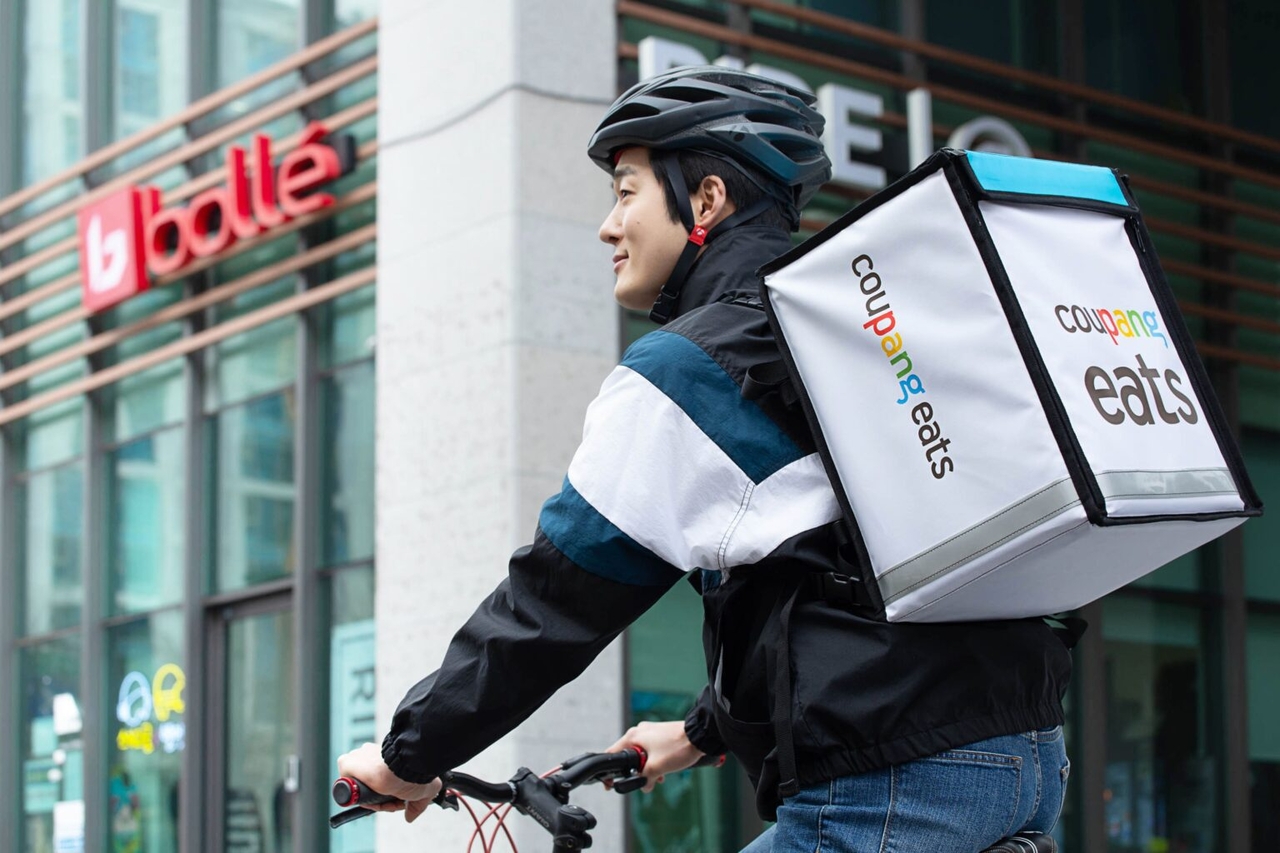
Coupang, which made overnight delivery a nationwide norm, is racing the clock again —this time with a quick commerce drive delivering local shop goods in under an hour, without stocking a shelf.
The company has quietly begun rolling out a new service under a Shopping tab in its Coupang Eats app, starting with a pilot in Seoul’s Gangnam-gu earlier this year. The initiative has since expanded to 10 neighborhoods across the city, including Seocho, Mapo and Songpa.
Unlike most quick commerce providers that rely on partnerships with well-known supermarkets and convenience stores, Coupang has taken a different tack by opening channels that serve smaller, mom-and-pop shops, alongside those big-name brands.
The new program grants users instant access to small shops across 13 categories, including flowers, pet supplies and stationery, with deliveries arriving in 30 to 60 minutes.
“The Eats app gives merchants a new way to reach customers,” a company official said, adding that the company plans to expand the service gradually over time.
The new initiative signals a strategic departure from the company’s earlier logistics-heavy quick commerce venture, Eats Mart, which is now being phased out and scheduled to shut down by the end of August.
Industry observers say Eats Mart’s logistics-heavy model was too costly to scale, while the new Shopping service takes a leaner approach by sourcing orders directly from neighborhood shops and bypassing the need for its own logistics network.
“Given that Coupang Eats is a latecomer to quick commerce, with players like Baemin already enjoying a significant head start, the company will need a competitive edge to hold its ground in an increasingly cutthroat market,” said one official, noting that its hyperlocal yet efficient strategy could be key to offsetting its late entry.
High-stakes one-hour race
Korea's quick commerce market is gaining momentum, valued at $3.19 billion today and forecast to grow to $4.3 billion by 2030, according to global research firm Statista.
To scale their reach, major players are adopting dual-track strategies that combine direct inventory with third-party merchant integration.
Baedal Minjok, or Baemin, which has long led Korea’s quick commerce market with its B Mart service, is now doubling down on logistics with a new in-house system called Bitlozi, designed to digitize and unify its inventory and delivery operations.
Baemin currently operates around 70 pick-and-pack centers, where products are prepared and dispatched for rapid delivery. What began as a stand-alone service has since expanded through partnerships with more than 19,000 retail locations, mostly convenience stores and supermarkets.
Portal giant Naver has also stepped deeper into the quick commerce race with its new service, Now Delivery. The company is leveraging its vast user base, over 45 million monthly active users as of May, while integrating thousands of convenience stores and supermarkets.
Just as Naver is leveraging its massive user base, Coupang’s path forward will likely hinge on the strength of its broader Wow Membership strategy, which reached 15 million subscribers by the end of last year.
The subscription bundles perks across Coupang’s ecosystem, including overnight shipping, free food delivery and streaming, with hyperlocal shopping now added to the mix.
“Quick commerce isn’t just about speed but a battle to anchor every part of the consumer’s spending to a single platform,” said one industry insider. “The players that offer real convenience and meaningful price advantages will ultimately win the market.”
minmin@heraldcorp.com

![[Graphic News] S. Korea ranks 9th in noodle consumption](https://wimg.heraldcorp.com/news/cms/2026/09/29/news-p.v1.20260929.e3945338add94d57ab3f00f8e6781416_T1.gif?type=h&h=800)