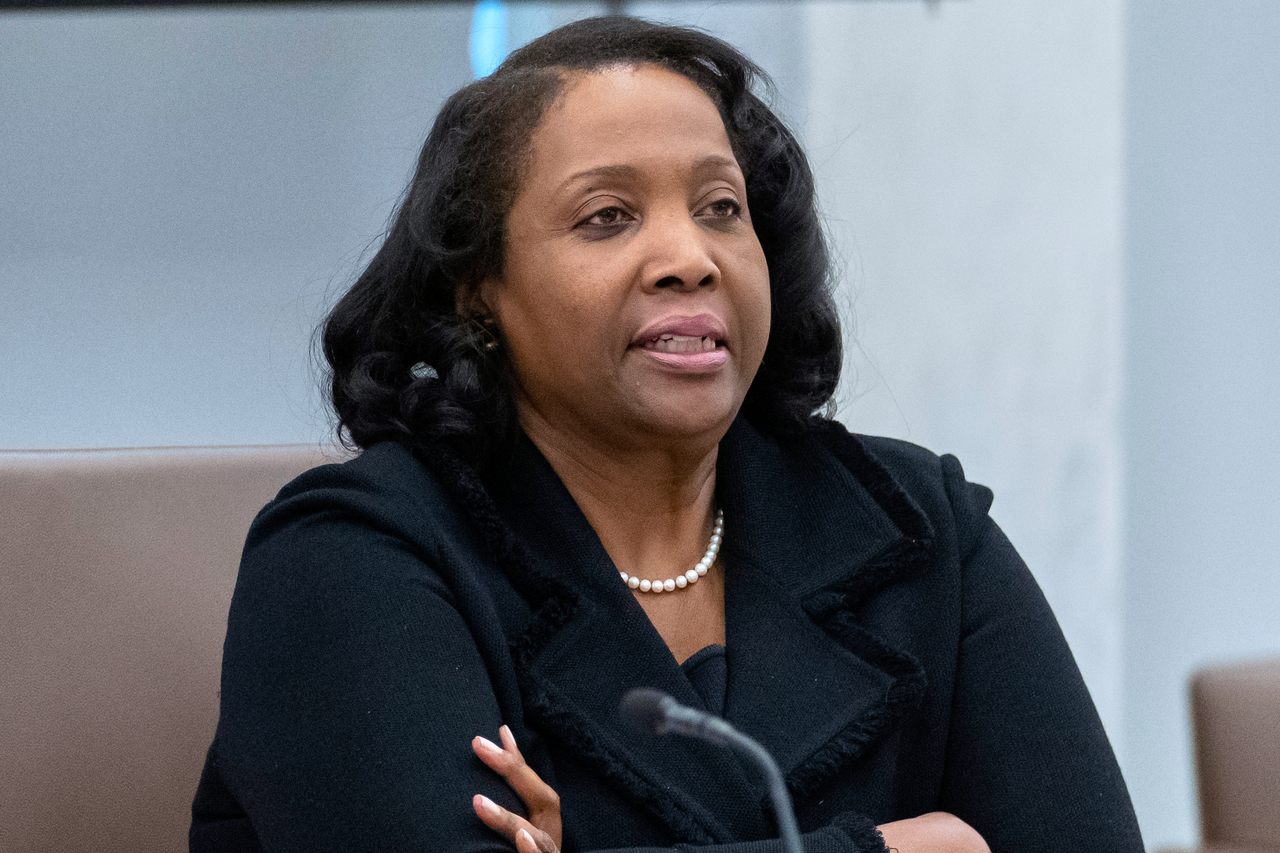
WASHINGTON (Reuters) -- Federal Reserve Gov. Lisa Cook will file a lawsuit to prevent President Donald Trump from firing her, a lawyer for the embattled central bank official said Tuesday, kicking off what could be a protracted legal fight over the White House's effort to shape US monetary policy.
"His attempt to fire her, based solely on a referral letter, lacks any factual or legal basis. We will be filing a lawsuit challenging this illegal action," Cook's lawyer, prominent Washington attorney Abbe Lowell, said in a statement.
The statement was issued a day after Trump said he would fire Cook, the first Black woman to serve on the central bank's governing body, for alleged "deceitful and potential criminal conduct" related to mortgages she took out in 2021.
Trump's attempt to remove her, unprecedented in the 111-year history of the nominally independent US Federal Reserve Board, is consistent with his style of breaking norms and prompting opponents to challenge him in court.
It follows other largely successful efforts to bring other elements of the US government under his direct control. Since returning to office in January, the president has overseen the departure of hundreds of thousands of civil servants, dismantled several agencies and withheld billions of dollars of spending authorized by Congress.
"We need people that are 100 percent above board and it doesn't seem like she was," Trump told reporters at a meeting. He said he had several "good people" in mind to replace Cook but would abide by any court decision that left her in her job.
Trump pressured the Fed to lower interest rates during his first term in the White House and he has escalated that campaign in recent months. The president has demanded that rates be cut by several percentage points and threatened to fire Fed Chair Jerome Powell, although he recently backed down from that.
Cook's departure would allow Trump to pick a majority of the Fed's seven-member board, including two incumbents and the pending nomination of White House economist Stephen Miran. Trump said he may consider Miran, whom he nominated for a temporary seat on the Fed board that is due to expire in January, for Cook's seat should it become vacant. The Wall Street Journal reported that former World Bank Group President David Malpass, a longtime Trump ally, was also discussed for the job.
The Fed said in a statement that Cook and other board members serve 14-year tenures and cannot be removed easily from office, in order to ensure that monetary policy decisions are based on economic data and "the long-term interests of the American people."
Though Trump on Monday said Cook's firing was "effective immediately," the Fed's statement indicates that it sees Cook's status as unchanged. The central bank next meets to set interest rates on Sept. 16-17, and based on the Fed's statement it appears it would take a court ruling between now and then for her to be prevented from participating.
Trump said in a letter to Cook Monday that he had "sufficient cause" to fire her because she had described separate properties in Michigan and Georgia as primary residences on mortgage applications before she joined the Fed in 2022.
In recent months Trump has fired several Black women who held senior government positions, including the head of the Library of Congress and the chair of the National Labor Relations Board.
William Pulte, a Trump appointee who is director of the Federal Housing Finance Agency, first raised questions about Cook's mortgages last week and referred the matter to US Attorney General Pamela Bondi for investigation. Bondi has yet to say whether the Justice Department will take action.
Cook took out the two mortgages in question when she was an academic.
She is due to serve on the Fed board through 2038, but the Federal Reserve Act of 1913 allows removal of a sitting governor "for cause."
Until now, that power has not been tested. US presidents have largely taken a hands-off approach to Fed matters to ensure confidence in monetary policy.










