Heath Tarbert, president of world’s second-largest stablecoin issuer, holds talks with KB, Shinhan, Hana, Woori, BOK in Seoul on digital money strategy
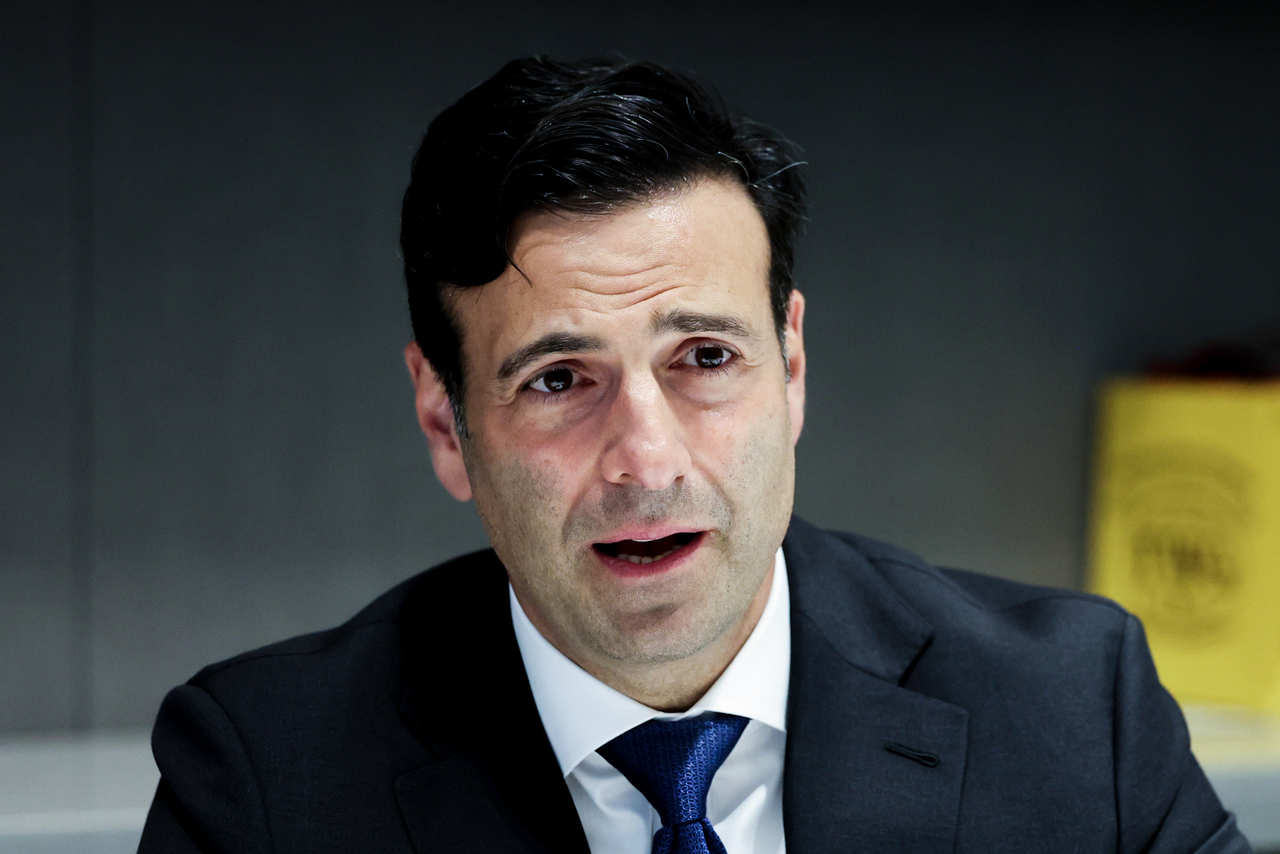
Circle President Heath Tarbert described South Korea as a strategically important market for stablecoin adoption in the company’s global expansion, in an interview with The Korea Herald during his vist to Seoul on Thursday.
“Korea is one of the most highly developed digital asset markets. It has a thriving developer community, sound regulation and a responsible government as a G20 nation,” Tarbert said. “Those are the kinds of places Circle likes to do business.”
His first trip to Seoul comes at a pivotal moment for stablecoins, following Circle’s June listing on the New York Stock Exchange and the passage of the Genius Act in July, the first US federal framework for stablecoins.
“We view Korea as a major economy and long-term market for Circle, not just a pilot or tested,” Tarbert said.
Local media cast the visit as a rare move by the president and chief legal officer of the world’s second-largest stablecoin issuer, underscoring Korea’s accelerating embrace of digital asset regulation.
During the visit, he reportedly met with executives from KB Kookmin, Shinhan, Hana and Woori banks, as well as Dunamu, operator of Upbit, and Kakao Pay. He also met with regulators, including Bank of Korea Gov. Rhee Chang-yong, who confirmed the meeting took place at Tarbert’s request.
“We’re meeting exchanges, banks, payment companies and other traditional businesses for whom stablecoins could help with cross-border sales and transactions,” Tarbert said. “They’re all names you’ll know.”
Tarbert outlined Circle’s Korea strategy as a mix of regulatory engagement, technology and partnerships. “Our approach is threefold: first, sound regulation — we believe this technology needs strong regulation to grow; second, best-in-class technology; and third, partnering with the best local players,” he said. With banks, the focus is fiat-to-stablecoin on-ramps, while with tech firms, the focus is on integration into consumer platforms, he emphasized.
Prudence, not paralysis
Amid global momentum, Korea is moving to establish its own stablecoin framework in line with President Lee Jae Myung’s pledge to cut reliance on dollar-based tokens and bolster monetary sovereignty.
Tarbert said Korea is not behind, but should also not delay.
“The US only passed the Genius Act last month and still hasn’t passed comprehensive market structure legislation,” he said. “This is a good time for Korea to move prudently, but not wait too long.”
The Financial Services Commission plans to submit a won-backed stablecoin bill to the National Assembly by October. Lawmakers are also advancing what could become the country’s first legal framework for stablecoins, defining digital assets and specifying who may issue won-pegged tokens.
Industry groups have urged lawmakers to focus on interoperability and technical standards. Financial technology leaders such as Toss, Kakao Pay and Naver Pay, as well as major banks, are preparing to enter the market.

The Bank of Korea has urged caution, saying issuance should begin with regulated banks and expand gradually. In response, eight major banks have formed a consortium to launch a won-pegged stablecoin by early 2026.
Tarbert, a former Commodity Futures Trading Commission chair and senior US Treasury official, welcomed the BOK’s prudence, but warned against paralysis. “As a former regulator, I see the technology is here and growing. Prudence is necessary, but ignoring it is not an option.”
Digital won, dollar in parallel
The debate in Seoul over whether to prioritize dollar-denominated stablecoins or a won-based version is, in Tarbert’s view, a false choice.
“A digital won will be important in the future — whether a central bank digital currency, a stablecoin or both,” he said. “At the same time, Korea should have access to a digital dollar for seamless conversion.”
He stressed that such conversion with reserve currencies is vital for Korea’s trade-driven economy. “Otherwise, families and businesses pay high fees to trade internationally.”
He added that Circle would welcome collaboration on a won-backed stablecoin, as long as it is regulated, trusted and transparent.
Tarbert also voiced support for Korea’s CBDC research, despite Washington’s retreat on the issue under President Donald Trump. He noted the Genius Act effectively prohibits a US CBDC, citing concerns about privacy, bank disintermediation and government overreach.
“Other countries may pursue CBDCs, but the US has chosen to digitize the dollar through regulated stablecoins instead,” he said. “Still, CBDCs and stablecoins can coexist, and Circle will support that with its system in other countries.”
Compliance, then convenience
Circle has distinguished itself through compliance and institutional trust, focusing on partnerships with regulated firms such as BlackRock and Fidelity. Its June IPO reinforced that notion, positioning it as a compliant alternative for investors.
Tarbert stressed that his Seoul visit was about building trust, not cutting immediate deals. “It’s Circle’s way: We engage first with local partners and government, entering through the ‘front door.’ Listening and understanding comes before launching," he said. "Korea is strategically important, so we’re here to build relationships.”
Beyond regulatory engagement, Tarbert emphasized Circle’s ambition to build the infrastructure for what its founder has called an “internet financial system.”
He highlighted Circle’s suite of products, from wallet services to the Circle Payments Network, which runs USDC on 24 blockchains to make cross-border payments faster and cheaper for everyday users. “The goal is to make sending money as simple as email,” he said.
Tarbert reiterated that stablecoins are payment instruments, not speculative assets. “Stablecoins are digital money, not investments. They’re backed one-to-one, like tokenized cash. If it fluctuates, it’s not a stablecoin,” he said.
He welcomed the Genius Act for codifying those principles, but stressed that is only the start.
“Up next in regulatory push is market structure regulation,” he noted. “Stablecoins are covered, but commodities, exchanges, custody and trading still lack federal standards. That’s the next focus in the US.”
Tarbert called stablecoins a real-world payment innovation, modernizing how money moves in a safer, more efficient way. But he was clear they will not replace fiat.
“Stablecoins will grow as a higher-utility form of electronic money, but fiat currencies and banks will remain vital. Both systems will coexist, like cable TV and streaming.”
jwc@heraldcorp.com

![[Graphic News] Hiking accidents peak in October](https://wimg.heraldcorp.com/news/cms/2026/10/20/news-p.v1.20261020.811b2e48d8404d3d8b0dc55cf4d42e6c_T1.gif?type=h&h=800)