The German Embassy in Seoul showcased what it called "techno music diplomacy" in Seoul on Saturday.
Hosting an all-night techno event that ran from 8 p.m. to 6 a.m., the show attracted young techno enthusiasts in their 20s and 30s.
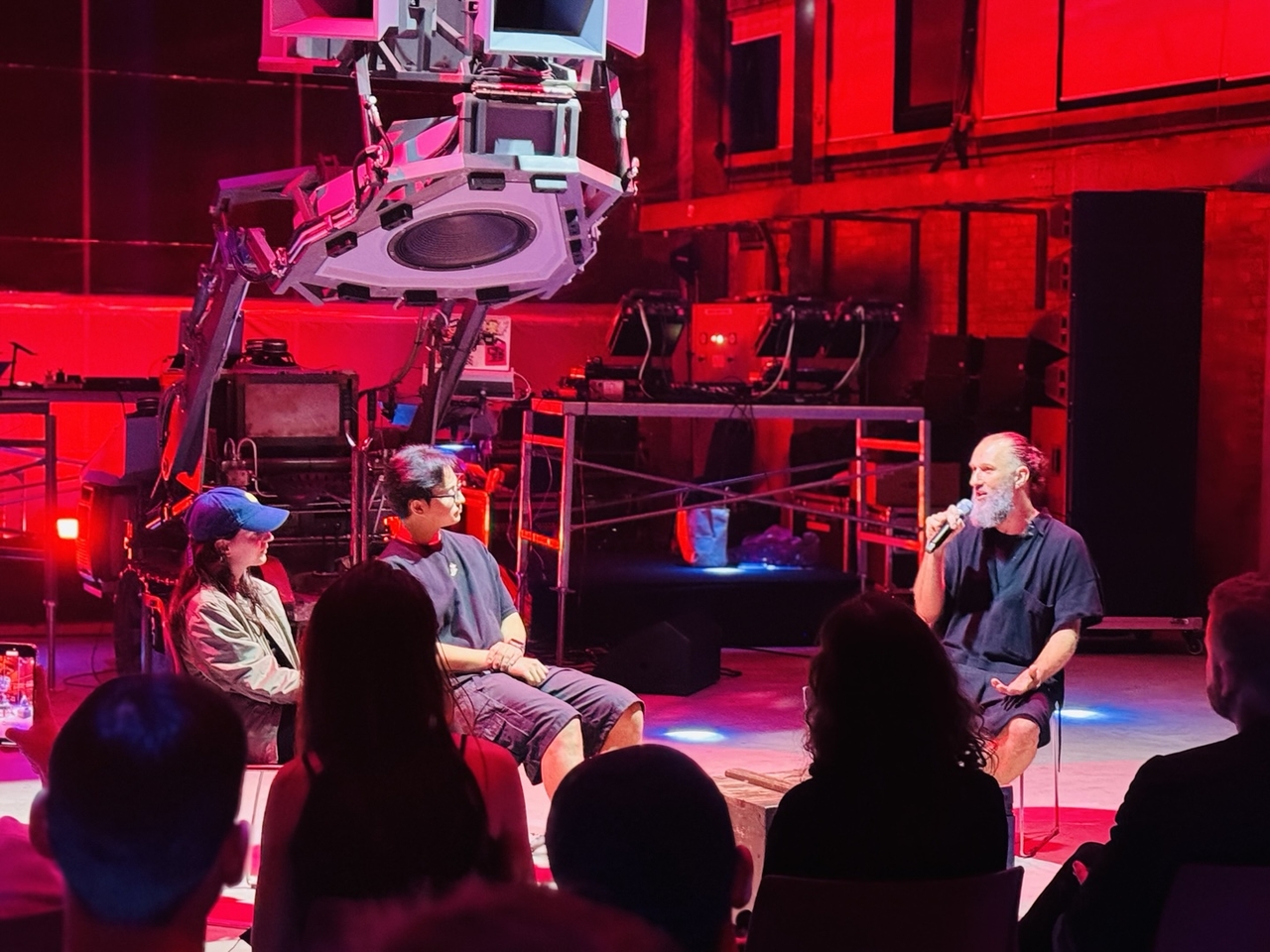
The event featured German sound artist Nik Nowak, whose installation The Mantis blends art, politics and history using 23 Cold War-era loudspeakers, exemplifying the intersection of club culture and sociopolitical expression.
In his remarks at the artist talk, David Bieger, public diplomacy and press officer at the German Embassy, told The Korea Herald that the embassy’s techno diplomacy program is designed to promote cultural exchange to showcase Germany’s vibrant techno scene.
He highlighted Berlin techno’s UNESCO recognition and its role as a creative and inclusive space, noting that East Asian DJs, including Joon Kwak, have participated in the program.
Nowak, who visited North Korea in 2017 to meet local artists, shared his views on art and sound in divided societies.
“I would ask the good people there to stay strong, arrange their lives as best they can and keep hope,” he told The Korea Herald.
“When I met people in North Korea, some even expressed the hope of one day visiting freely. That vision of a future with freedom and new relationships touched me deeply. Having grown up in a divided country myself, I know how important it is to stay open and maintain hope, even amid external pressures.”
Discussing his work, Nowak compared North Korea’s use of loudspeakers and disturbing noises to historical examples, such as psychological operations during the Vietnam War, noting that sound has long been used as a tool of influence and control.
Reflecting on his "Symphony of Silence" project, he explained his attempt to use sound —and silence — as a neutral artistic space between North and South Korea.
“Even the idea of silence is never neutral,” he said, noting that North Koreans censored the project as undermining their revolution.
Nowak also created a sculpture with two loudspeakers facing each other, inspired by North Korean monuments, symbolizing the preservation of multiple narratives for a postunification society.
He shared upcoming projects, including an outdoor festival in South Korea and a sound installation in Berlin, emphasizing that his work explores sound, memory, identity and peace.
While South Korean sound systems are accessible for artistic use, he noted, North Korean systems remain integral to internal state control.
Berlin techno, recognized as UNESCO Intangible Cultural Heritage, has long served as both a creative hub and a safe space for minorities, according to the embassy.
sanjaykumar@heraldcorp.com