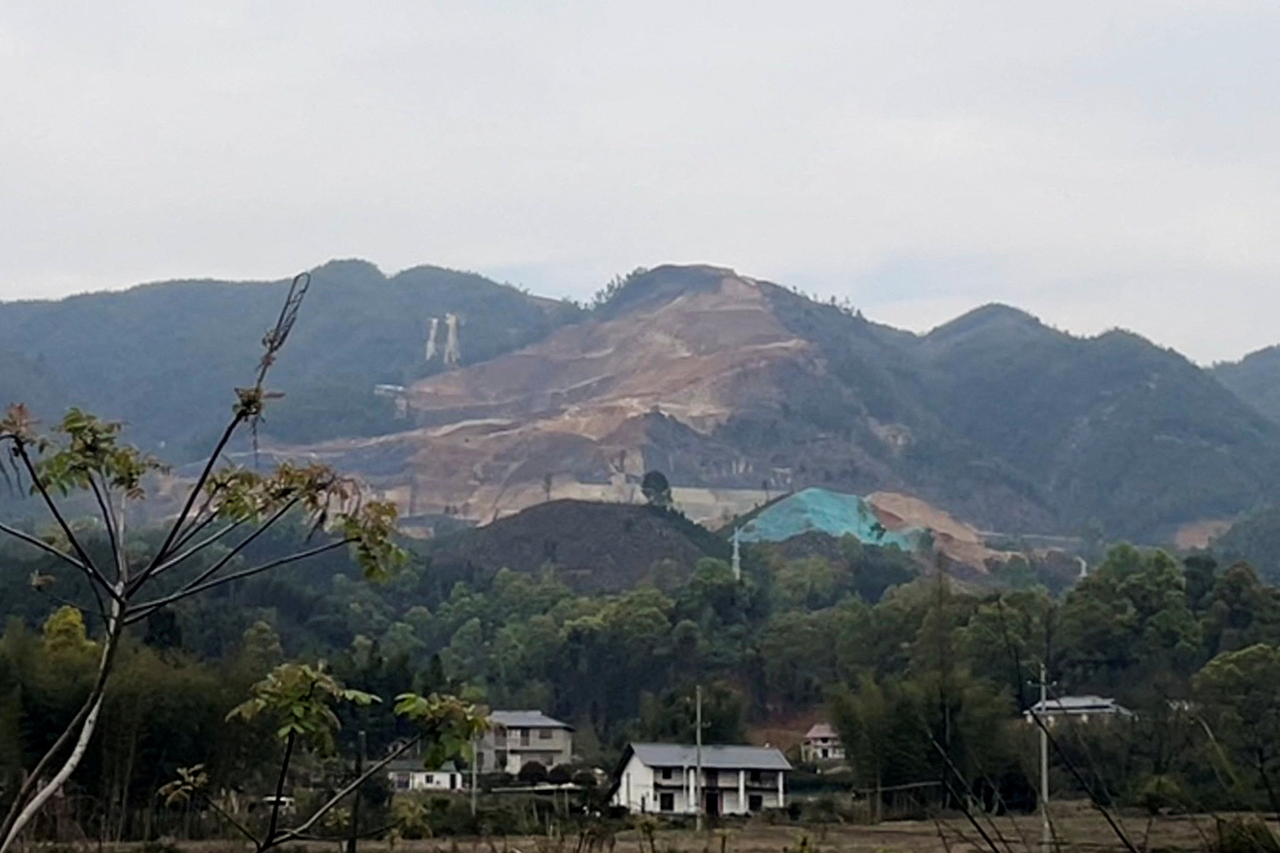
The suspension of CATL’s lithium mining operations in China, the world’s third-largest lithium producer, is set to lift near-term profits for South Korean battery material suppliers as rising lithium prices lift inventory values.
According to news reports on Monday, CATL has halted production at its Yichun mine — the biggest in China’s lithium hub in Jiangxi province — as it failed to renew its mining license.
CATL said the license for its Yichun mine expired on Aug. 9 and that it is seeking renewal “as soon as possible,” adding production will resume once it receives approval, Reuters reported.
However, industry insiders expect the Chinese government may delay renewing the license as part of efforts to curb oversupply in the domestic lithium sector.
“The Chinese government appears to have strategically delayed the renewal of CATL’s lithium mining license to rein in cutthroat competition stemming from domestic oversupply, raising the possibility of similar measures against other mines in the country,” said Yang Min-ho, an energy engineering professor at Dankuk University.
This could benefit Korean battery material companies, which have seen their profit margins squeezed by weak lithium prices arising from oversupply, including from China, Yang added.
“A rise in lithium prices, prompted by CATL’s mine halt, could lead to higher prices for cathode materials, and in turn, higher margins in the next quarter,” said an industry source familiar with the matter on condition of anonymity.
“Despite the electric vehicle sector’s slowdown, order volumes from customers (battery cell manufacturers) may recover as they seek to purchase products from current inventories at favorable prices.”
CATL’s mine suspension immediately drove a surge in global lithium prices and lifted the share prices of South Korean battery-related companies.
On Monday, lithium futures on the Guangzhou Futures Exchange — a key global benchmark for lithium price, particularly for China and the Asia-Pacific region — soared 8 percent to hit the daily limit, reaching 81,000 yuan ($11,270) per ton, the highest level since last November.
For Korean battery material companies, Posco Future M and EcoPro BM’s stock prices rose sharply on the main Kospi and the tech-heavy Kosdaq, by 8.31 percent and 7.98 percent, respectively, in the same period. L&F Corp.’s share also jumped 10.32 percent.
On Tuesday, Posco Future M and EcoPro BM climbed 0.37 percent and 5.97 percent, respectively, during intraday trading, while L&F Corp. gained 3.12 percent from the previous session.
Most Korean battery material suppliers have experienced a downturn in the second quarter due to the decline in lithium prices and a slowdown in EV demand. Posco Future M’s operating profit dipped 71.7 percent to 770 million won ($554,200) from April to June from the previous year. L&F’s operating loss expanded by 43.9 percent to 121.2 billion won.
Meanwhile, CATL has been aggressively expanding its mining investments to reduce EV battery production costs. Its Yichun mine, with an annual capacity of 46,000 metric tons of lithium carbonate equivalent, accounts for roughly 3 percent of projected global output in 2025, according to Australian government data cited by Reuters.
hyejin2@heraldcorp.com