High yields, vast IP give Korean display makers decisive edge over Chinese rivals
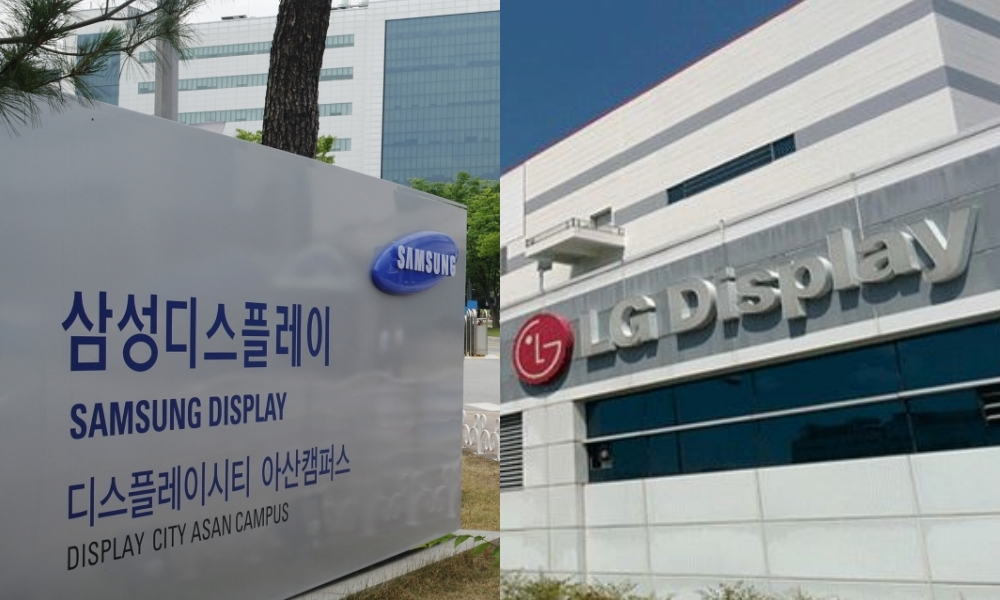
South Korea’s top display makers Samsung Display and LG Display are cementing their dominance in the high-end OLED market by becoming the only firms to supply Apple’s upcoming iPhone 17 lineup with next-generation low-power panels known as low-temperature polycrystalline oxide OLEDs.
According to industry sources Friday, Apple is set to adopt LTPO panels across the new iPhone 17 series, a move that further sidelines Chinese competitors like BOE, which continues to struggle with mass production due to low yields and technological hurdles.
LTPO OLEDs, known for reducing power consumption by 15 to 20 percent compared to traditional low-temperature polycrystalline silicon or LTPS OLEDs, have become the gold standard for premium smartphones.
Originally developed by Apple in 2014, the technology gained traction only in recent years due to complex manufacturing and high costs. It is now widely used in top-tier models like Samsung’s Galaxy Ultra and Apple’s iPhone Pro.
Samsung and LG’s exclusive supply to Apple — the world’s largest smartphone maker — highlights their technological edge over Chinese rivals in the lucrative high-end display sector.
In the first quarter of this year, the two Korean firms controlled a combined 71.8 percent of the LTPO OLED market, according to Omdia. In contrast, Chinese players, including BOE, TCL CSOT and Visionox, collectively held just 27.8 percent.
“BOE is far from catching up,” said an industry official on condition of anonymity. “The technical and yield barriers for LTPO remain high, and Korean firms have already built a commanding lead.”
Samsung and LG are also ahead in intellectual property. As of 2022, LG held 649 LTPO OLED-related patents and Samsung 376 — significantly outpacing BOE (373), TCL (106) and Tianma (99), across jurisdictions including the US, China and Korea.
Looking ahead, Apple is expected to adopt LTPO3, the next-generation iteration of the technology, as early as 2027.
Korean firms are already ramping up R&D in anticipation, aiming to widen the performance gap with Chinese competitors.
Beyond LTPO, both Samsung and LG are spearheading innovation in other next-generation display formats. Samsung recently unveiled an electroluminescent quantum dot display with an industry-high 4,000-nit peak brightness, while LG introduced its fourth-generation OLED technology, setting a new benchmark in brightness performance.
Both companies are also accelerating development in emerging fields such as OLED on silicon for XR and VR devices, as well as rollable and flexible displays, the markets where Chinese manufacturers have yet to gain meaningful traction.
yeeun@heraldcorp.com