Kia, an automaker under Hyundai Motor Group, is emphasizing flexibility in configuration and spacious interiors with its new purpose-built vehicle model, the PV5, as a key strategy in expanding into the electric PBV market.
On Tuesday, Kia showcased the vehicle’s modular technology at a studio in Gwangmyeong, Gyeonggi Province, highlighting its potential to meet diverse mobility needs.
The PV5 is the first model built on the group's E-GMP.S platform, dedicated to electric PBVs, and is expected to support at least nine variants by 2026, all sharing a common driver compartment and design.
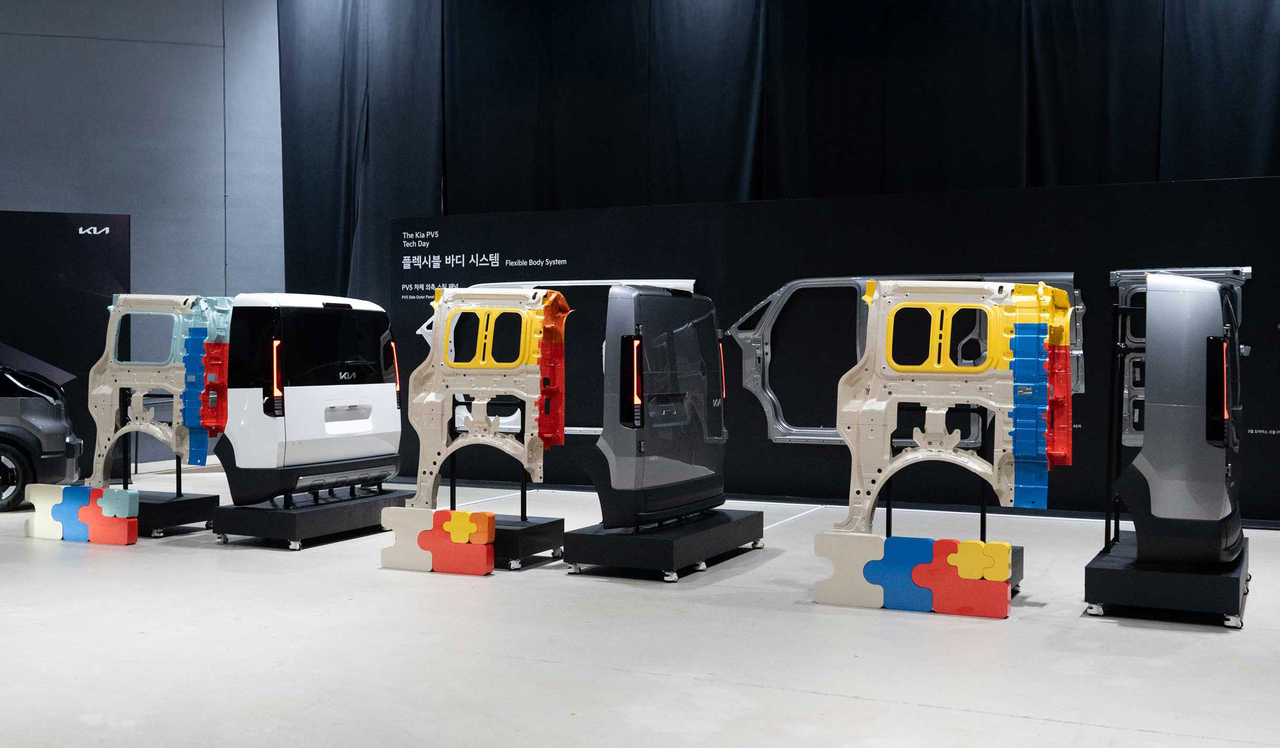
Modular components allow the model to be configured into various forms, including a refrigerated truck and an open-bed truck, while only a passenger van and box-type cargo van are currently available.
The structure allows for a high degree of customization, enabling buyers to choose features such as door and window configurations, rear overhang length and seat layout to suit specific operational needs when placing an order.
Pursuing unlimited flexibility in its PBV business, the company plans to offer base modules with conversion-supporting options. This will enable external partners to integrate conversion components without structural modifications or additional assembly, Kia said.
During the event, Kia also highlighted the PV5’s spacious interior, which offers up to 5,165 liters of cargo capacity.
To maximize space, the vehicle concentrates electric power modules to the front and adopts a cell-to-pack battery system, which installs cells directly without separate modules.
Company officials said they involved potential customers from the early development stages through validation to fully utilize the expanded space.
This was supported by extensive research, including direct participation in logistics operations and wheelchair-accessible taxi services, as well as analysis of approximately 1,000 user scenarios.
As a result, all PV5 configurations feature a low second-row step height for easy passenger boarding and alighting and an interior height of up to 181 centimeters to facilitate cargo room tasks. It offers a tight 5.5-meter turning radius for easy maneuvering and parking in narrow spaces, despite a long 2,995-millimeter wheelbase that ensures spacious interior room.
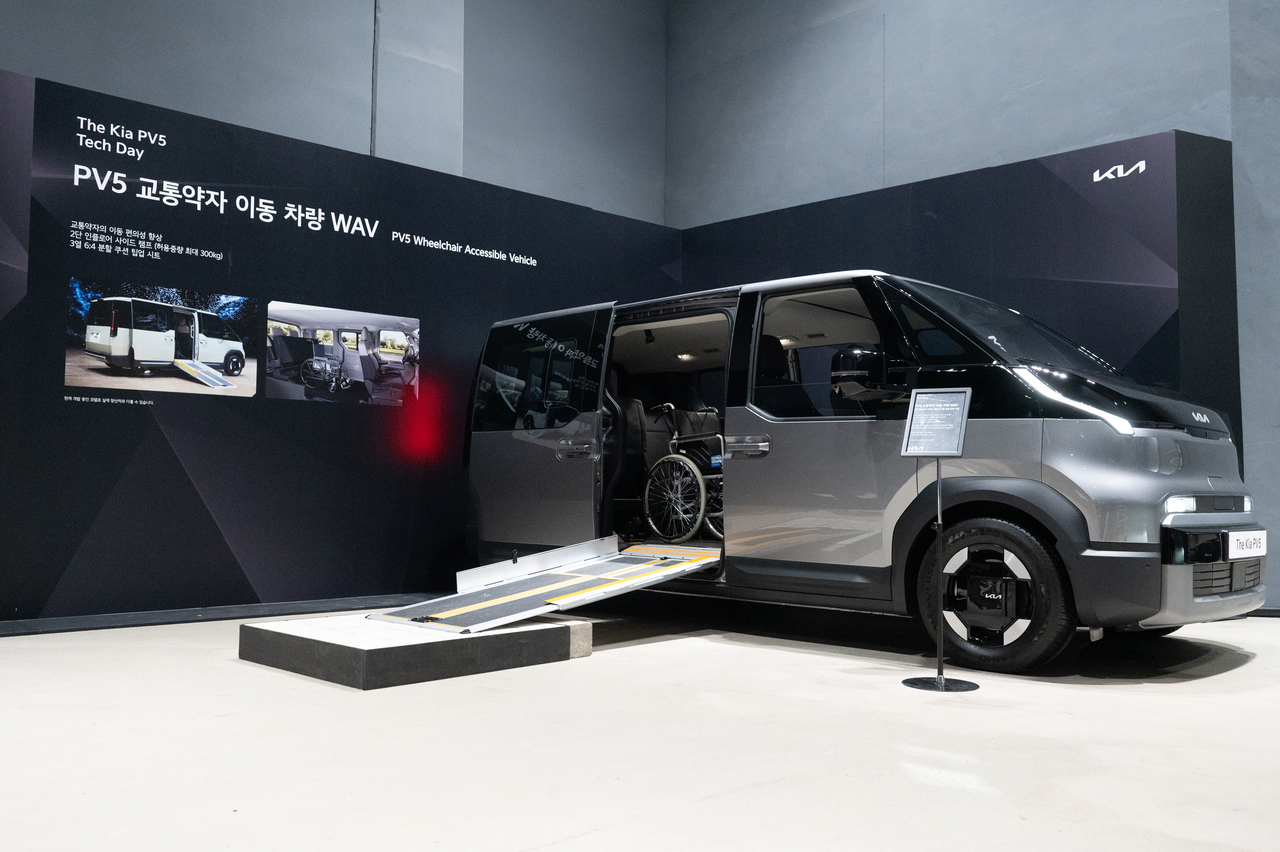
In addition to these shared features, the cargo variant accommodates standard global logistics pallets, while the passenger version offers a 775 mm door opening to allow all types of wheelchairs and enough room for caregivers in the cabin.
Officials added that the software supports diverse uses with an Android-based infotainment system and Hyundai’s proprietary Pleos application market, offering tailored business programs such as comprehensive fleet vehicle monitoring and mobility solutions for vehicle operation, range and charging management.
While Kia plans to begin deliveries of the passenger van and box-type cargo van configurations in Korea this August, the global rollout will start in the fourth quarter of 2025, beginning with Europe.
“A model marking the beginning of future mobility, the PV5 brings innovations such as maximized interior space, flexibility for multi-purpose use and external connectivity, developed through active engagement with potential customers,” said Ju Seok-ha, vice president of Hyundai Motor Group’s multiservice vehicle project group 3.
“We will continue to improve the PV5’s product quality and completeness based on our customers’ feedback.”
forestjs@heraldcorp.com