Korean battery material producer expects a turnaround as Gwangyang precursor plant enters full-scale production in the second half of the year
Posco Future M posted a sharp drop in second-quarter profit and swung to a net loss, hit by slowing demand for EV battery materials, though the company pointed to a potential rebound in the second half of the year as new production ramps up.
According to a regulatory filing on Friday by the Korean battery material producer, it logged 660.9 billion won ($474.7 million) in revenue and 770 million won in operating profit in the April to June period this year, down 27.8 percent and 71.7 percent, respectively, from the same period last year.
The company reported a net loss of 33.5 billion won in the second quarter after posting a 48.9 billion won net profit in the first quarter.
Posco Future M’s energy materials division was hit hardest, with quarterly revenue falling 37.6 percent from the previous quarter to 315.4 billion won, and the unit posting an operating loss of 25.5 billion won as the global EV market showed signs of slowing.
According to the company, sales of high-nickel cathode materials decreased from the previous quarter while sales of natural graphite anode materials increased among overseas clients. Posco Future M said the decrease in sales led to a dip in its plant operation rate, dampening overall profitability.
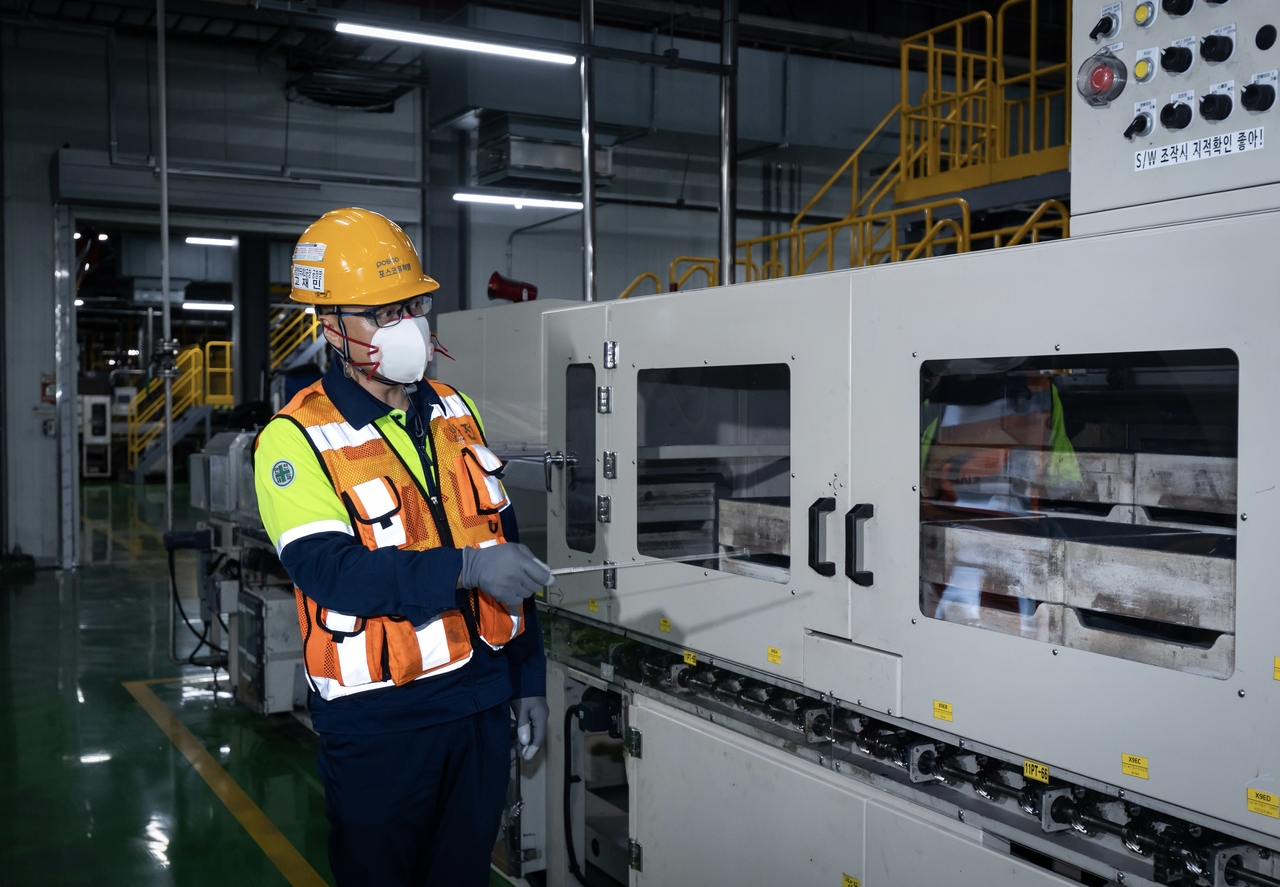
Posco Future M said it expects to see profitability improve as its precursor plant in Gwangyang, South Jeolla Province, is set to enter full-scale mass production in the second half of this year. Precursors are key substances used in the production of cathode materials, one of the main components of lithium-ion batteries.
The company held an official opening ceremony for the Gwangyang plant last month. According to the firm, the new plant has an annual production capacity of 45,000 metric tons of precursor, which is enough to produce batteries for 500,000 EVs.
In addition to the precursor plant entering full-scale production, Posco Future M is projected to benefit from the US government continuing to raise the pressure on China-dependent supply chains by announcing a maximum 721 percent tariff on Chinese anode producers and a preliminary anti-dumping tariff of 93.5 percent on imported Chinese graphite.
“As Posco Future M has a production capacity that can meet demand for non-Chinese EV battery materials, both cathode and anode,” said a battery industry official.
“The intensifying trade war between the US and China will give (Posco Future M) an advantage in securing contracts in Western countries.”
hwkan@heraldcorp.com