Younger Koreans more accepting toward immigrants, but refugees less welcome across age groups
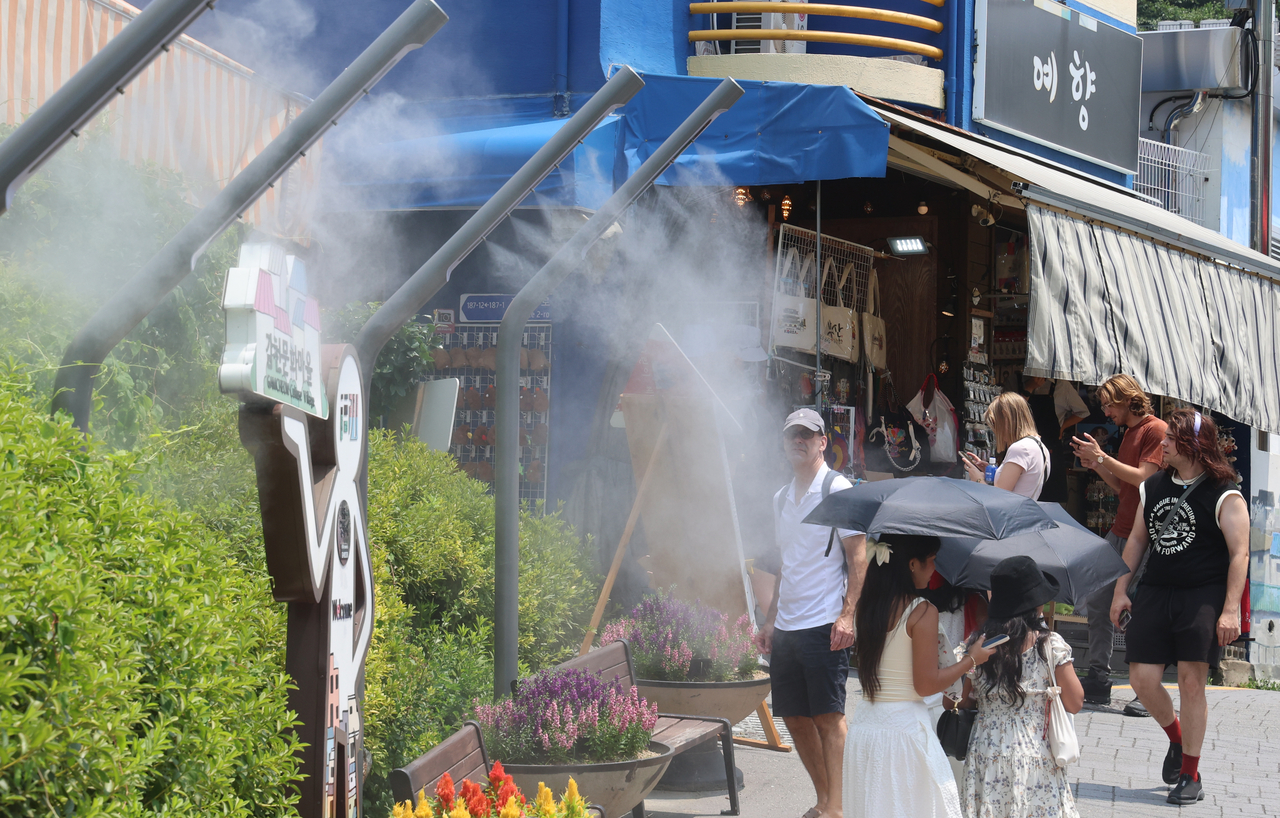
A recent survey showed that nearly 96 percent of South Koreans are willing to accept immigrants as part of their society on some level, but only 8 percent said they are willing to accept them as family members.
The survey by the Korea Institute for Health and Social Affairs asked Koreans aged 19-74 how open they were to immigrants, defined as people from other countries living in Korea on long-term visas. According to the KIHASA report, 38.7 percent of respondents said they were willing to accept immigrants as their neighbors. Another 30.51 percent said they were fine with having immigrants as colleagues, and 18.35 percent said immigrants could become their best friends. However, only 8.37 percent said they were open to an immigrant becoming their spouse or a member of their family.
The survey was part of KIHASA's report on generational differences here on accepting immigrants, and tasks for related policies. Answers were solicited from a total of 3,011 people.
The youth population (19-34) was generally less opposed to immigrants than other age groups, with only 2.59 percent of them saying they could not accept immigrants under any circumstances. This was significantly lower than any other age group, including 7.49 percent among senior citizens (65 and older), and the overall average of 4.07 percent.
But the vast majority of even the younger group showed reluctance toward marrying an immigrant or having one join their family, with only 8.61 percent saying they were open to the idea. Middle-aged Koreans (35-64) were marginally more open to marrying immigrants (9.13 percent), while over half of senior citizens (57.89 percent) said they were just fine with having an immigrant neighbor.
Only 5.05 percent of seniors were willing to accept immigrants as family.
"The senior group showed a dual attitude (toward immigrants), being open to them in everyday life with limited contact, but refusing to be in close relationships or to be close emotionally," the researchers said about the findings.
The survey also showed that Koreans were much more open toward immigrants staying here on ordinary long-term visas than toward refugees. For immigrants with permanent residency, less than 2 percent of the respondents across the age groups -- from 0.23 percent of the youth group to 1.65 percent of the oldest group -- said they could not accept them, but opposition surged when asked the same question about refugees.
About 29.57 percent of senior citizens said they were unwilling to accept refugees at all, followed by 19.27 percent of middle-aged people and 15.86 percent among the youth group.
The percentage of those willing to have a refugee as a family member or spouse was under 3 percent in all age groups, though 10.88 percent of the youth group said they could accept a refugee as a best friend -- the highest out of all three age groups.
minsikyoon@heraldcorp.com