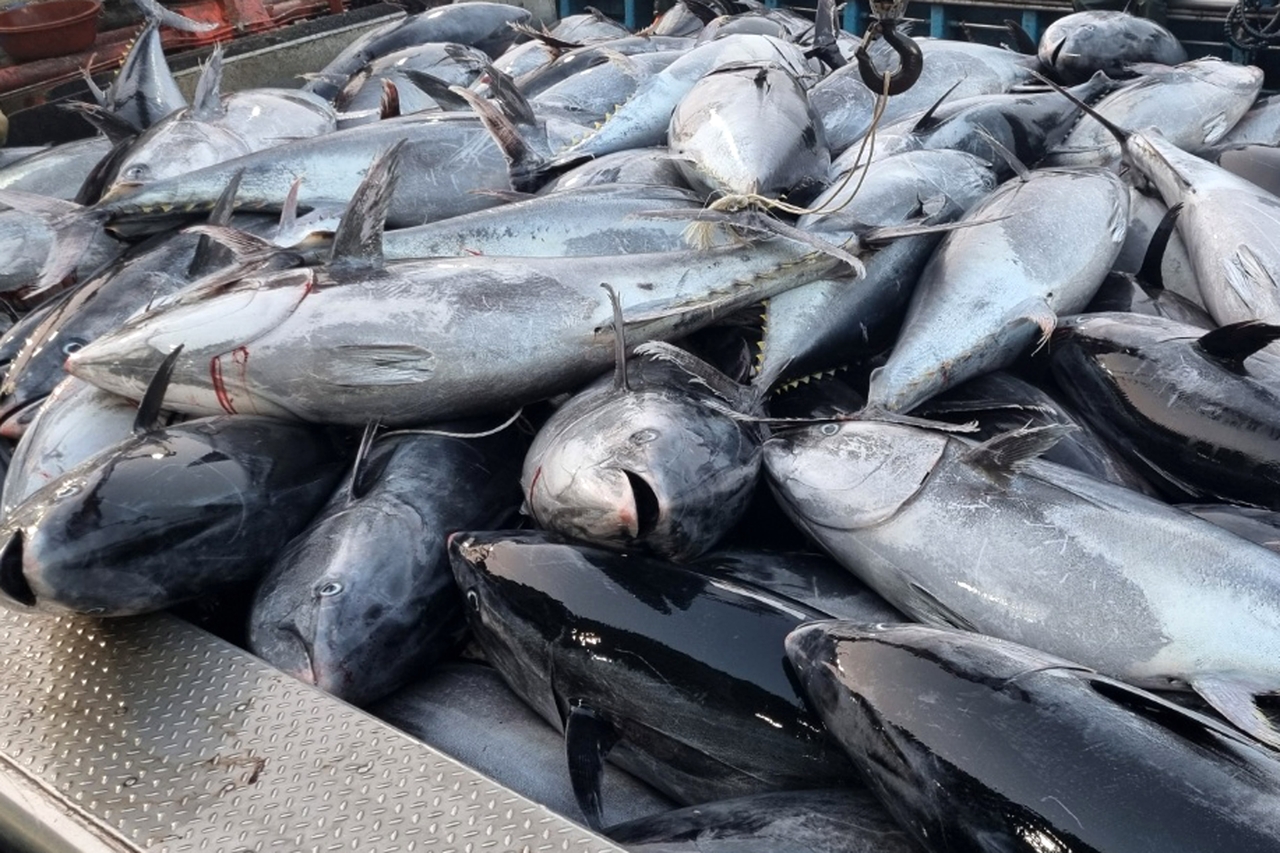
More than 1,300 giant bluefin tuna, each weighing over 100 kilograms, were caught off the eastern coast of South Korea this week. But instead of heading to market, the entire haul was discarded.
The reason: local fishermen had already exceeded their government-allocated fishing quota for tuna.
The unexpected catch took place off the coast of Yeongdeok County in North Gyeongsang Province. According to officials from the Yeongdeok County Office and the Ganggu Fisheries Cooperative, the tuna were trapped in a fixed-net fishery near the town of Ganggu. The nets, typically used to catch smaller species like mackerel and squid, are believed to have captured the tuna as they chased prey into shallow waters.
Each tuna measured between one and 1.5 meters in length and weighed between 130 and 150 kilograms. The catch should have been a windfall. At the most recent auction just days earlier, similar bluefin tuna sold for 14,000 won per kilogram, or about $10. With each fish averaging around 140 kilograms, the 1,300 tuna hauled in off Yeongdeok’s coast could have fetched roughly 2.55 billion won, or about $1.86 million.
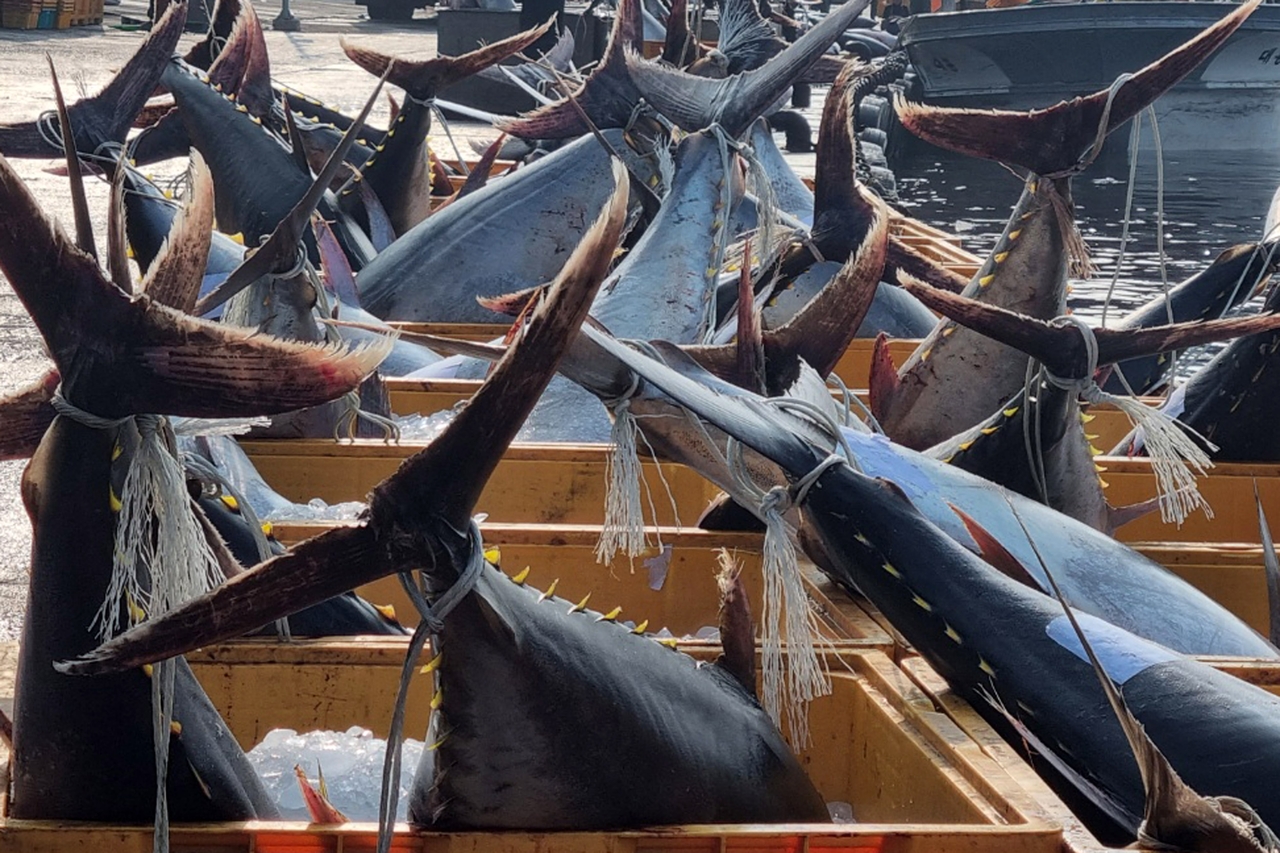
But despite the value of the fish, regulations required the fishermen to discard the entire catch at sea because their region had already reached its yearly bluefin quota.
Under rules set by the Western and Central Pacific Fisheries Commission, bluefin tuna catches are strictly limited in order to protect the species, which is considered vulnerable due to overfishing. South Korea receives a national quota, which the Ministry of Oceans and Fisheries divides among local regions.
For 2025, North Gyeongsang Province was allocated 110 metric tons of bluefin, with just 35 tons assigned to Yeongdeok County. According to Yeongdeok officials, the county had already caught close to 100 tons by early July, well above its limit, even after receiving extra allocations earlier in the year.
Bluefin tuna cannot legally be sold or brought ashore once the quota is surpassed. Violations are treated as serious offenses under Korea’s Fisheries Act, punishable by up to two years in prison or fines of up to 20 million won.
A representative from the region's cooperative said that fishermen were unaware the quota had already been met when they brought in the fish. Even if a new quota is requested, the process takes time, and tuna spoil quickly without refrigeration. With no quota remaining and no time to preserve the fish, all 1,300 tuna were discarded.
This is not the first time such waste has occurred. In July 2022, more than 1,000 dead tuna washed up on a beach in Yeongdeok after being discarded under similar circumstances.
Fishermen and local officials are now calling for more flexible quota systems, especially as changing ocean temperatures are bringing larger numbers of bluefin into Korean waters.
Historically found in warmer Pacific regions, bluefin tuna have become more common in the East Sea as ocean temperatures rise. According to government data, the bluefin catch in North Gyeongsang jumped from just over 3 tons in 2020 to nearly 164 tons in 2024.
Korea has one of the world’s highest seafood consumption rates per capita. According to the UN Food and Agriculture Organization, South Koreans consumed an average of 54.66 kilograms of seafood per person in 2020, more than even Japan at 46.65 kilograms. While direct statistics on tuna consumption are dated, a 2007 report from Korea’s Ministry of Oceans and Fisheries ranked South Korea third globally in annual sashimi-grade tuna consumption, behind only Japan and the US.
mjh@heraldcorp.com


![[Legal updates in Korea] New insurance mandate protects firefighters on the job](https://wimg.heraldcorp.com/news/cms/2026/10/01/news-p.v1.20261001.76835f19eb424f18814ac3bb65d896a9_T1.jpg?type=h&h=800)