Hyundai doubles down on quality, tech features as BYD gains ground with low-cost EVs
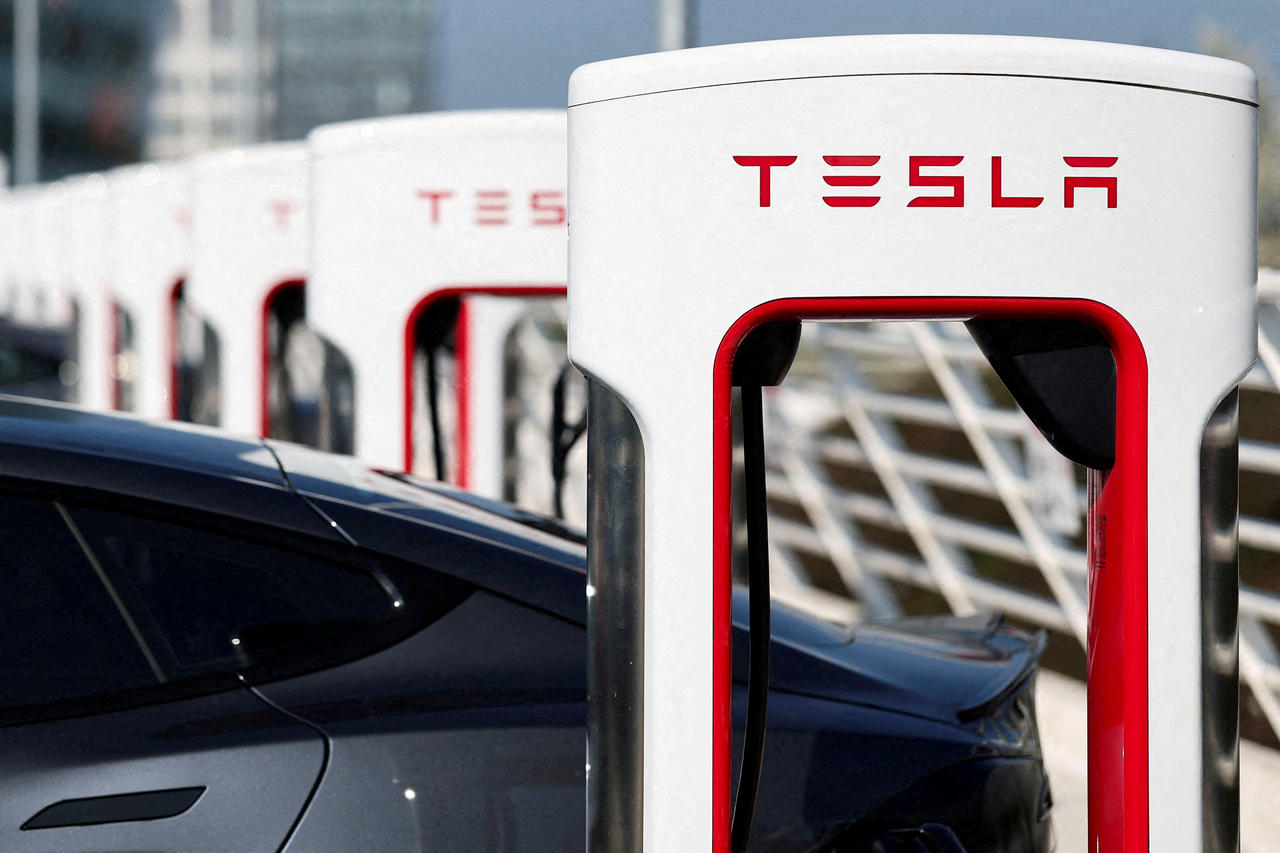
Tesla’s shrinking presence in the European market is setting the stage for cutthroat competition between Hyundai Motor Group and China's BYD. While the Korean auto giant has maintained its stronghold in the world’s second-largest electrified vehicle market, the Chinese EV maker is rapidly eating into Tesla’s share as it aggressively offloads excess domestic inventory in global markets.
BYD's surge
According to reports on Wednesday, Tesla may lose its position as the third-largest EV brand in Europe to BYD for a second consecutive month. Recent data on new EV registrations show that BYD has already overtaken Tesla in the United Kingdom and Germany — two of the region’s key EV markets — in May.
Germany’s Federal Motor Transport Authority reported that Tesla’s sales in Germany last month fell 36.2 percent on-year to 1,210 units, while BYD’s volume surged nearly ninefold to 1,857 units. In the UK, Tesla’s new registrations dropped 36 percent to 2,016 units, while BYD recorded a staggering 407 percent increase to 3,025 units, according to the Society of Motor Manufacturers and Traders.
This shift follows a major milestone in April, when BYD surpassed Tesla in monthly European sales of battery-powered vehicles for the first time, even with the countervailing tariffs of up to 35 percent on Chinese EVs in effect since November. BYD sold 7,231 units in April, edging out Tesla’s 7,165 units, according to data from London-based market tracker JATO Dynamics.
Although the difference was just 66 units, industry insiders see the moment as a major inflection point. Tesla has been in a back-and-forth battle with Hyundai Motor Company and Kia for the No. 2 position in European monthly EV sales. In April, the Korean duo sold a combined 16,447 battery EVs, trailing only Volkswagen’s 23,514 units.
If Tesla fails to rebound from its sluggish performance — partly attributed to CEO Elon Musk’s political entanglement with the Donald Trump administration — the competition for market share in Europe will likely center on Hyundai Motor Group and BYD. With BYD holding a clear pricing advantage, the Korean legacy automakers are ramping up their survival strategies.
“Kia’s EV3 (a compact electric sport utility vehicle) has been well received in Europe, and our smaller EV2 SUV is set to debut next year,” said a Hyundai Motor Group official. “Our strategy is to highlight quality and performance.” Kia also plans to roll out the EV4 sedan and the EV5 midsize SUV later this year.
The Kia EV3 and its competitor, the BYD Atto 3, are priced starting at approximately 35,990 euros ($41,000) and 32,690 euros, respectively.
New round of chicken game?
Experts say Hyundai Motor and Kia need to enhance customer experience to stay competitive against BYD, which is gaining ground with its affordable, high-performing EVs.
“Compared to Tesla, which earns around $10,000 in profit per EV, Hyundai and Kia’s per-unit profit is only about one-tenth of that,” said Lee Ho-geun, a professor of automotive engineering at Daeduk University. “This leaves them with limited room to cut prices.”
He also noted that while Korean cars tend to benefit from better resale value and less consumer backlash compared to Chinese brands in Korea, BYD could narrow the gap in Europe by redirecting its swelling EV inventory abroad.
Last week, China’s central government reportedly warned domestic automakers against irrational price cuts. The ongoing price war, led by BYD, has seen discounts of up to 34 percent as it tries to defend its home turf from increasing competition, Lee explained.
Im Eun-young, an analyst at Samsung Securities, noted that BYD’s significantly higher selling prices in Europe — 2.5 to 3 times more than in China — could help offset profit losses from those domestic price cuts. “BYD and Kia are drawing attention as they roll out affordable EVs in the 30,000-euro range,” she said.
“Hyundai and Kia should look into improving infotainment systems, possibly through partnerships with European telecom companies to enhance connected services,” Lee added. “Expanding service centers could also go a long way in improving the overall customer experience.”
hyejin2@heraldcorp.com