New power players of Seoul are veiled, press-shy — and proven 'loyalists'
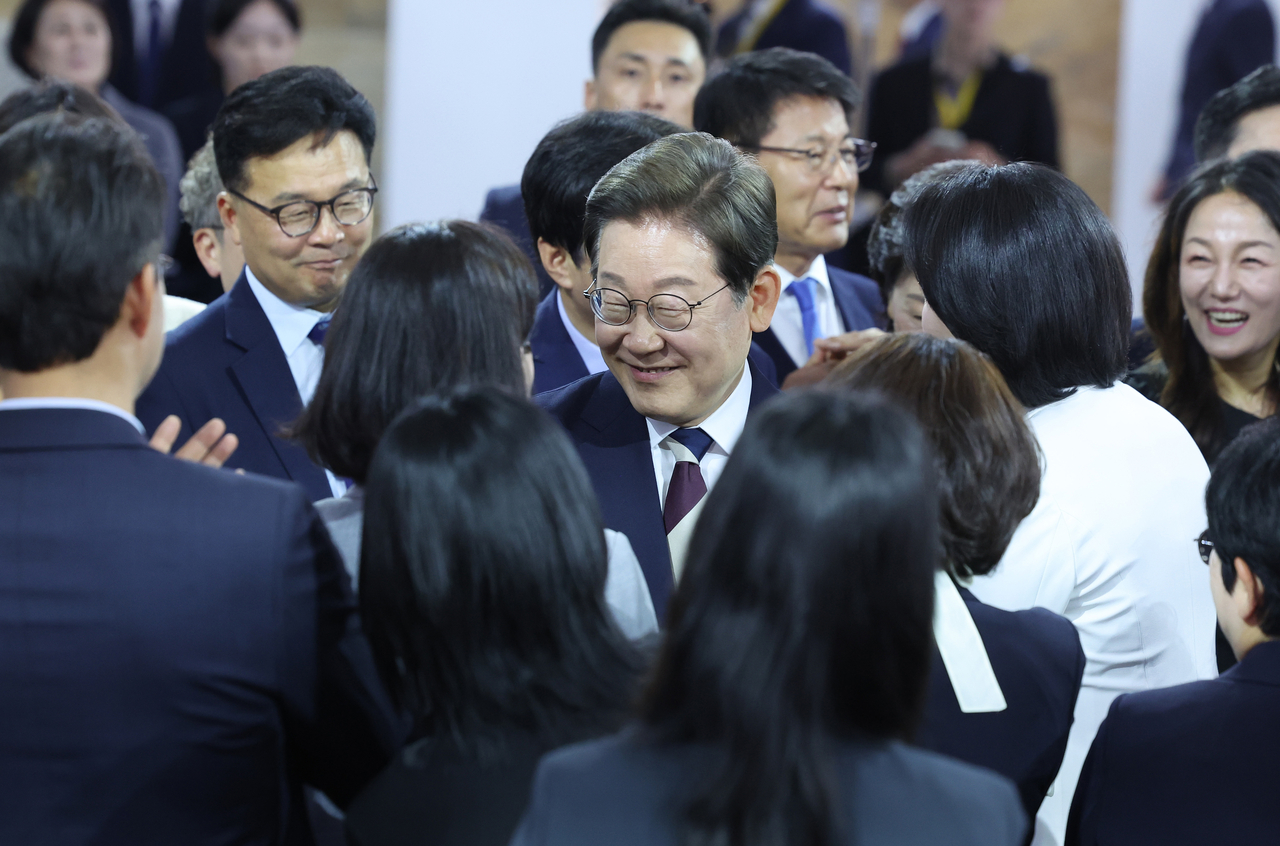
South Korea's new President Lee Jae-myung has yet to put together his dream team.
Lee wants a team "who can get the results that he wants," people who have worked with him say. But the ultimate litmus test for determining who Lee will let near him is how much he can trust them.
The new pro-Lee
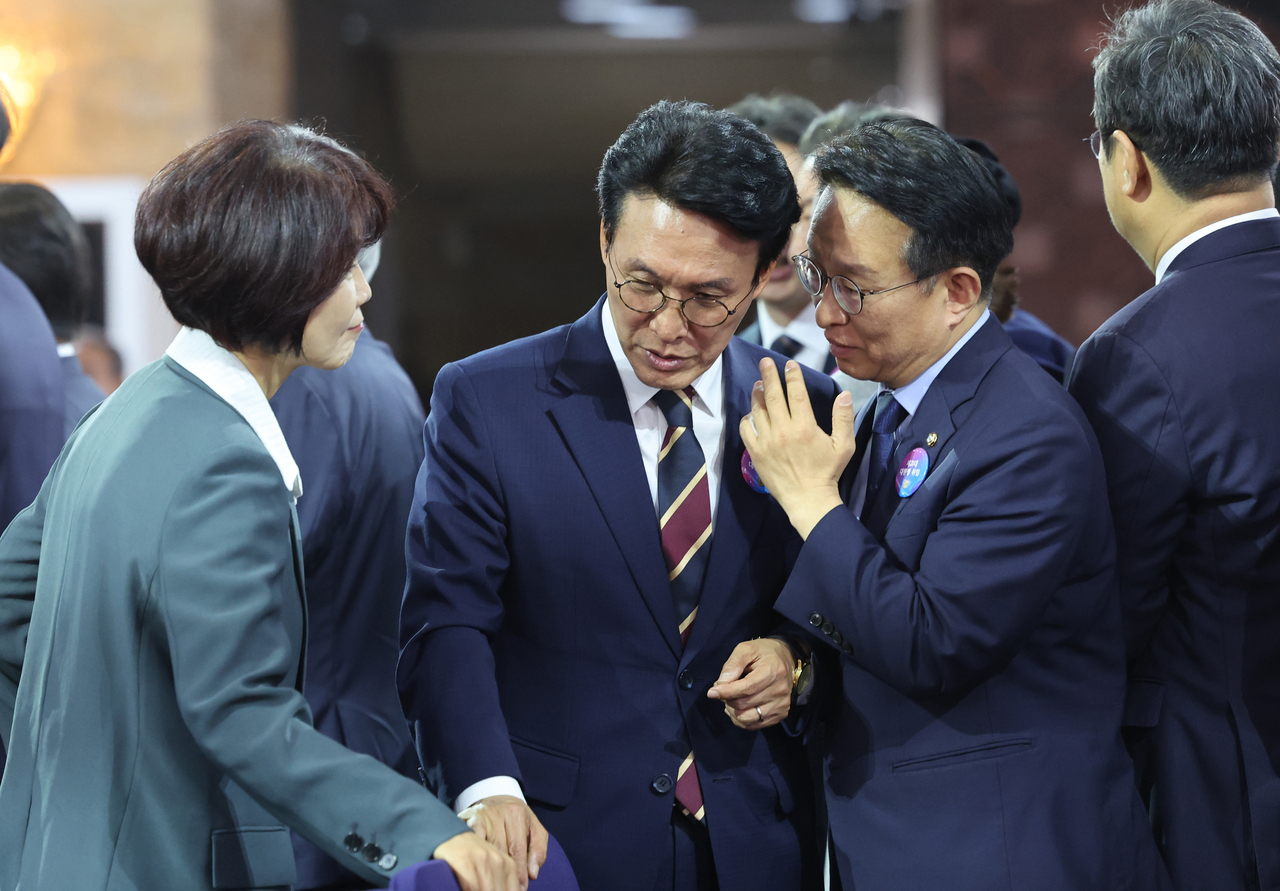
Lee is notoriously selective about who he lets into his close circle.
When Lee was still the Democratic Party of Korea's leader, the word in the corridors was that "no true 'pro-Lee Jae-myung' is at the National Assembly." It was a half-joke suggesting how much Lee trusted his old connections, mostly from before his days as a lawmaker, over newer ones.
The "new pro-Lee" faction took form at the beginning of Lee's second term as Democratic Party leader in August last year.
The Democratic Party leadership, with Lee at the helm, was filled by figures channeling the most fervent of the party's support base.
Rep. Kim Min-seok, a former star politician who made a stunning return to the spotlight under Lee's Democratic Party, has been at the center of the new power group that has tightened its grip over the party.
When Kim ran for a seat on the Democratic Party's supreme council last August, it soon became apparent that he was Lee's preferred choice to serve on the party's top decision-making body, a coveted and prestigious spot.
Lee reportedly even told Kim that he "wished he had known him sooner," according to an insider account.
Lee has been described by some within the Democratic Party as micromanaging those whom he picks to work for him.
Everything from the top seats in the leadership down to the lowest-level posts at the Democratic Party are said to have been screened and handpicked by Lee.
Policy brains
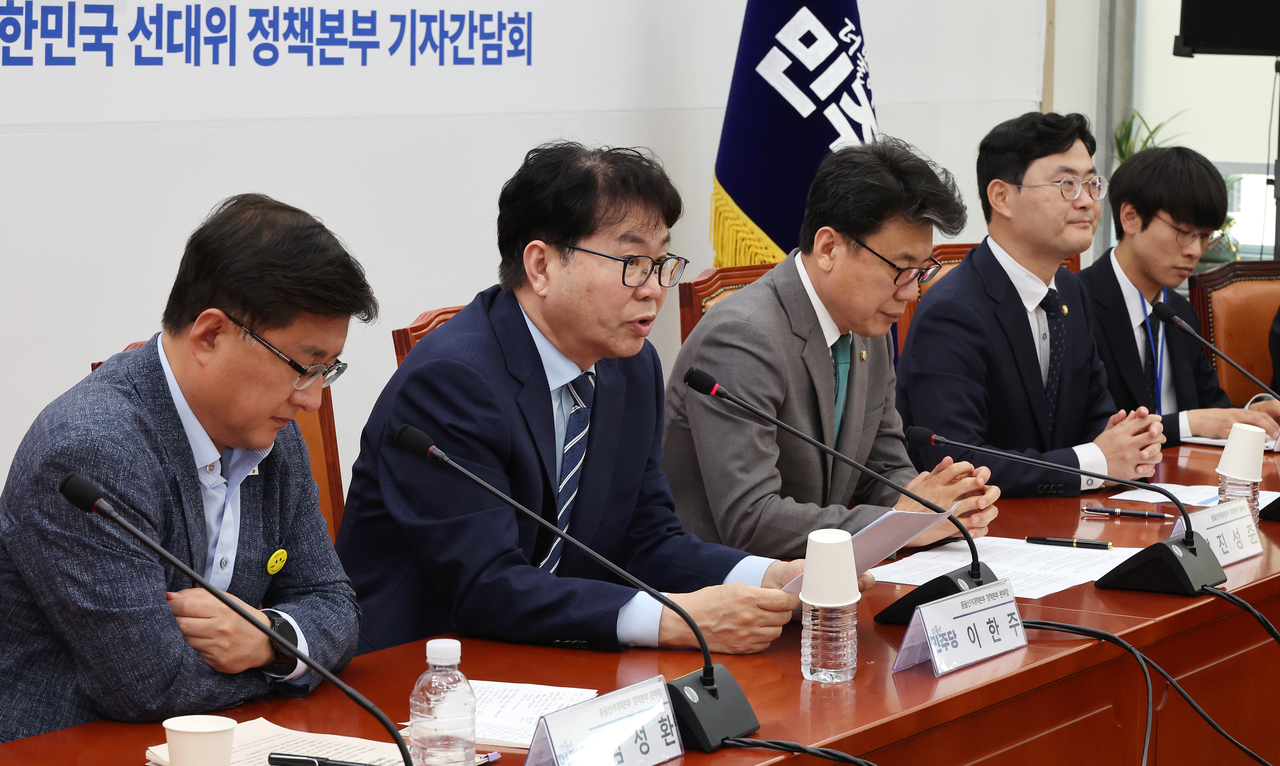
Lee's policy advisers are also his longtime confidants.
Lee Han-joo, the director of the Democratic Party's think tank, the Institute for Democracy, has been described as the president's "mentor."
The think tank director is the architect behind the president's universal basic income policy, which dates back to his time as mayor of Seongnam, Gyeonggi Province. The two have known each other for two decades, and their views on welfare and social policies are said to align well.
One of the people the president is said to trust most on national security and foreign policies is Kim Hyun-chong, who was the deputy director of the National Security Office for former Democratic Party President Moon Jae-in.
Kim was the trade and foreign affairs adviser to Lee during his presidential campaign, and steered the then-presidential candidate's task force on US trade strategy.
According to a campaign official, Kim belongs to a separate group of advisers who are picked based on merit.
"Lee appreciates people who deliver," the official said.
Kim was also known for shunning press contact apart from a few YouTube appearances.
Hidden hands
Lee has a special place in his heart for people who stood by him as Seongnam mayor and Gyeonggi Province governor when he was still, by most measures, not considered part of the mainstream of the Democratic Party.
The very top of the cadre of the "pro-Lee" faction is populated by Seongnam- and Gyeonggi-era figures, who are "proven loyalists."
Another trait shared by this group of original Lee allies is that they remain veiled from public view, despite having held official positions as his aide or support staff.
One of Lee's most trusted allies from his nascent days is Jeong Jin-sang, about whom surprisingly little is known.
Jeong, who is about five years younger than Lee, is said to have worked for the president at his lawyer's office since the 1990s, before he was in politics.
"It's not enough to say Lee and Jeong are on the same boat. They've sailed too far from the shore that they're now in the middle of an open sea. They're stuck together," a Democratic Party lawmaker, who has insider knowledge of the president's professional relationship with Jeong, said.
arin@heraldcorp.com