South Korean exporters expect a 4.9 percent drop in exports this year if US President Donald Trump's tariff policies continue, according to a new survey released Monday.
The survey was conducted by local pollster Mono Research and commissioned by the country’s major business lobby, the Federation of Korean Industries. It polled 150 export-oriented companies among the country’s top 1,000 companies by revenue.
Findings suggest that these companies expect their export volume will decrease by 4.9 percent this year compared with the previous year, assuming current US tariff measures stay in effect. The figure represents the average forecast across the surveyed companies.
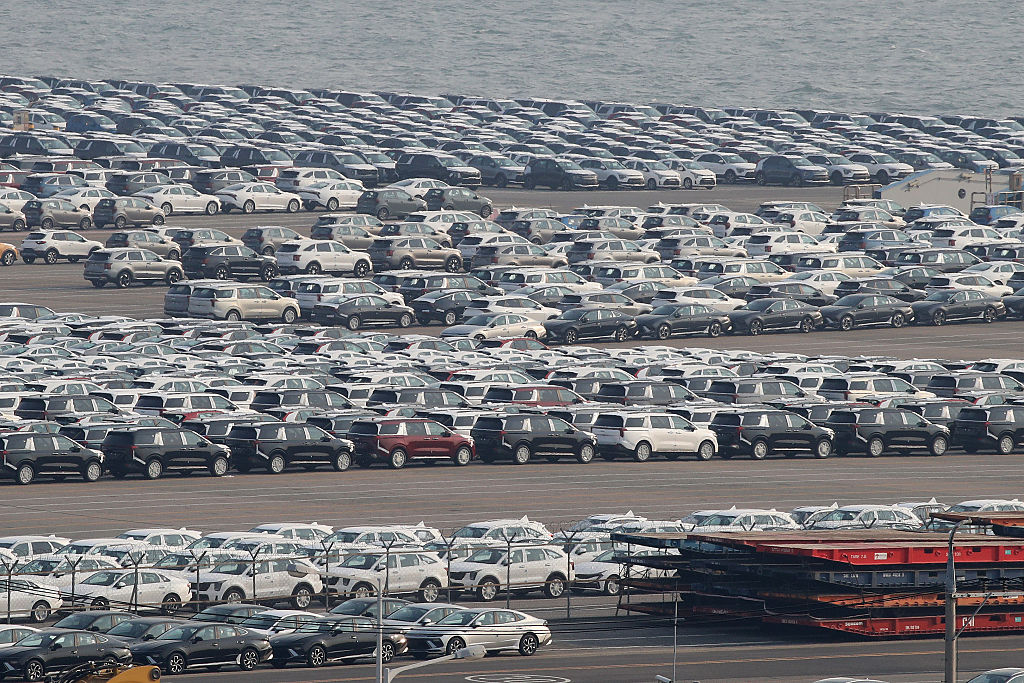
By sector, companies that produce electronics projected the steepest decline at 8.3 percent, followed by automobiles and parts with a 7.9 percent drop, petroleum products at 7.2 percent, general machinery at 6.4 percent, semiconductors at 3.6 percent and steel at 2.8 percent.
Meanwhile, shipbuilders and biopharmaceutical companies projected an increase in their overseas shipments, by 10 percent and 1 percent, respectively, despite the tariff measures.
The survey also found that if US tariff policy remains unchanged, companies expect their overall revenue and operating profits to fall by 6.6 percent and 6.3 percent, respectively, on average.
Around 81 percent of respondents said US tariff policies would negatively affect both American and Korean businesses, while 14.7 percent said the tariffs would hurt Korean companies but benefit their US counterparts.
Asked what the biggest management challenges are, 24.9 percent cited increased uncertainty due to frequent tariff policy changes by the Trump administration, followed by a global economic slowdown stemming from tariff tensions with 24 percent, declining US exports with 18.8 percent, heightened currency fluctuation risk with 17.5 percent and potential damages due to dumping by China.
As a countermeasure, 26.9 percent of companies said they are diversifying export markets as their top response, while 19.8 percent said they are restructuring their global production network. Other strategies include strengthening foreign exchange risk management with 16.5 percent and launching collective industry responses with 15.1 percent.
In terms of desired government action, 44.6 percent of respondents urged negotiations with Washington to reduce tariffs, while 13.6 percent called for support for diversifying export markets. Another 13.1 percent demanded broadening the list of duty-free items and 9.4 percent suggested ensuring that South Korea receives tariff rates equal to other competing countries.
Surveyed on how long the uncertainty in the global trade industry will persist, 42.7 percent predicted six months to one year, followed by 18 percent estimating one to two years.
“Despite a temporary tariff reduction agreement between the US and China, the uncertainty on tariff policies remains,” said Lee Sang-ho, head of FKI’s economic and industrial research department. “The government must closely monitor tariff-related developments, work to remove nontariff barriers and develop negotiation strategies to minimize damage to Korean firms.
sahn@heraldcorp.com