Report raises concerns on Korea's defense offset program, foreign ownership of nuclear power operations for first time
The Office of the US Trade Representative released an extensive report on foreign trade barriers Monday, citing South Korea’s policies in automobiles, beef imports, defense trade and nuclear power plants as areas of concern.
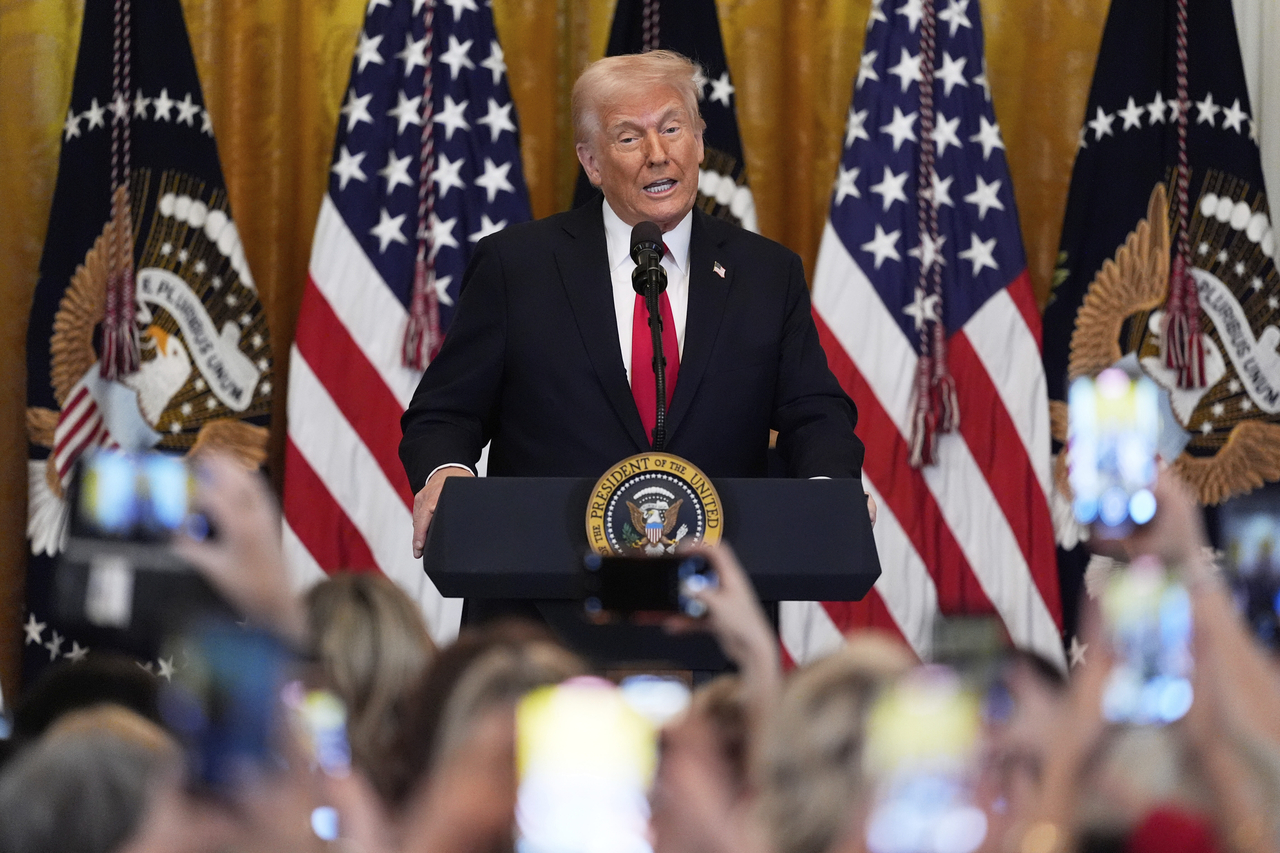
The annual National Trade Estimate Report on Foreign Trade Barriers carries added significance this year, as US President Donald Trump is set to roll out sweeping reciprocal tariffs on all trading partners Wednesday.
It is still unclear to what extent the report submitted to Trump and the US Congress will affect Trump’s reciprocal tariff plans. But Trump has repeatedly stated that tariffs and nontariff measures deemed unfair or discriminatory against American businesses will factor into decisions on the scope of reciprocal tariffs.
“No American President in modern history has recognized the wide-ranging and harmful foreign trade barriers American exporters face more than President Trump,” US Trade Representative Jamieson Greer said in a statement.
“Under his leadership, this administration is working diligently to address these unfair and non-reciprocal practices, helping restore fairness and put hardworking American businesses and workers first in the global market.”
The 397-page report identified trade barriers in around 60 countries and regions, with seven pages dedicated to South Korea.
While many issues listed had already been mentioned in last year’s edition, the latest report flagged South Korea’s defense offset policies as a barrier for the first time.
“The Korean government has pursued policies that prioritize local technology and products over foreign defense technology through its defense offset program,” the report said. “An offset obligation may arise for a foreign contractor should the value of the defense contract exceed $10 million.”
Under Korea’s defense offset program, foreign sellers of military equipment or technology to the government are required to provide some form of compensation, such as technology transfers and other defense industrial cooperation.
The program, established in 1982, has helped build the foundation of the country’s defense industry, including co-developing the T-50 trainer jet with the US support.
Similar defense offset programs exist in other countries, and Korea’s offset requirements are considered relatively moderate. Under the Korean regulation, the offset value must account for at least 50 percent of the contract value in competitive bids and 30 percent in non-competitive procurements. In contrast, some European countries have set the requirement at 70 percent or even 100 percent.
The offset trade is also on the decline. According to a 2023 report by the Korea Institute for Industrial Economics and Trade, the value of offsets dropped from $7.99 billion between 2011 and 2015 to $800 million between 2016 to 2020.
Despite the downward trend, the USTR’s mention raises questions about its intention, with some observers suggesting it may be a move to gain leverage in future defense negotiations.
The report also cited investment restrictions in Korea’s power sector, mentioning for the first time that foreign ownership of nuclear power operations is banned.
“Korea prohibits foreign ownership in the nuclear power generation sector and limits foreign ownership to no greater than 30 percent in hydroelectric, thermal, solar and other forms of non-nuclear power generation,” it said.
While last year’s report mentioned limits for hydro, thermal and solar power ownership, it was the first time that nuclear energy was included.
The long-standing issue over beef imports again appeared in the report. The USTR raised the issue on Korea’s ban on imports of US beef from cattle over 30 months old. The measure was put in place in 2008 following concerns over bovine spongiform encephalopathy, commonly known as mad cow disease.
“This ‘transitional measure’ has remained in place for 16 years. In addition, Korea continues to prohibit the import of processed beef products, including ground beef patties, beef jerky and sausage, regardless of age.”
On the automotive front, the report highlighted that improving market access for US carmakers remains a “key priority” for the US. Though similar concerns were issued in last year’s report, the renewed focus comes as Trump announced 25 percent tariffs on all foreign and imported cars starting Thursday.
The USTR also raised concerns on Korea’s emission-related components regulations under the Clean Air Conservation Act, which requires carmakers to obtain certification when making component changes. But the US auto industry has raised concerns about “lack of clarity” over what types of modifications fall under which category, it added.
The report further noted that US carmakers are potentially subject to criminal prosecution by Korea’s customs authorities, but domestic automakers are not.
Digital trade issues were also addressed. The USTR criticized legislation in Korea that would require foreign content providers to pay network usage fees to Korean internet service providers.
“Because some Korean ISPs are also themselves content providers, fees paid by US content providers could benefit a Korean competitor,” it said.
The report also took issue with Korea’s restrictions on the export of high-precision mapping data, in an apparent aim at the Korean government rejecting Google's request for high-resolution data, citing national security concerns.
“Korea’s restrictions on the export of location-based data have led to a competitive disadvantage for international suppliers seeking to incorporate such data into services offered from outside Korea,” it said. “Korea is the only significant market in the world that maintains such restrictions on the export of location-based data.”
In response, South Korea’s Industry Ministry on Tuesday said the report assessed Seoul “more favorably” compared to other US trade partners. It added that the concerns raised in the report largely reflect issues continuously raised by the previous NTE reports and by US stakeholders.
The ministry said there were 21 non-tariff measures related to Korea that were mentioned in the report, a slight increase from last year, but still far below the roughly 40 issues identified before 2023.
The Korean government will continue to address US concerns over nontariff measures with Washington through various communication channels, it added.
sahn@heraldcorp.com