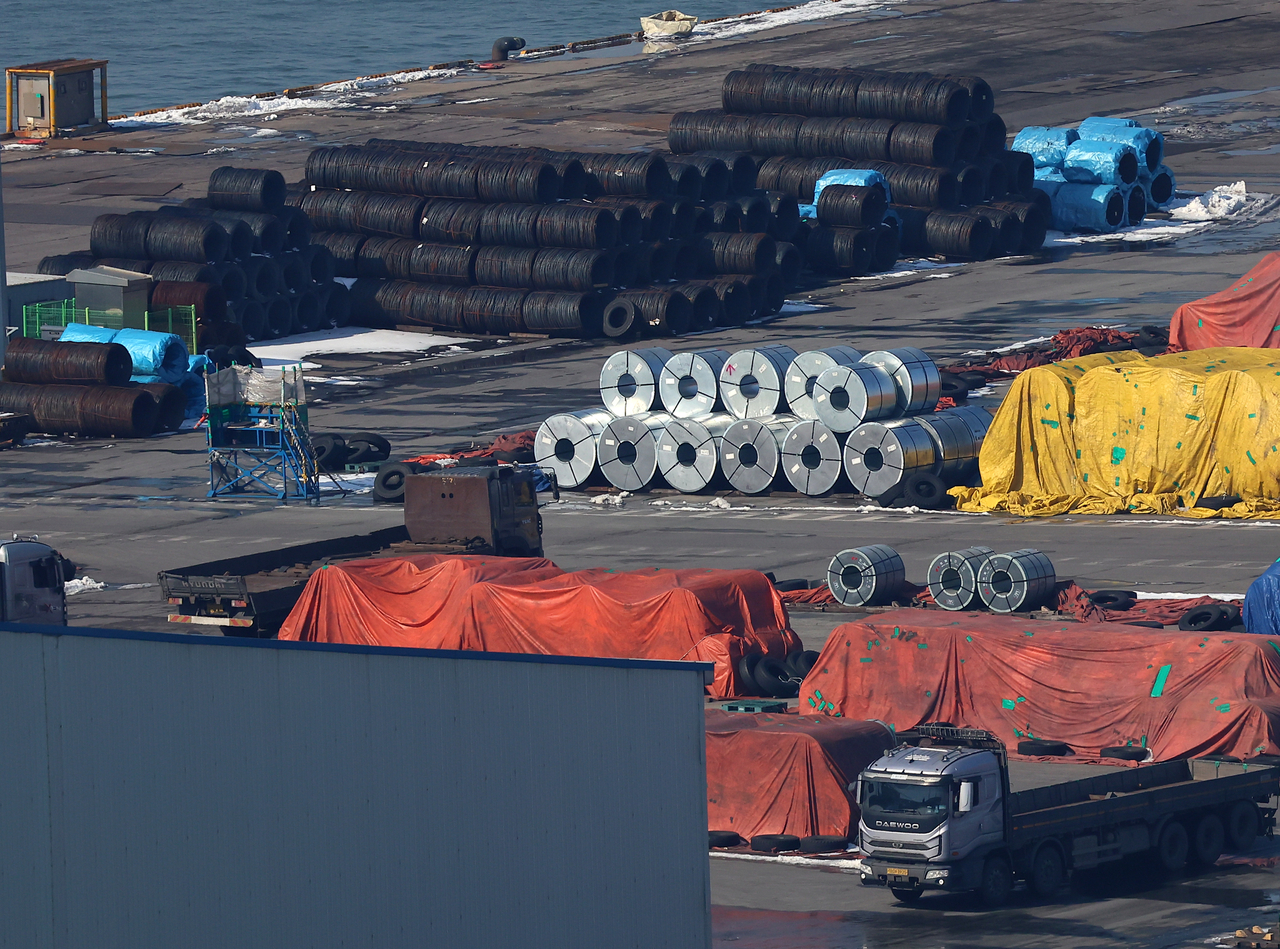
South Korea's trade watchdog on Thursday made a preliminary decision to impose antidumping tariffs on Chinese thick steel plates after its initial investigation identified potential damage to the domestic industry.
Under the decision, the Korea Trade Commission (KTC) will ask the Ministry of Economy and Finance to impose an antidumping tariff of between 27.91 and 38.02 percent on hot-rolled thick plates imported from China, according to its officials.
The KTC launched an investigation into the case in October, three months after Hyundai Steel filed a complaint with the government against low-priced thick steel plates imported from China.
The decision comes amid mounting concerns in the Korean steel industry after the US government announced plans to impose 25 percent tariffs on all steel and aluminum imports starting March 12.
Market watchers say the new US duties could worsen challenges facing the local industry, which is already grappling with oversupply, especially from China, and declining global demand.
If cheaper Chinese steel products, unable to enter the US market, flood other regions, such as Europe and Southeast Asia, South Korean steelmakers will likely face tougher price competition.
"Local businesses have been in a chicken game against Chinese companies that flooded the market with cheap thick steel plates, but with the latest FTC decision, they now have a chance to improve their profitability and protect the domestic market," an official at a Korean steel company said, asking not to be identified.
The volume of thick steel plate imports has been on a steady rise in recent years, nearly doubling from 1.26 million tons in 2021 to 2.06 million tons last year, while the demand for such products in South Korea dropped from 8.11 million tons to 7.8 million tons over the same period, according to industry sources.
The final verdict is expected to be delivered about five months later.
Meanwhile, the KTC decided to extend the implementation of existing dumping prevention measures on flat-rolled stainless steel and oriented polypropylene (OPP) film products from China, Indonesia and Taiwan.
Under its decision, the KTC will ask the finance ministry to continue requiring a pledge to adjust prices of flat-rolled stainless steel products from the countries and slap antidumping tariffs of between 2.5 percent and 25.04 percent on OPP film imports.










