Four resulted directly from President Yoon's Dec. 3 martial law declaration, including Yoon's own trial
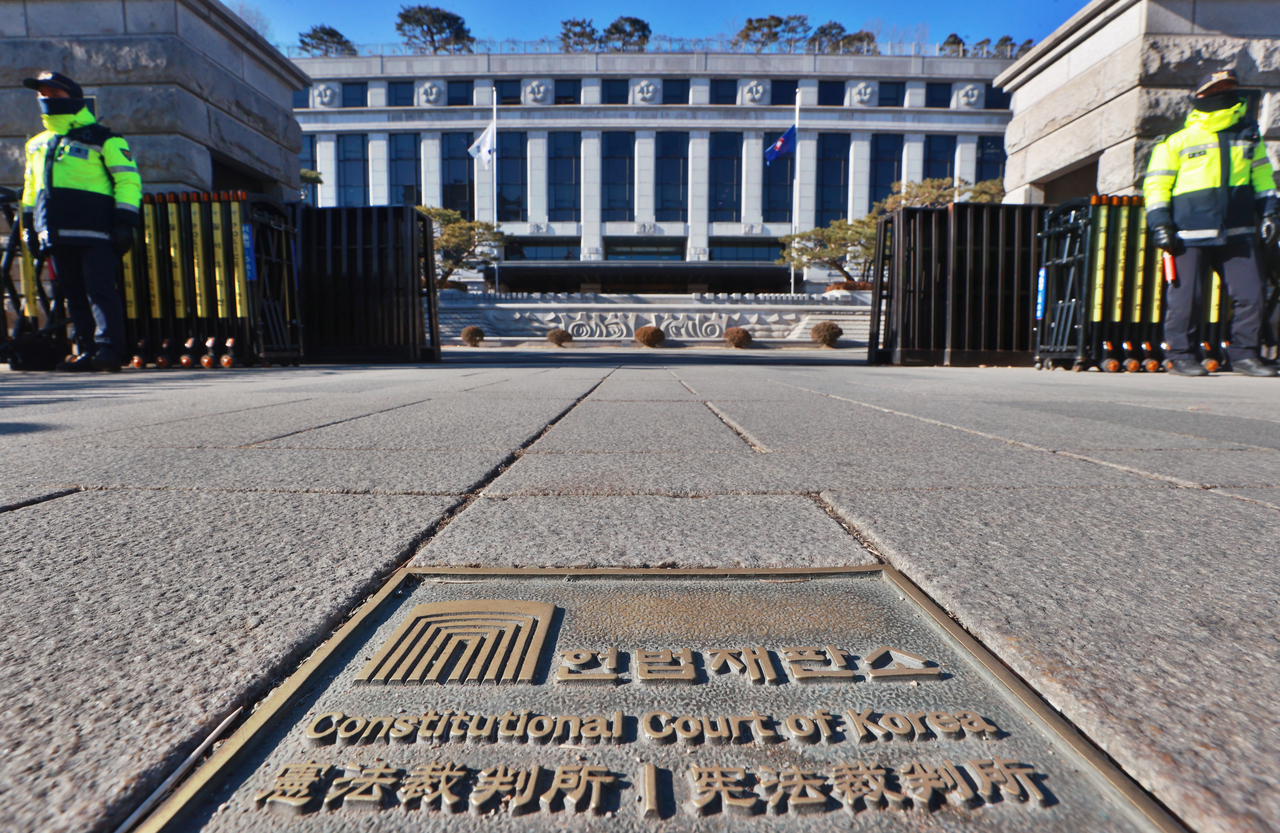
South Korea’s Constitutional Court has 10 impeachment trials to deliberate and conclude within this year -- the highest number of impeachment cases in any given year since the court was established in 1988.
The most high-profile case is the trial of President Yoon Suk Yeol, which commenced on Dec. 27 with a preparatory hearing.
Yoon, who declared martial law on Dec. 3 only to see it reversed by the parliament hours later, is also facing a criminal investigation for insurrection and abuse of power. On Tuesday, he became the first sitting president in the country's history to have a warrant issued for his arrest.
Yoon's temporary replacement, Prime Minister Han Duck-soo -- who was the interim leader for less than two weeks -- also faces an impeachment trial. The opposition-led National Assembly passed a motion to impeach him on Dec. 27. This came after Han, apparently siding with the ruling People Power Party, refused to appoint three new justices to the Constitutional Court nominated by parliament.
The current acting president, Choi Sang-mok, on Tuesday approved the appointments of two of the three justice nominees, leaving just one of the nine seats empty. Reaching a verdict on a presidential impeachment with just eight justices is legally possible, and a precedent on this exact scenario was set during the impeachment trial of former president Park Geun-hye, when just eight Constitutional Court justices concluded the case.
Of the 10 impeachment trials pending, four are the direct result of Yoon's controversial martial law decree. In addition to Yoon and Han, Justice Minister Park Sung-jae and National Police Agency Chief Cho Ji-ho face possible dismissal via impeachment, accused of conspiring with Yoon and following his possibly illegal orders during the period of martial law.
The backlog at the court also includes cases predating the martial law impeachments. The opposition Democratic Party of Korea in early December passed resolutions to impeach several high-ranking government and judicial officials, buoyed by its majority in the National Assembly.
A motion to impeach Board of Audit and Inspection Chair Choi Jae-hae was submitted to the National Assembly on Dec. 2, a day before the fateful martial law announcement, and was passed in a parliamentary vote on Dec. 5. Lawmakers on that day also passed motions to impeach three senior prosecutors: Seoul Central District Prosecutors Office Chief Lee Chang-soo and two of his deputies, Cho Sang-won and Choi Jae-hun.
Lee Jin-sook, the chair of the Korea Communications Commission, is slated to give a final statement to the court in her ongoing impeachment trial, which began in August last year. The impeachment trial of Son Jun-sung, deputy chief prosecutor of the Daegu High Prosecutors Office, was temporarily put on hold in April 2024 due to an ongoing criminal case against him.
The series of impeachment motions passed against officials and prosecutors in the Yoon administration was one of the main reasons Yoon said he declared martial law. Ironically, his controversial actions led to even more impeachment trials stacking up for the new year.
The Constitutional Court will deliberate each of the 10 impeachment cases this year, but it is unclear how long it will take to conclude all of them. The court has already vowed to prioritize the Yoon case, and the trials related to Han, Minister Park, and police commissioner Cho are similarly expected to be promptly concluded.
Court custom and a nonbinding legal clause calls for impeachment trials of high-ranking officials to be concluded within 180 days, although no penalty exists for violating this guideline.
Presidential impeachments have historically been concluded well before that deadline, as the trials of former presidents Roh Moo-hyun and Park Geun-hye took 63 days and 91 days, respectively -- with the former being dismissed and the latter approved.
Impeachment trials for judicial officials have historically taken more than 180 days, but rarely more than a year.
minsikyoon@heraldcorp.com