Zinc smelter pins high hopes on security asset designation to resist MBK’s acquisition
Whether private equity firm MBK Partners’ bid to acquire Korea Zinc would be deemed a foreign investment has emerged as a decisive factor in the monthslong battle for management control of the world’s largest zinc smelter.
Korea Zinc has been in a tussle to fend off a takeover bid by a coalition of its largest shareholder, Young Poong, and MBK Partners.
In a defensive maneuver, Korea Zinc sought and was granted approval from the government on Nov. 18 to add its high-nickel precursor technology to the list of national core and high-tech strategic technologies.
National core technology status refers to technologies with high technical and economic value in domestic and foreign markets or those that may have serious consequences on national security when transferred to another country.
The core and strategic technologies designation gives the government approval rights in case of an acquisition of Korea Zinc by a foreign company due to potential security threats.
Against this backdrop, the chance of governmental intervention in MBK's acquisition of Korea Zinc has heightened because of the private equity fund’s ambiguous nationality status.
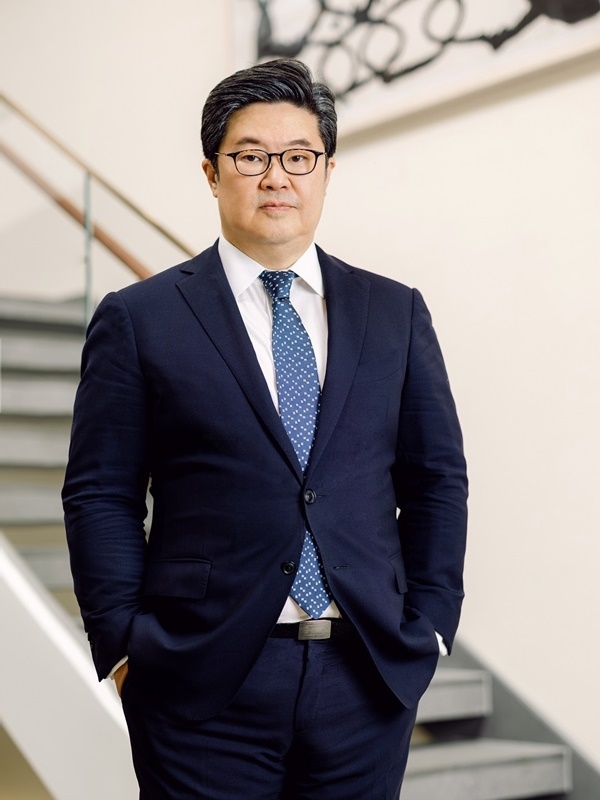
MBK is registered as a Korean entity, but its main management team consists of foreign nationals, including Chair Michael Byung-ju Kim, which could lead to the application of the "foreign investment" provisions of the Act on Prevention of Divulgence and Protection of Industrial Technology and the Act on Special Measures to Strengthen Competitiveness and Stabilize Supply Chain of Materials, Components, and Equipment Industry.
The acts require stricter investment screening of foreign investments into companies with national core and strategic technologies, as prescribed in the National Core Technology list.
The MBK chairman, a US citizen, exercises the final decision on all investment matters and holds the right to veto as the chair of MBK’s Investment Review Committee decision-making body. In addition, over 80 percent of the funds raised by MBK to finance the acquisition of Korea Zinc is allegedly composed of foreign funds.
In the United States, where capital market-related systems such as private equity funds are more developed than in Korea, corporations in which foreigners exercise dominant influence, such as MBK, are classified as “foreigners.”
“Experts believe that if foreign control is clearly evident in the composition of shareholders, management participation and policymaking authority, as in MBK, it is highly likely that the company will be classified as a foreign-controlled company,” a Korea Zinc official said.
Under regulations administered by the Committee on Foreign Investment in the US, the term "foreign person" means “any entity over which control is exercised or exercisable by a foreign national, foreign government, or foreign entity.”
The term "control" refers to power, either direct or indirect, whether exercised or not, through the ownership of a majority or a dominant minority of the total outstanding voting interest in an entity, board representation, proxy voting, special share, contractual arrangement, formal or informal arrangement to act in concert, or other means, to determine, direct or decide important matters affecting an entity.
Earlier this year, MBK reportedly retreated from its bid to acquire Asiana Airlines' cargo business possibly due to the nationality of its leadership. The aviation business is also designated as part of the national infrastructure, facing heightened regulatory scrutiny.
"MBK's failed attempt to join the Asiana bid is one of the latest cases where the government has fended off foreign ownership of a national infrastructure business," a legal source said on condition of anonymity. "For MBK's Korea Zinc bid, we need to pay attention to authoritative interpretation."
Meanwhile, the Young Poong-MBK alliance has raised its stake in Korea Zinc to 40.97 percent from the 38.47 percent stake it had secured through the tender offer launched in September and October, while Korea Zinc Chair Choi Yun-beom and related parties own about 34 percent of the company.
Korea Zinc plans to hold a shareholders meeting on Jan. 23, 2025, to vote on the appointment of two groups of new board members recommended by Korea Zinc and the Young Poong camp.
hnpark@heraldcorp.com











