Executives outline plans for smarter production, autonomous ships, satellite networks at Herald Business Forum
South Korea’s industrial leaders are pushing artificial intelligence beyond software and into factories, shipyards and space, seeking productivity gains and new capabilities in manufacturing and defense.
Speaking at the Herald Business Forum at The Shilla Seoul on Tuesday, executives from Hyundai Motor Group, LG Electronics, Posco Holdings, Samsung SDI, HD Hyundai, LIG Nex1 and Korea Aerospace Industries outlined how AI is reshaping operations, products and investment priorities.
The proposals highlighted a shared priority: using AI to handle complex tasks that conventional automation has struggled to address.
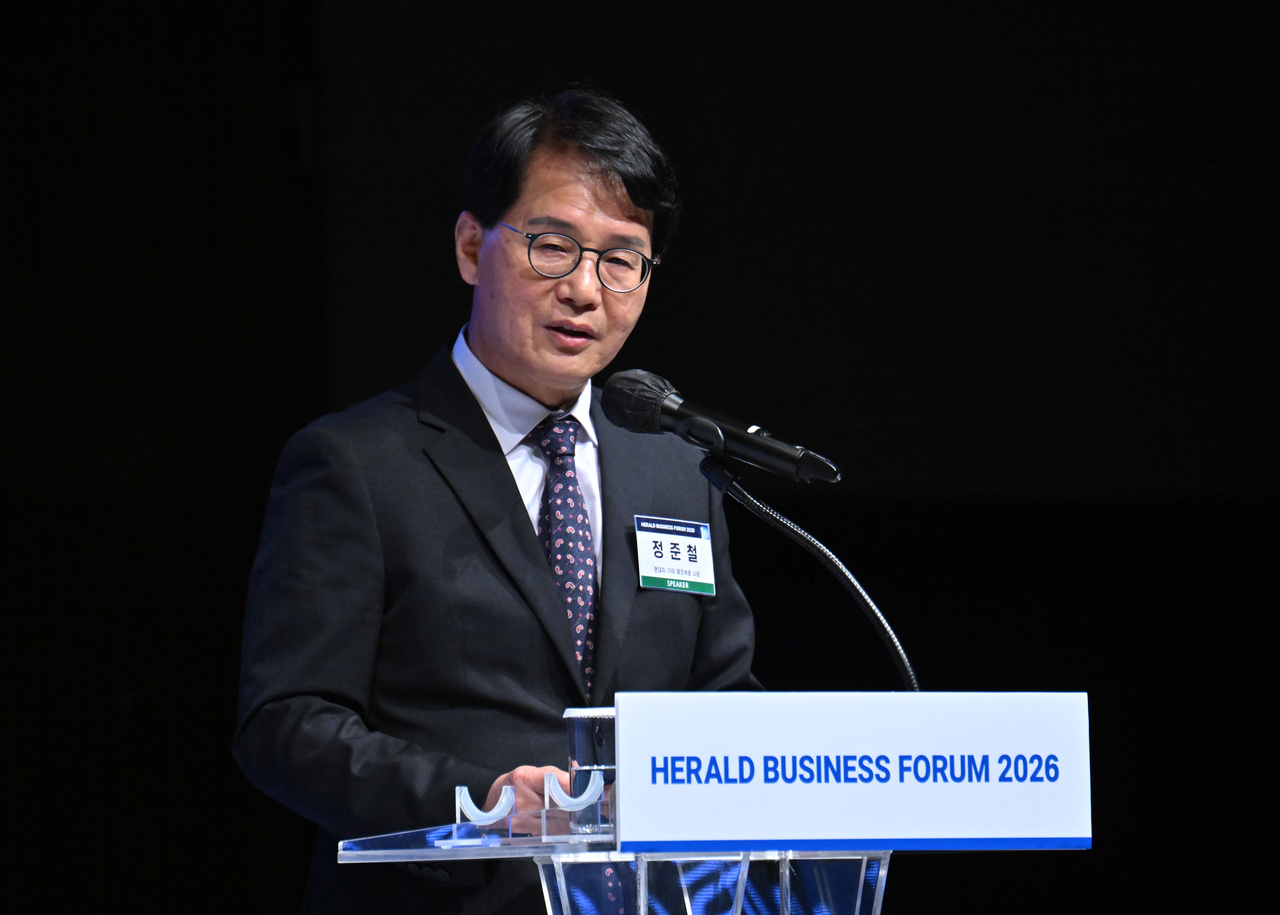
Jung Jun-cheul, president and head of the manufacturing division at Hyundai Motor Group, said final assembly remains one of manufacturing’s toughest automation challenges.
While press, body and paint shops are almost fully automated, trim and assembly operations at Hyundai’s recently built Ulsan electric vehicle plant have reached only 43 percent automation.
Hyundai plans to pilot its Dark Factory 24/7 concept at Hyundai Motor Group Innovation Center Singapore by 2030. Jung said robots would handle demanding, repetitive tasks, allowing workers to focus on supervision and process management.
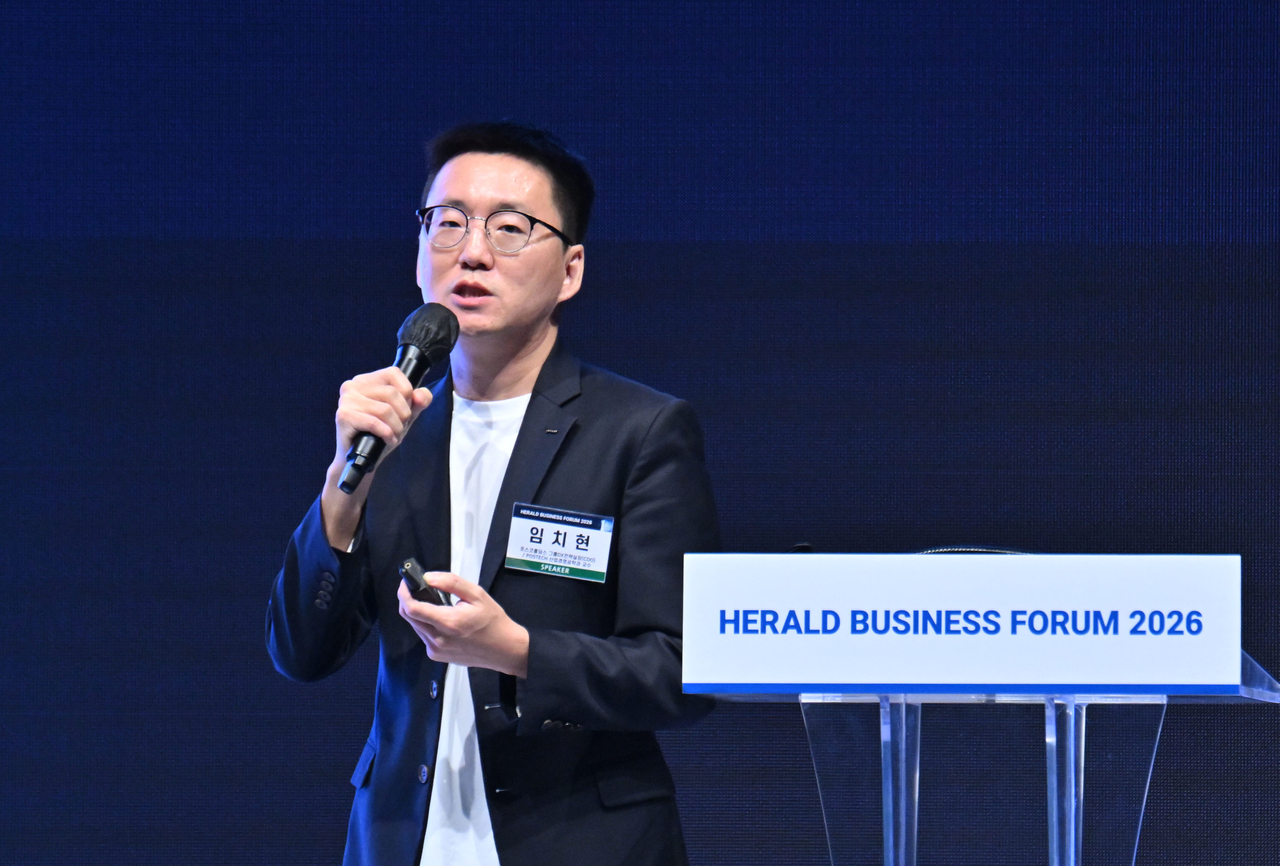
Posco Holdings is using AI to redesign workflows across steelmaking, battery materials, trading and construction, said Lim Chie-hyeon, head of its DX strategy office, which oversees digital and artificial intelligence transformation.
Its research institutes are embedding AI agents throughout research and development. “Tasks that took two days have been shortened to three minutes, and the time required to analyze experimental data has dropped dramatically,” Lim said.
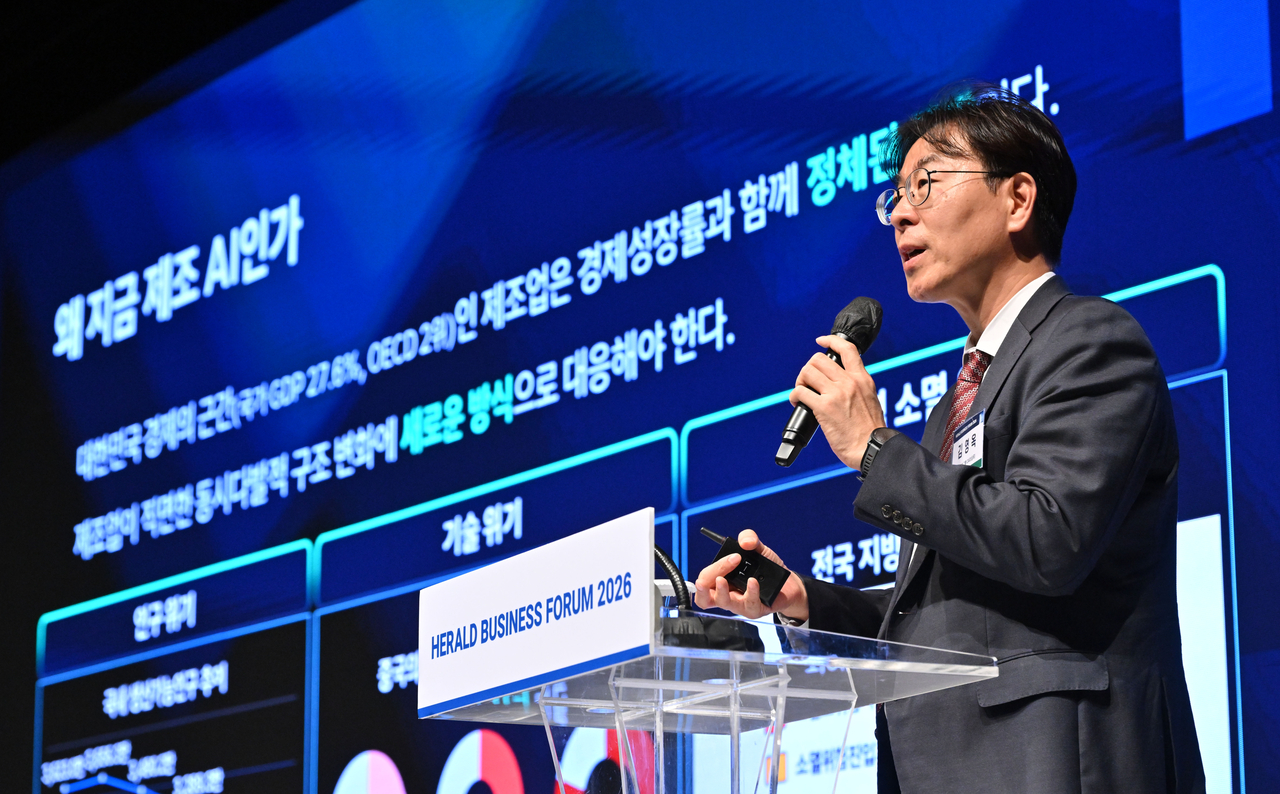
At HD Hyundai, Chief AI Officer Kim Young-ok outlined plans for autonomous navigation and route optimization to reduce vessel operating costs. In shipyards, robots are taking on hazardous work such as enclosed-space welding, while digital twins developed with Nvidia and Siemens help simulate and improve operations.
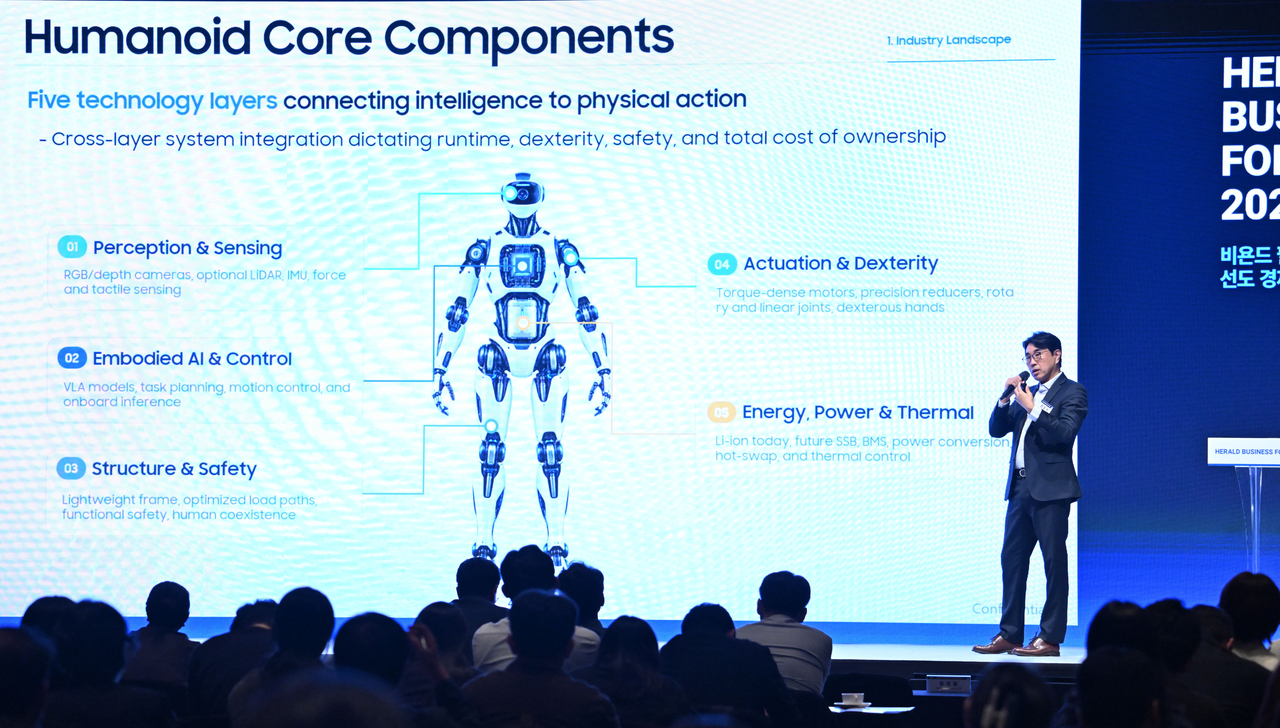
Samsung SDI sees humanoid robotics as a growing battery market. Hyun Jang-suk, vice president and head of its technical program management team, said the company has supplied more than 150 million 21700 cylindrical cells this year to more than five major Chinese humanoid robot manufacturers.
It also aims to apply its SolidStack all-solid-state battery technology to humanoids, targeting mass production in 2027.
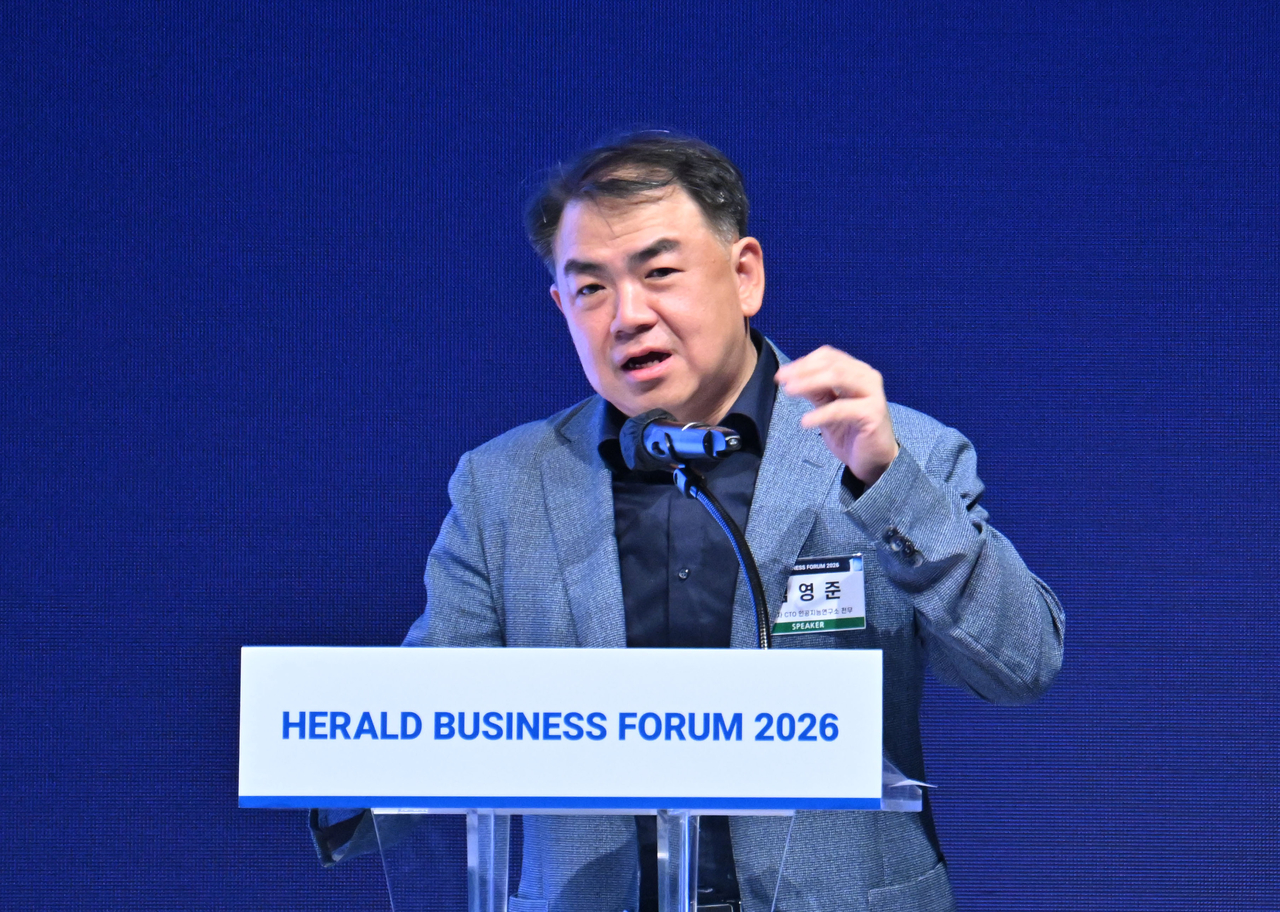
LG Electronics is prioritizing factory-floor data to train robots for real-time decisions, said Senior Vice President Kim Young-joon. Capturing “failure-and-recovery patterns” helps machines correct mistakes, with economic value the ultimate test.
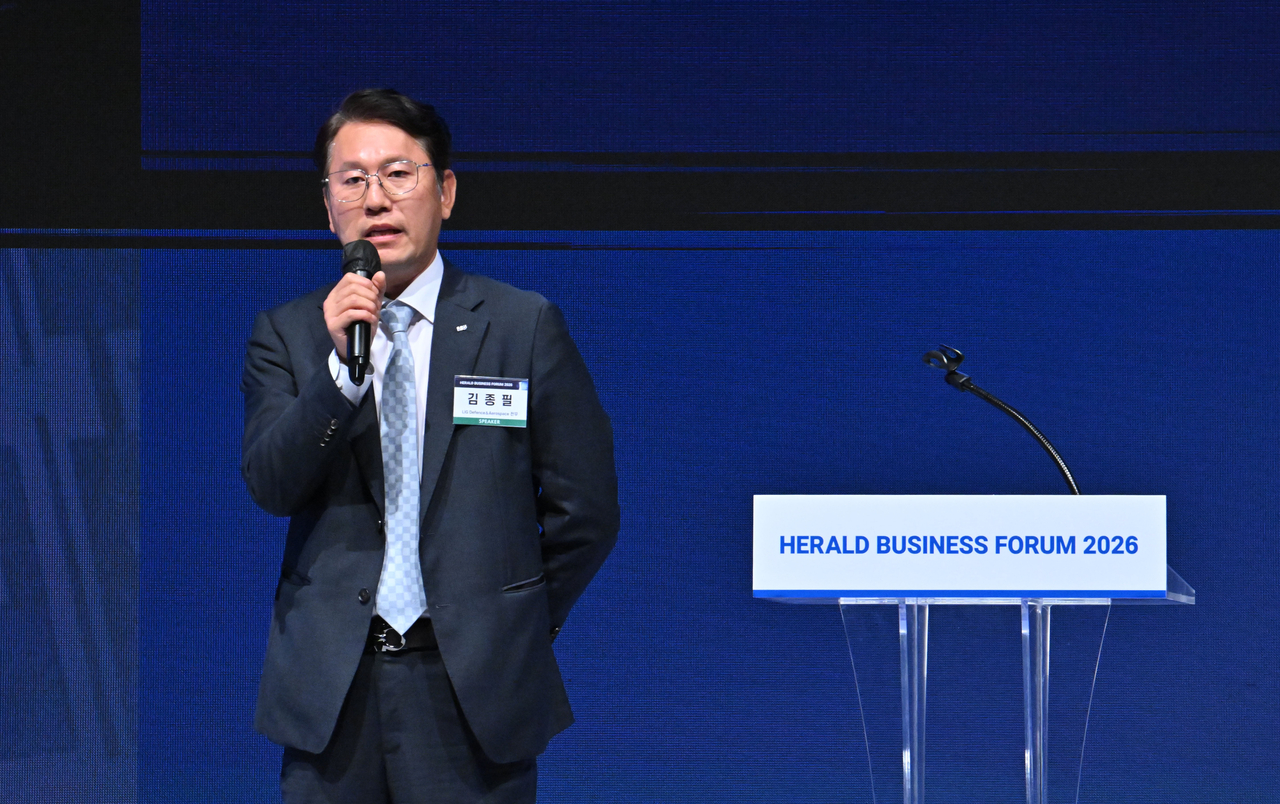
In aerospace, cheaper launches and expanding satellite networks are creating new uses for AI.
Kim Jong-pil, vice president of LIG Defense & Aerospace Satellite Mission Center, described how AI can process satellite imagery to identify specific military targets and monitor maritime vessel movements, turning raw data into tactical intelligence.
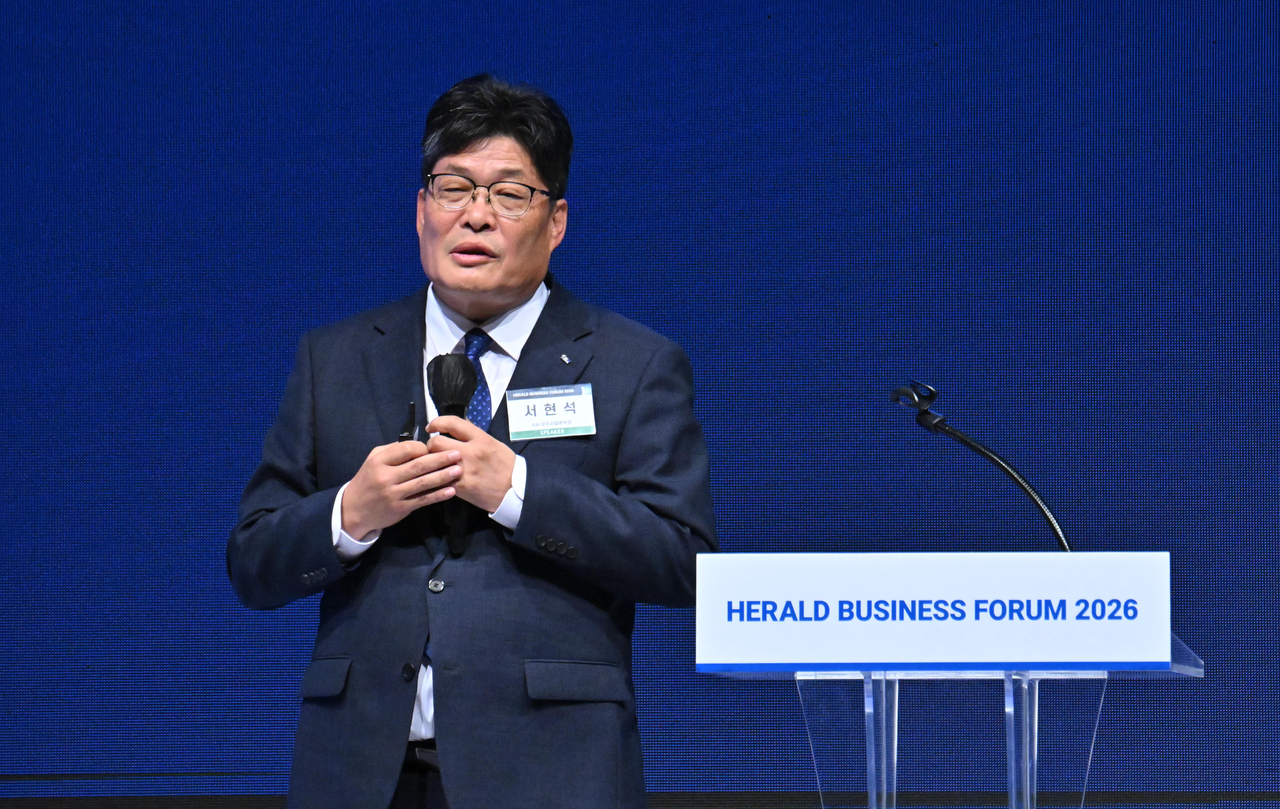
Seo Hyun-suk, vice president of the space business division at Korea Aerospace Industries, said onboard AI would allow satellites to filter out cloud-obscured imagery and coordinate missions without ground commands.
Such networks would underpin KAI’s planned sixth-generation crewed-uncrewed teaming system, linking aircraft such as the KF-21 with autonomous decoy and support drones.
Seo called for a national strategy to develop radiation-hardened AI chips for space. Kim urged closer integration of military satellites and commercial assets, supported by streamlined procurement and global partnerships.
hyejin2@heraldcorp.com