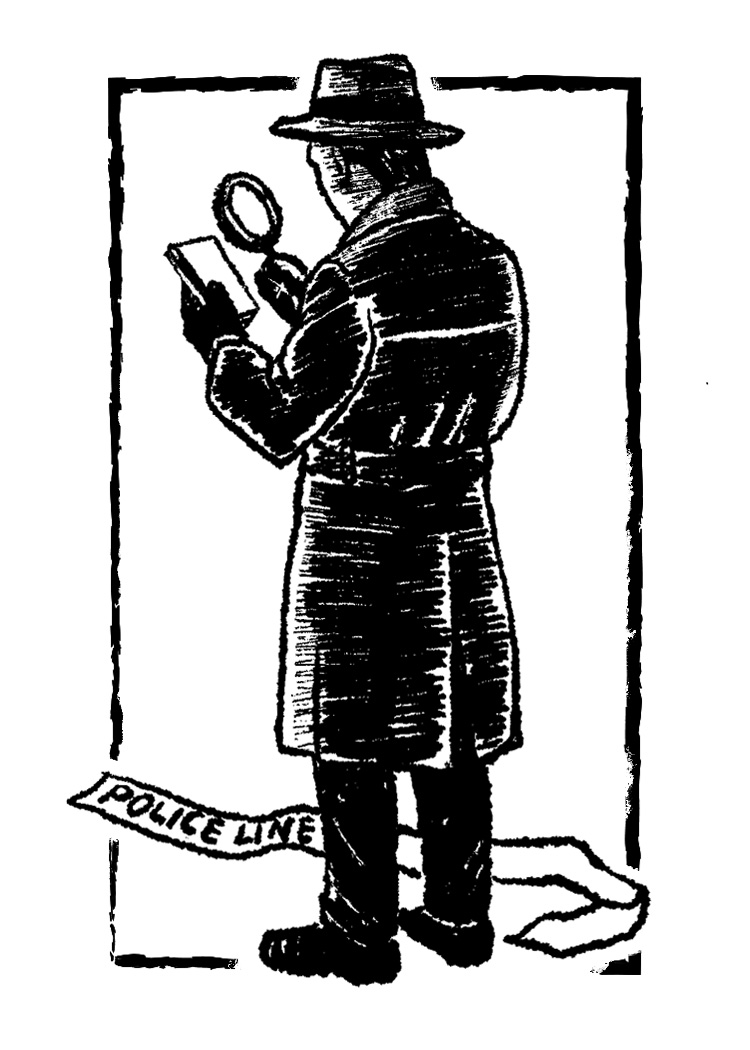
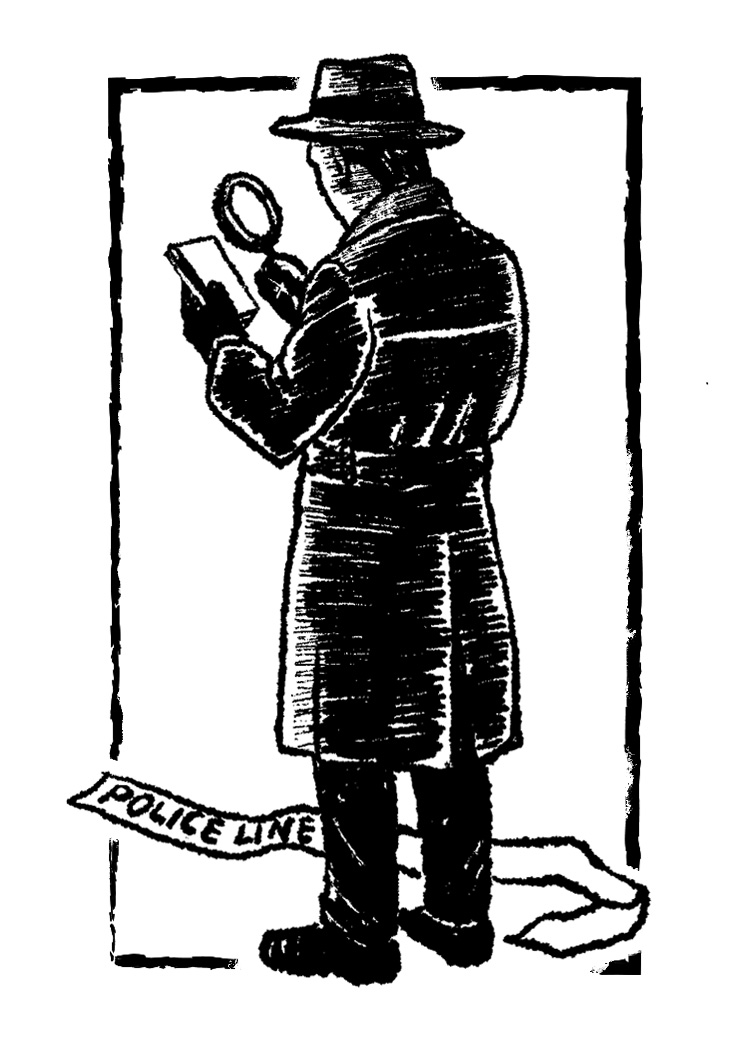
A murder transformed into a fabricated espionage narrative in the 1987 'Suzy Kim case,' in an illustration of abuses under South Korea’s authoritarian past
In January 1987, the South Korean Embassy in Singapore got a call from the US Embassy about a suspicious asylum seeker, a 28-year-old Korean named Yun Tae-shik. Yun claimed he had narrowly escaped an attempted kidnapping by North Korean agents, alleging that the operation’s point person was none other than his wife.
But his story quickly began to unravel. It was soon revealed that Yun had attempted to defect to North Korea before approaching the US Embassy. Further interrogation revealed a far darker truth: Yun had killed his wife, Kim Ok-bun, and was trying by any means to evade prosecution.
From there, the case took a bizarre turn.
In the decades that followed, it came to be widely known as the case of “Suzy Kim” — a supposed North Korean spy who had married in disguise and conducted secret operations.
In this edition of "True Crime," we explore how a husband’s poorly conceived attempt to cover up his wife’s killing turned into something else completely when South Korea’s then-ruling military junta seized the case for its own purposes. Kim was an ordinary woman, but the state needed her to be a ruthless spy living under a false identity, marrying an unsuspecting man and drawing him into a web of deception and entrapment.

A doomed marriage
Who was Kim Ok-bun before she was turned into someone she was not?
Kim was born in 1952 as the third of six children in a poor family in North Chungcheong Province. She began supporting her family from a young age, working at bars near US military bases in South Korea and Japan before eventually moving to Hong Kong.
“Suzy Kim” was an alias she used abroad, not her legal name, and Yun was her third husband.
Their marriage, however, was built on deception.
Yun, six years younger than Kim, was a middle school dropout, but he claimed to have graduated from the Korea Military Academy and to have been discharged as a captain, a background that would have implied connections to prominent military figures in the Chun administration.
The two met in Hong Kong and tied the knot in 1986, but the couple gradually grew apart during their stay in the city. Yun was as violent as he was incompetent, and it was reported that he subjected his wife to frequent physical abuse.
On Jan. 3, 1987, the couple argued and Yun turned violent, strangling his wife to death. Two days later, he hid her body under a bed and went to the North Korean Embassy in Singapore to seek asylum.
But North Koreans had no interest in taking in a murderer with no prominent background, and he was eventually sent to the South Korean Embassy in Singapore. What followed is the version of events known from the beginning of this episode: He became the victim who narrowly escaped a trap set by his wife, a North Korean spy posing as an ordinary housewife.
To understand how this was possible, it is necessary to introduce Chang Se-dong, then South Korea’s intelligence chief and one of the most loyal and powerful lieutenants of President Chun Doo-hwan, who ruled the country under a military junta and suppressed dissent through brutal crackdowns.
Chang claimed that his agency had been deceived by Yun.
“I am responsible for failing to hand the suspect (Yun) over to prosecutors as head of the Agency for National Security Planning (today’s National Intelligence Service),” he said at a press conference in 2002. “I have not apologized directly to Kim’s bereaved family, but I have conveyed my condolences indirectly.”
But contrary to Chang's claims, a reinvestigation in the 2000s found that both Chang's agents in Singapore and then-South Korean Ambassador to Singapore Lee Jang-chun had deemed Yun's claims unlikely from the outset.
It was Chang who, despite initial objections from the ambassador, allowed Yun to speak directly to the press in Bangkok on Jan. 8, 1987, triggering sensational coverage back home.
South Korean newspaper articles published the next day described the incident as a daring abduction attempt by Pyongyang.
“North Korean agents were found to have used all sorts of methods, including honey-trapping and fake marriages, to lure one of our workers out of the country to the North,” an article in Kyunghyang Shinmun, a local daily, reported.
Yun continued to play the role of the victim. Upon his arrival at Gimpo International Airport on Jan. 9, after the Bangkok press conference, he told reporters, “I never knew the true meaning of anti-communism, but now I do. … I was terrified not only when I was taken to the North Korean Embassy but also after I escaped, but it feels like a dream to be back in Seoul.”
The government, of course, knew his story could not be trusted.
During intense interrogation sessions at the intelligence agency in Seoul, Yun confessed everything. But that confession was kept under wraps. He remained at the intelligence agency for more than three months, where he was "educated" on the fabricated scenario the agency cooked up, before being released in April 1987.
Meanwhile, in Hong Kong, local authorities investigated the death of a Korean woman in their jurisdiction. They had discovered Kim’s body under a bed on Jan. 26, 1987, and later announced that they found no evidence suggesting the deceased had any ties to North Korea or communism. They concluded that Suzy Kim was not a spy and summoned Yun for questioning, but South Korea’s Foreign Ministry refused to cooperate.
North Korea also denied any attempt to kidnap Yun.
But none of the reports from abroad reached the South Korean public, as the country’s authoritarian regime put a muzzle on the media. Yun never faced charges for his crime in Hong Kong, although he was later convicted of fraud and served prison time in the 1990s.
'A spy family'
Being labeled a communist and a sympathizer of a hostile state is enough to smear the reputation of any individual in a democratic nation, but it was more so during the ideological conflict of the Cold War.
From the 1960s through the 1980s, South Korea’s authoritarian governments frequently accused political rivals of being communists — including prominent liberal figure Kim Dae-jung, who later became the country’s president and a Nobel Peace Prize laureate.
Against this backdrop, Kim’s posthumous portrayal as a North Korean spy was a tragedy in itself, and one that left lasting consequences for her family in South Korea.
In 2003, Kim’s family sued Yun and the South Korean government over the hardships they had endured.
Family members said they were subjected to constant surveillance and intimidation by investigative agencies. Kim Hyeon-gyeong, one of the victim’s four younger sisters, testified that the entire family was repeatedly called in for questioning and that her phone was tapped. The persistent fear of being watched left her deeply traumatized, with effects lasting for decades.
Testimony from Ahn Hyeon-cheol, Kim Hyeon-gyeong’s husband, illustrated the inhumane treatment the family endured. During interrogations — where they were not even given water — intelligence agents allegedly used sexually degrading language toward the Kim sisters.
Ahn recalled, “I never told my wife this, but they asked me what it’s like to live with a commie wife. They said my sister-in-law was a whore, and so was my wife.”
He also said the agents pressured him to divorce his wife. Although he initially resisted, he eventually said he would get divorced, calling the moment “extremely shameful.” Ultimately, however, he did not leave his wife, becoming the only brother-in-law who remained married to a Kim sister.
The family’s suffering did not end there. Kim's mother was also abused by the intelligence agencies, and at one point, they took her coat, saying it was "paid for by a spy."
Kim's older brother, who was also subject to abuse, protested, saying, "Hit me if you will, but how can you do that to an old woman? You must have parents, too."
The mother was so tormented by the ordeal that she lost her ability to speak and passed away in 1997. Her older sister was fired from her job, became mentally unwell, and died tragically in 1987. Kim's older brother was killed in a traffic accident in 2000.
The entire family faced social ostracism, and even Kim's nephews and nieces were subject to school bullying.
During those years, they were not even able to ask where Kim’s body had been buried.
Delayed reckoning
Yun, meanwhile, gained a reputation as an up-and-coming entrepreneur in the late 1990s after being released from prison in 1996, having served time for fraud, not for Kim’s murder.
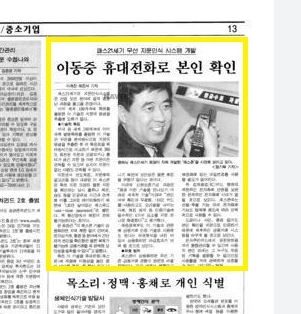
It was not until 2000 that local media reports revisited the case and raised new questions, prompting the Kim family to file a murder complaint against Yun, 13 years after Kim’s death.
Amid allegations that the National Intelligence Service had hindered the prosecution’s investigation, Yun was finally arrested on Nov. 13, 2001, just 50 days before the statute of limitations was set to expire. He was convicted of murder on May 14, 2002, and was sentenced to 15 years and six months in prison. He was released in April 2017 after completing his sentence.
After the reinvestigation posthumously cleared Kim of being a spy, the bereaved family sought to locate where she was buried in Hong Kong. By then, it was too late: Authorities had already classified the body as unclaimed and transferred the remains to a public cemetery for unidentified individuals.
With no way to recover the remains, the family later brought back a handful of soil from the cemetery and placed it at their mother’s grave — all they could do to mourn.
On Aug. 21, 2003, the NIS issued an official apology for the incident.
"We express condolences for the deceased, and issue an official apology for the Agency for National Security Planning's role in rigging the incident," it said.
But the prosecution did not indict the related government agencies that covered up Yun's murder and framed Kim as a spy. The applicable charges — abuse of authority and dereliction of duty — carried statutes of limitations of seven and five years, respectively, which had already expired.
The Kim family won the civil suit filed in 2003, in which the court ordered the state and Yun to pay them 4.2 billion won ($2.95 million) in compensation and also damages for the delay, totalling 4.57 billion won.
Many members of the public believe the official apology and financial compensation came too little, too late for the Kim family, who had to suffer the loss of their siblings and mother and go through a great deal of personal pain as their family fell apart.
It is widely regarded as one of the worst abuses of state power by the administration of Chun Doo-hwan and his right-hand man Chang Se-dong, disregarding the lives of the people in order to extend the regime's oppressive and dictatorial rule.