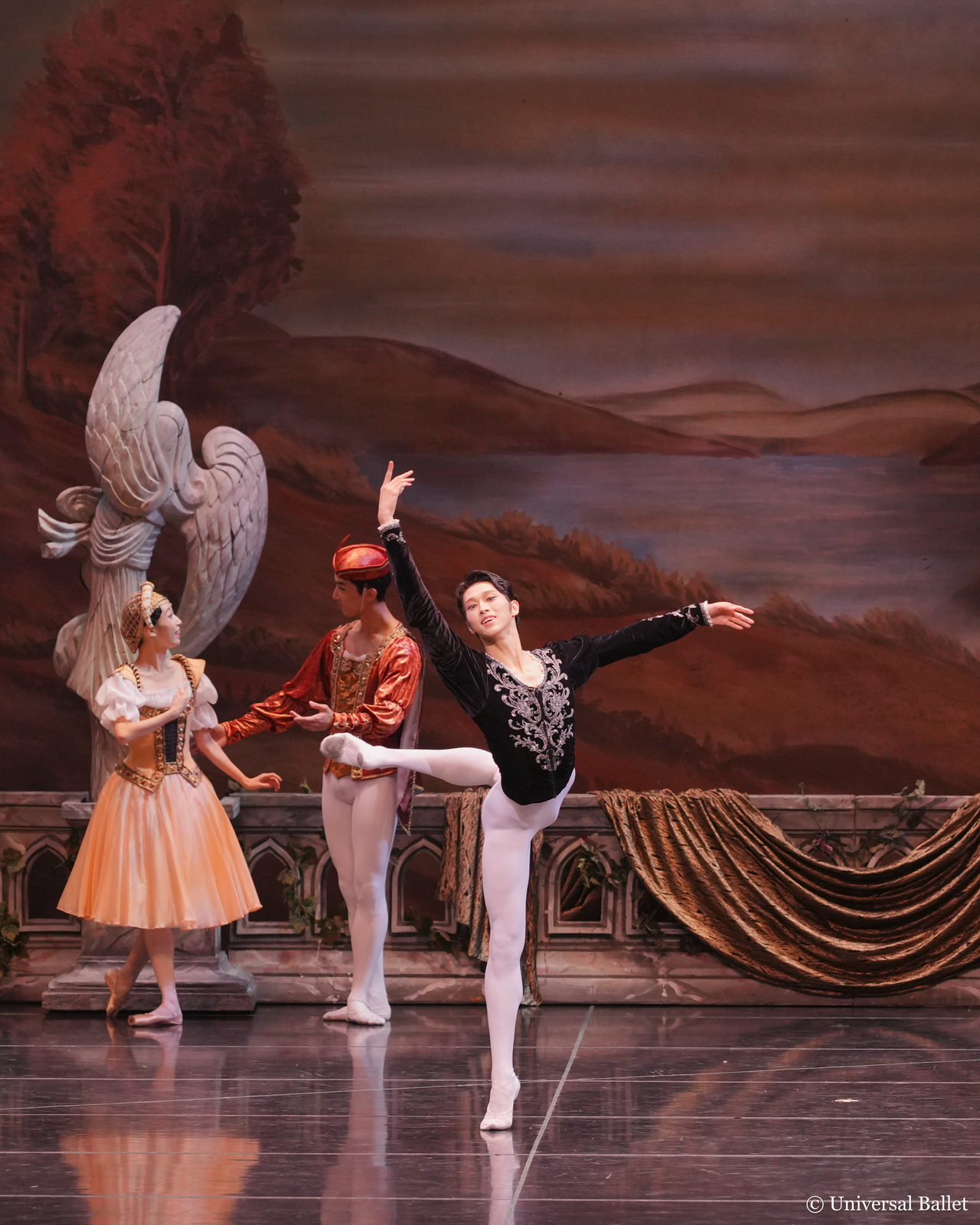
After year at the Mariinsky, Jeon has grown into a ballet prince

His father wanted him to give up ballet. The boy refused.
"Can't you see that I'm happy when I dance?"
It was a familiar argument, one that would play out in countless families with children dreaming of careers their parents considered too uncertain.
Tears filled the boy’s eyes. His father worried that it would be difficult for a man to build a successful career in dance in Korea. The boy was doing well in school, the father reminded him. Why not keep ballet as a hobby and pursue a more stable career?
"That's not me. I just like dancing," he insisted.

The boy was Jeon Min-chul, then an elementary school student appearing on SBS's 2017 talent show "Finding Genius."
Nine years later, Jeon, 22, is a first soloist with the Mariinsky Ballet, one of the world's most prestigious ballet companies.
He has just completed his first season in St. Petersburg and returned to Korea for a summer holiday — though "holiday" may be too generous a word. In July and August, he has been appearing in a series of galas and full-length ballets, drawing sold-out audiences, long lines of fans waiting for bouquets and autographs after performances and, not to mention, constant standing ovations.
The ballet sensation says he is happy to finally be able to share what he has learned over the past season.
"I'm grateful that I can share what I've learned at the Mariinsky with Korean audiences," he said, with the same excitement that once made him certain he wanted nothing more than to dance.
A boy’s journey to ballet
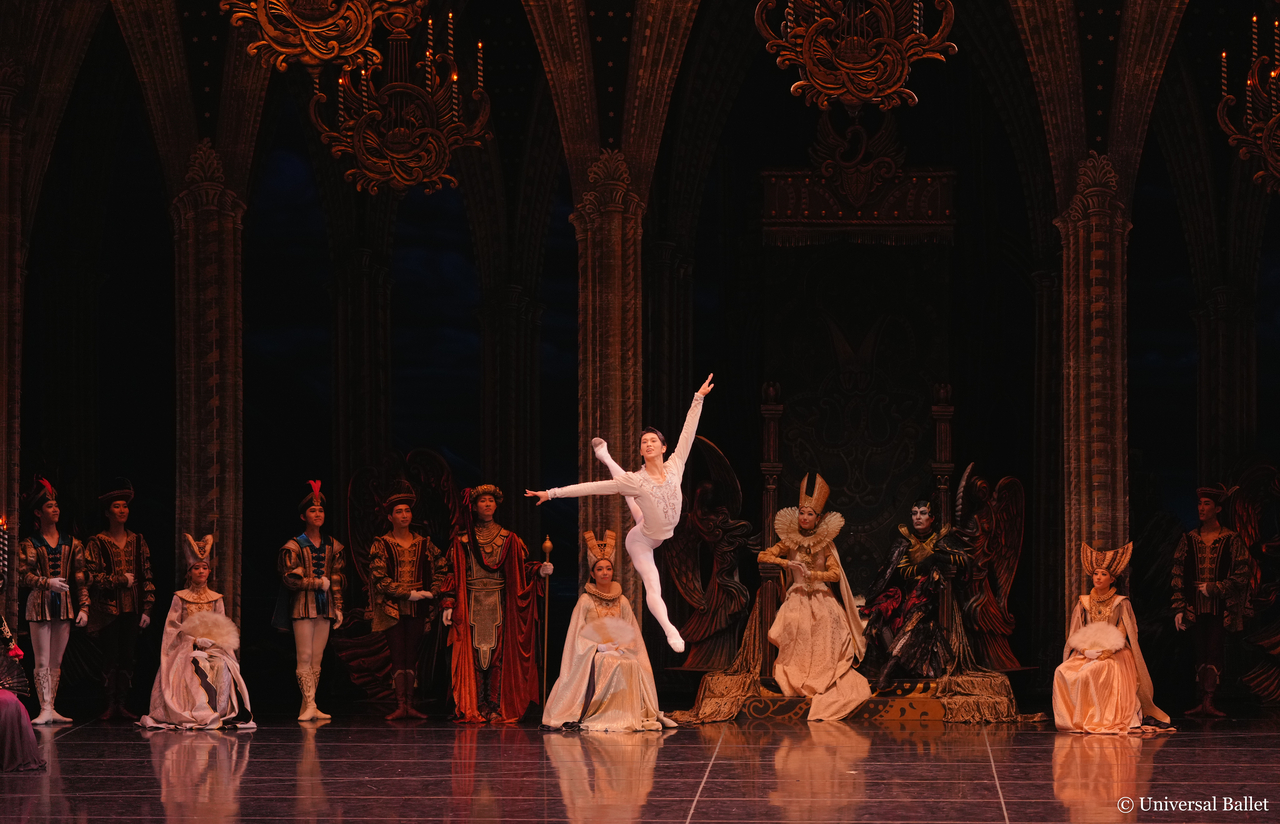
Jeon began turning heads in May 2024, when he performed Kim Yong-geol's adaptation of Maurice Bejart's "Bolero" at the Korea Ballet Festival. Bare-chested and wearing black Ray-Ban sunglasses, he moved to Ravel's hypnotic score with striking physicality.
At 185 centimeters, with long limbs and a slender frame, Jeon already had the silhouette of a ballet prince. The performance quickly propelled him into the spotlight among ballet fans.
By July, word had spread that Jeon was headed for the Mariinsky Ballet. The company already had one celebrated Korean star, principal dancer Kim Ki-min, who joined in 2011. Jeon would become only the third Asian dancer to join the company, after Kim and Japanese ballerina May Nagahisa.
As news of Jeon's move to the Mariinsky spread, an old television clip from his childhood began circulating online. In 2017, "Finding Genius" had followed the audition process for child actors in the Korean production of the musical "Billy Elliot." Candidates hoping to play Billy underwent intensive training in ballet, tap and vocal performance.

Among them was Jeon, who stood out from the crowd. Perhaps too much. At 150.3 centimeters, he was already too tall for the role of the young Billy, and he did not make the cast.
As the clip resurfaced, Jeon was dubbed Korea's real-life Billy. The emotional parallel was hard to miss: a father worried about his son's future, a boy who could think of little else but dancing, and a young dancer determined to let his talent make the argument for him.
"My parents were ordinary office workers and had no connection to the arts. Before I started ballet, they had never even seen a ballet performance. They didn't know much about classical music, either," Jeon recalled in an earlier interview. "Now they're my biggest supporters."
First season with the Mariinsky
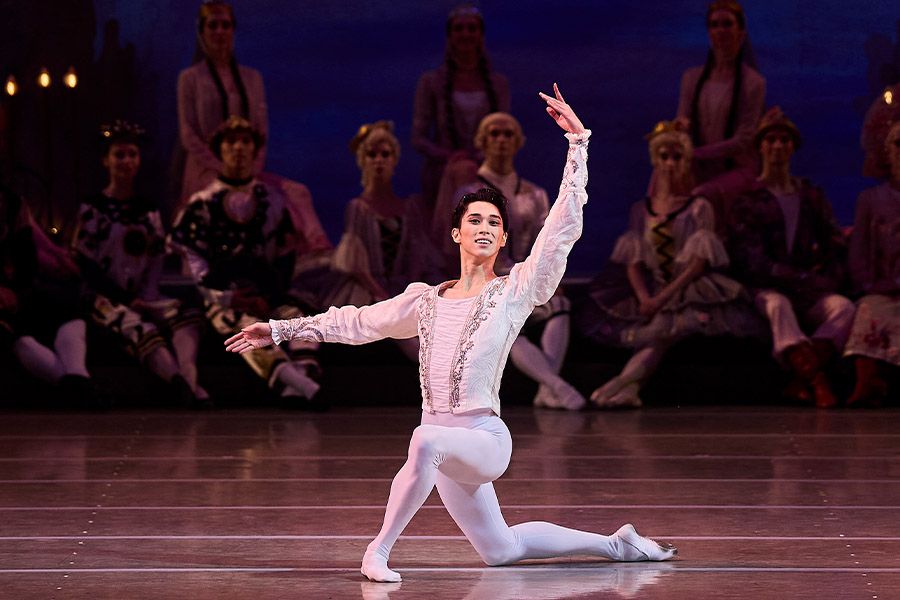
Jeon's appointment at the Mariinsky was remarkable not only because he was Korean, but also because of where he entered the company's hierarchy. The Mariinsky has five ranks: corps de ballet, coryphee, second soloist, first soloist and principal. Young dancers typically enter at the bottom and work their way upward. Jeon entered as a first soloist — and was given leading roles immediately.
He first took the Mariinsky stage as Solor in "La Bayadere." Over the course of the season, he went on to dance leading roles in "Giselle," "Swan Lake," "Raymonda," "The Sleeping Beauty," "The Nutcracker" and "Romeo and Juliet."
But for Jeon, the most important part of his first year was not the number of roles he danced, but how it changed the way he saw ballet.
"Life in St. Petersburg changed me both as a dancer and as a person," he said. "In Korea, my life revolved entirely around the rehearsal studio, practicing from morning until late at night. In St. Petersburg, I had much more space in my daily life."
The slower rhythm gave him time to see performances, observe other dancers, step away from ballet and think about his art. The city also became a source of inspiration.
"Even the streets on my walk home after rehearsal felt beautiful. Those quiet moments, when I was simply lost in thought, became part of my dancing."
At the Mariinsky, his teachers also pushed him beyond technique, emphasizing acting and emotional expression. After watching countless performances and spending a year onstage himself, Jeon began to see movement as a language of its own. Now, he wants to use the classical vocabulary of ballet to make those unspoken emotions visible.
"I could hear the language and whispers that dancers were exchanging through their movements," he said. "Through classical ballet, I want to convey the emotions I feel and the flow of the story to the audience as clearly as possible."