
Recovery efforts began Tuesday across southeastern Korea after record-breaking rainfall battered the region, with the hardest-hit cities struggling to return to normalcy.
Authorities continued to warn of possible landslides as hundreds of residents remained in evacuation centers, while crews worked to remove soil, fallen trees and other debris from roads and streams by flooding.
Geoje, South Gyeongsang Province, resumed public transportation Tuesday after a one-day suspension forced by 927.6 millimeters of rainfall there on Sunday and Monday.
Despite authorities’ continued efforts to clear debris left by floods and landslides, transportation networks had yet to fully recover. Twenty of the city’s 30 schools remained closed because of damage to their facilities.
Though heavy rain warnings had been lifted, rain was still falling in Geoje as of noon Tuesday. According to the Ministry of the Interior and Safety, a further 31 mm of rain had fallen by 10 a.m. on Tuesday, taking the total since midnight Saturday to 958 mm, exceeding the city's average rainfall for the entire summer.
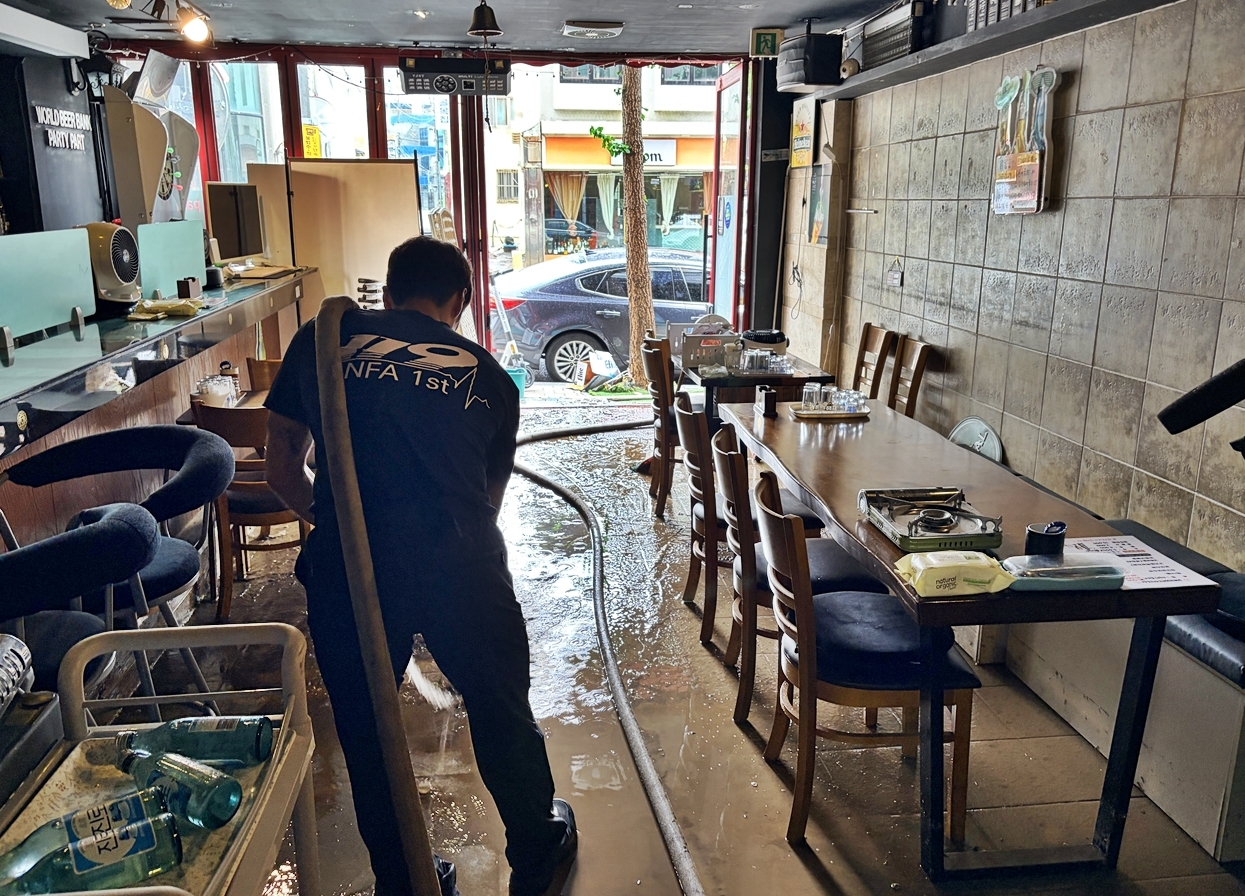
The city began deploying equipment and personnel early Tuesday to clear mud, fallen trees and other debris from roads and clogged waterways.
“We will mobilize all available resources to speed up recovery and minimize inconvenience to residents,” Geoje Mayor Byun Gwang-yong said. “As the ground remains saturated, additional incidents such as landslides and soil runoff could occur. Residents are urged to exercise caution and take safety precautions in areas at risk.”
Tongyeong, South Gyeongsang Province, which had recorded cumulative rainfall of 776.7 mm as of 10 a.m. Tuesday, was also working to clear roads and restore damaged facilities.
Interior Minister Yoon Ho-jung visited Geoje and Tongyeong on Tuesday and said the government would move quickly on measures including recommending that the hardest-hit areas be designated as special disaster zones.
The government provided 3 billion won ($2.1 million) in special grants and 40 million won in disaster relief funds the previous day to support emergency recovery work and displaced residents.
The full extent of the damage was still being assessed.
Nationwide, 2,598 cases of damage, including flooded homes and roads and fallen trees, had been reported, with 2,352 in South Gyeongsang Province, according to an Interior Ministry update issued Tuesday morning.
Of the 4,161 power outages caused by the rain, 97 percent had been restored, the ministry said. Water service for 5,177 households was expected to be fully restored by Friday.
Many evacuated residents had yet to return home, as their houses remained affected by flooding and landslides. The Interior Ministry said 251 people were still staying in evacuation centers as of 9 a.m. Tuesday.
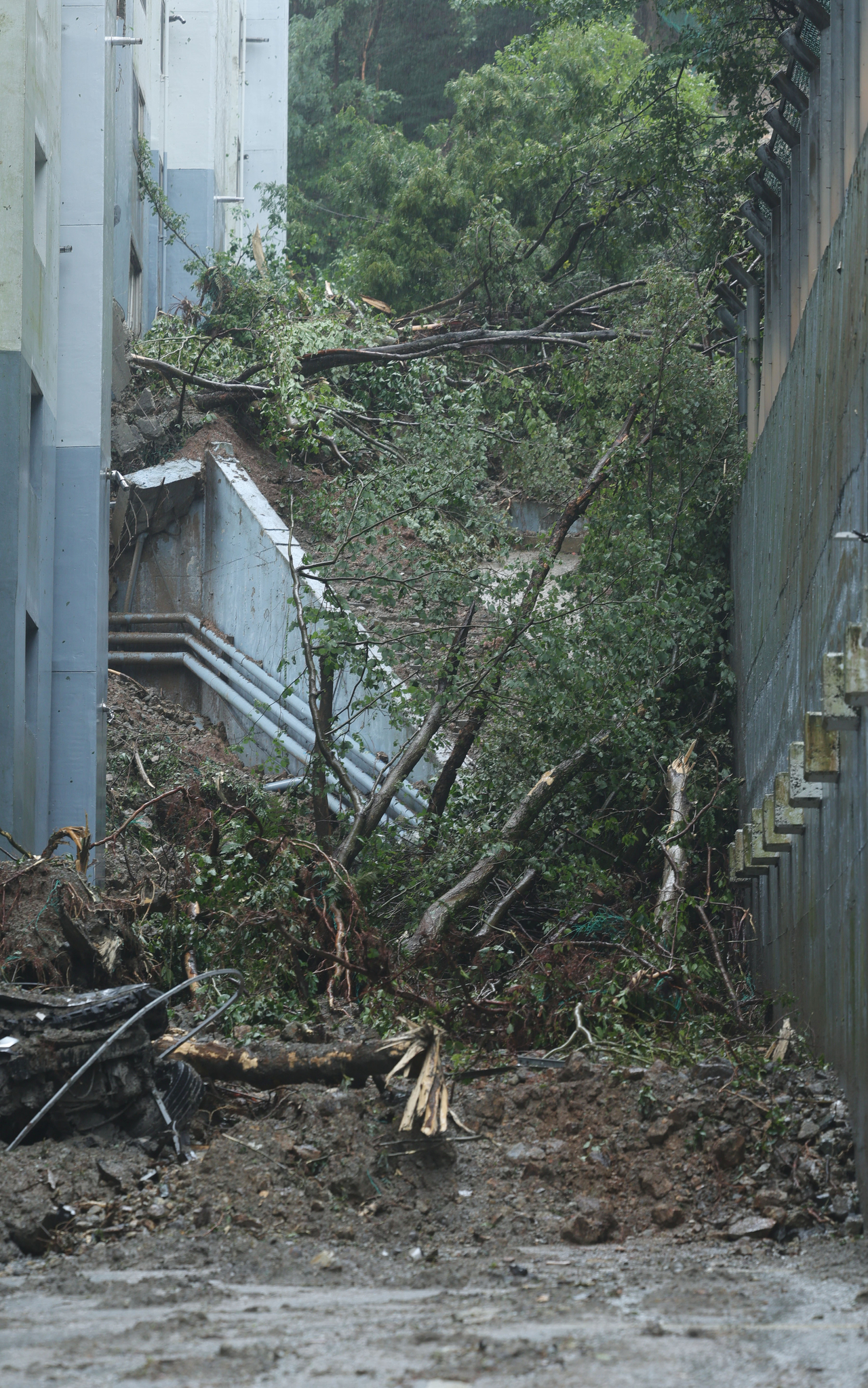
Of them, around 140 residents of an apartment complex in Okpo-dong, Geoje, were staying in nearby schools and other public facilities after a landslide struck the complex, killing one person and injuring two others.
Authorities continued to warn of further landslides in Geoje and Tongyeong as the ground remained saturated and unstable.
Political leaders have already visited affected areas and pledged support for recovery efforts.
Democratic Party of Korea Chair Rep. Kim Min-seok visited Geoje on Monday evening shortly after being elected party leader. People Power Party Chair Rep. Jang Dong-hyeok and Floor Leader Rep. Jeong Jeom-sig visited the city Tuesday morning.
Prime Minister Han Seong-sook also visited the area. President Lee Jae Myung, meanwhile, called for extreme weather to be treated as an issue of national security and instructed the prime minister to closely oversee the response.
“Record-breaking heat waves, droughts and torrential rains are becoming part of our daily lives,” Lee said. “It is time to approach the climate from the perspective of national security.”
forestjs@heraldcorp.com