President says Uzbekistan remains open to foreign investors
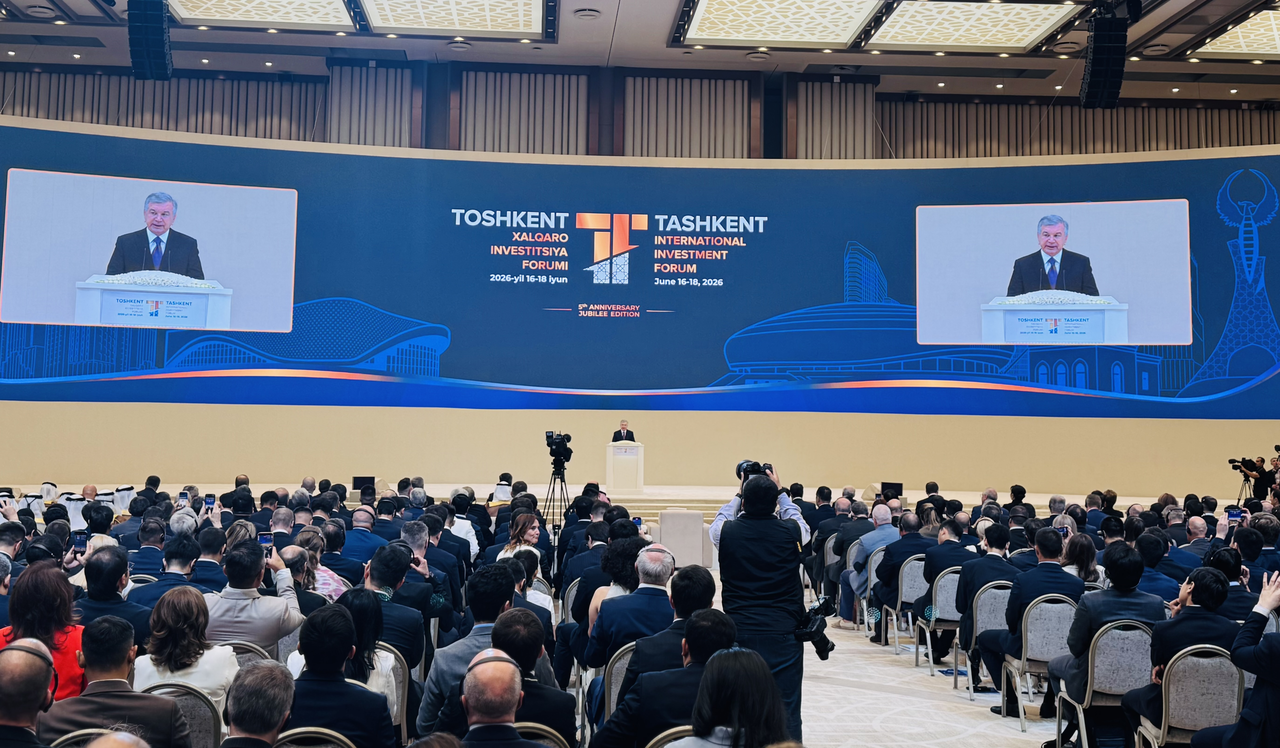
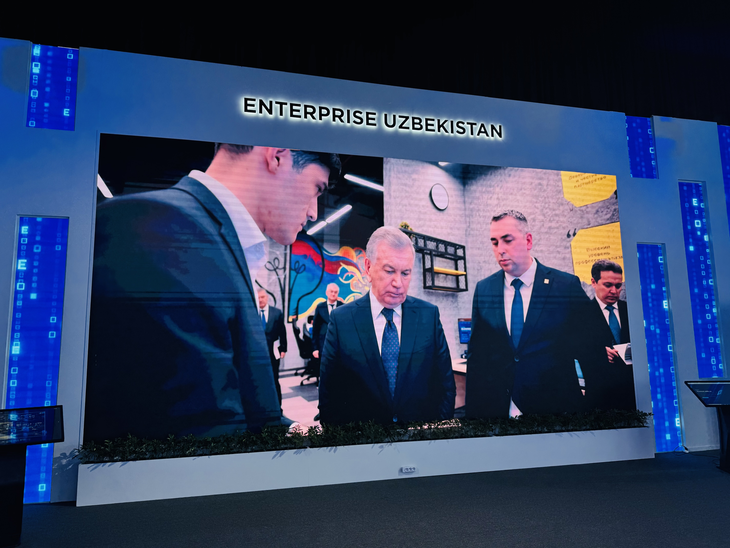
TASHKENT, Uzbekistan — Uzbek President Shavkat Mirziyoyev unveiled a six-point investment agenda at Tashkent International Investment Forum that includes a financial center based on English and Welshcommon law, an international commercial court and incentives for artificial intelligence projects, as Uzbekistan seeks to attract more foreign capital.
The three-day forum, regarded as Central Asia's largest investment gathering, was held from June 16, attracting more than 8,000 participants from 99 countries, including heads of government, investors and representatives of international financial institutions.
More than 160 delegates traveled from South Korea to attend the Korea-Uzbekistan Business Forum organized by Herald Media Group, including over 120 CEOs as well as government officials, politicians and journalists, forming the largest Korean delegation in the five-year history of the event.
Measures included the creation of the Tashkent International Financial Center under a legal framework based on English common law, the launch of sovereign Islamic bonds and greater investment in manufacturing, critical minerals, AI and renewable energy.
The planned financial center will operate under English common law, a framework often used by international financial hubs to provide investors with greater legal certainty.
Addressing government leaders, business executives and representatives of international financial institutions, Mirziyoyev said Uzbekistan's reform agenda has continued to attract growing international interest.
He said the country had attracted more than $150 billion in foreign investment in recent years, including $123 billion over the past five years. Uzbekistan's economy grew 7.7 percent last year, while foreign investment reached $43 billion and international reserves exceeded $70 billion, he said.
"The doors of New Uzbekistan will always remain open to foreign investors," Mirziyoyev said.
Mirziyoyev outlined six priorities for future investment: strengthening legal protections for investors, developing capital markets, expanding high-value manufacturing and critical minerals processing, advancing green energy and AI, improving transport and logistics connectivity, and accelerating regional development.
The government also plans to expand capital markets through new financing instruments, including sovereign Islamic bonds, or "sukuk," while increasing investment in manufacturing and critical minerals. Mirziyoyev said Uzbekistan's reserves of gold, copper, uranium and rare minerals are estimated at $3 trillion.
In the energy sector, Uzbekistan aims to increase the share of renewable energy in electricity generation to 54 percent and develop renewable-powered data centers. Investors in a newly established AI and data center zone in Karakalpakstan will receive tax and customs incentives through 2040.
The president also highlighted major transport projects, including the China-Kyrgyzstan-Uzbekistan railway, the Trans-Afghan Corridor and the Middle Corridor linking Asia and Europe.
The president also highlighted major transport projects, including the China-Kyrgyzstan-Uzbekistan railway, the Trans-Afghan Corridor and the Middle Corridor linking Asia and Europe.
He said public-private partnership infrastructure projects worth $27 billion are ready for implementation, while the housing sector is expected to generate at least $10 billion in annual demand.
"For us, investment is far more than a source of capital," Mirziyoyev said.
"It is a catalyst for advanced technologies, modern knowledge and expertise, new jobs and development."
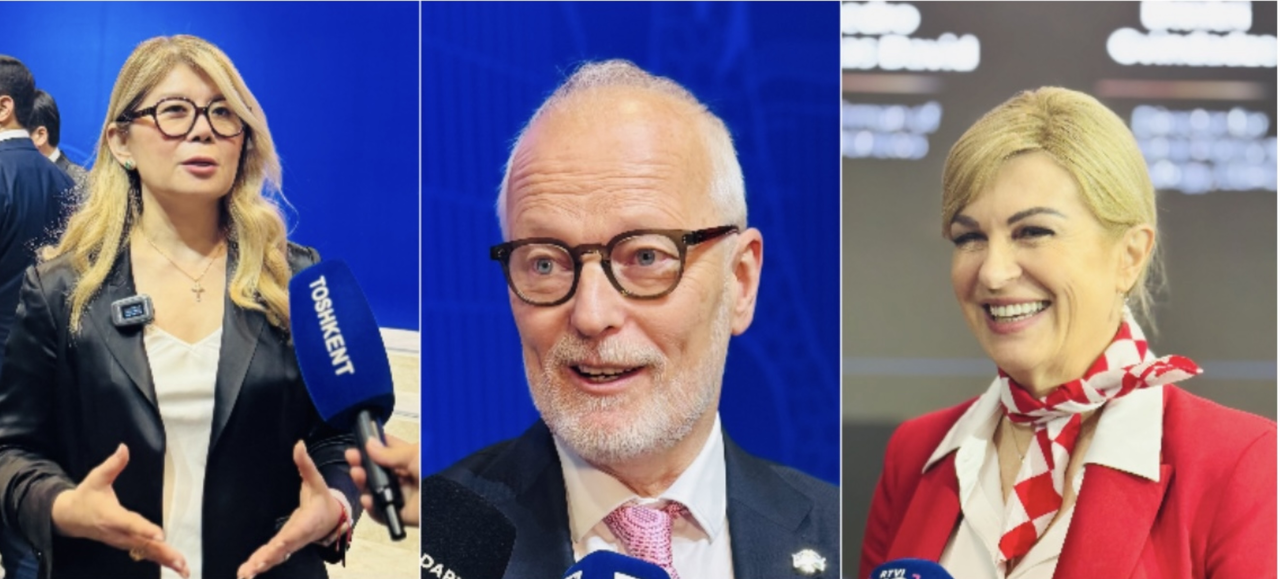
UK Minister of State for Investment Lord Stockwood encouraged investors to take a long-term view of Uzbekistan's economic transformation.
"Not just Korean investors, but any investors should look at this country and build long-term partnerships," he told The Korea Herald.
Elena Son, executive director of the American-Uzbekistan Chamber of Commerce, said investor interest in Uzbekistan was rising as economic reforms created new opportunities across key sectors.
Speaking with The Korea Herald on the sidelines of the forum, she cited strong Korea-US ties and Uzbekistan's growing appeal as an investment destination.
"The opportunities are unlimited," she said, adding that Uzbekistan needs Korean expertise, technology, financing and investment to create jobs and develop its young workforce.
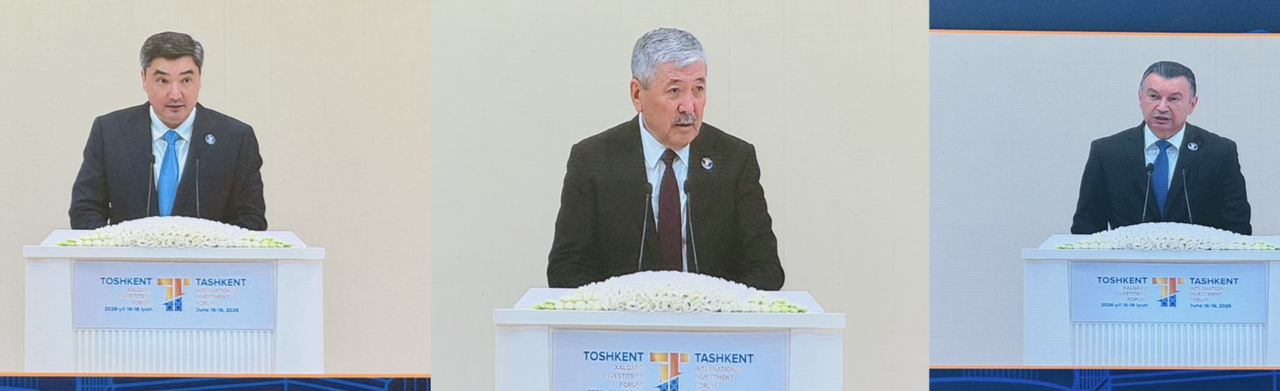
Regional leaders echoed calls for deeper economic integration. Kazakh Prime Minister Olzhas Bektenov said Central Asia's combined GDP had surpassed $500 billion, while Kyrgyz Prime Minister Adylbek Kasymaliev cited the region as "one of the most promising regions of Eurasia."
Meanwhile, Tajikistan's Prime Minister Kokhir Rasulzoda highlighted growing regional trade and investment ties, saying businesses increasingly viewed the region as a stable destination for investment.
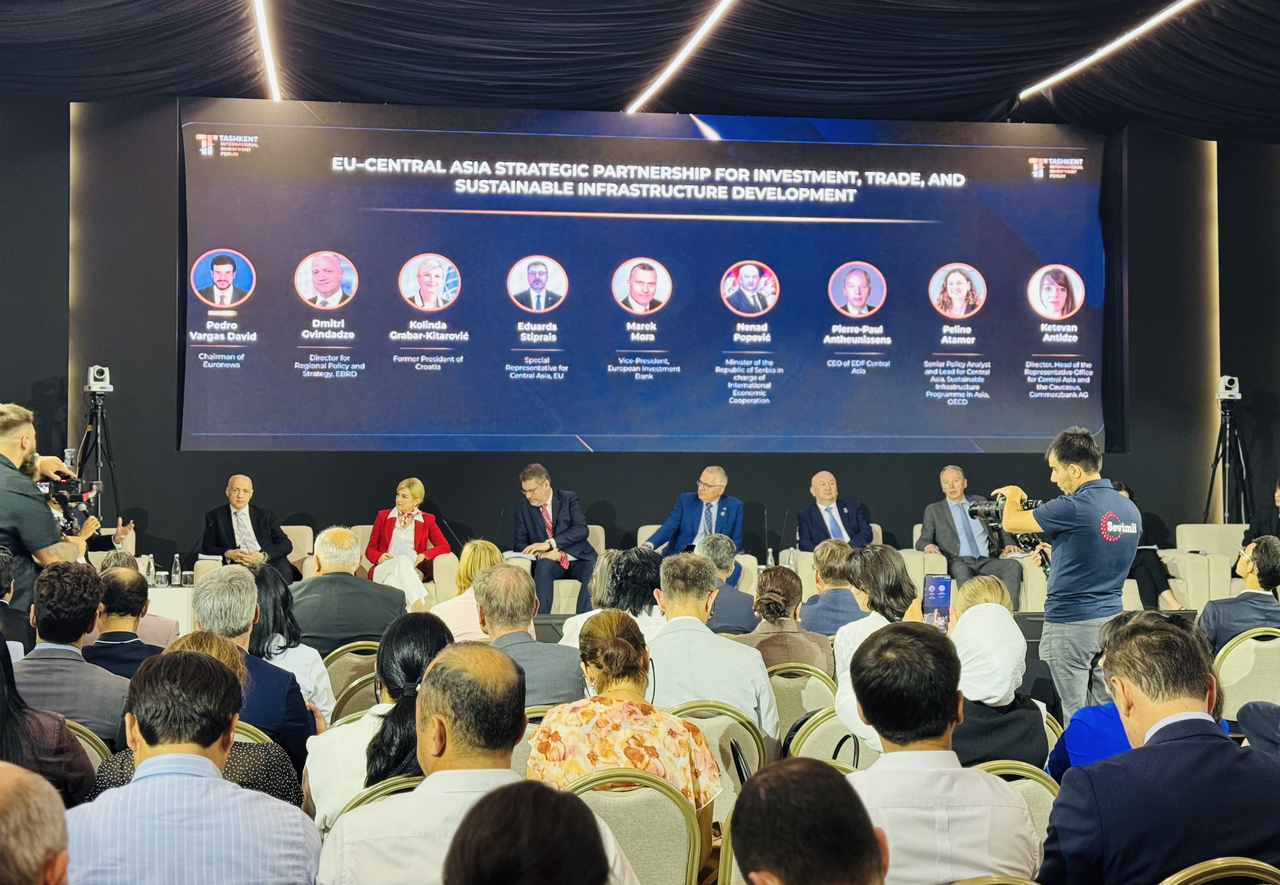
Speaking to foreign journalists on the sidelines of the forum, former Croatian President Kolinda Grabar-Kitarovic said stronger connectivity, digitalization and policy alignment would be key to deepening cooperation between Central Asia and Europe.
"I am quite impressed by the development of physical infrastructure and what Uzbekistan has been doing, especially since 2017, in carrying out structural reforms," Grabar-Kitarovic told reporters.
The forum is expected to generate new investment agreements and partnerships across sectors including energy, infrastructure, logistics and AI.
sanjaykumar@heraldcorp.com
herim@heraldcorp.com