US investment bank raises its 12-month Kospi target to 9,000, citing durable chip earnings, AI demand and improving shareholder returns
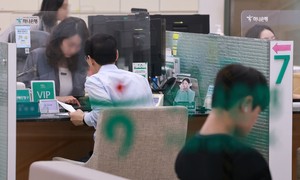
Goldman Sachs raised its 12-month Kospi target to 9,000, one of the highest among major brokerages, saying South Korean stocks still have room to climb after a rally that has already lifted the benchmark more than 75 percent this year.
The US investment bank lifted its target from 8,000 in a Thursday report, just 20 days after its previous upgrade, calling Korea its "highest conviction view" in Asia. Goldman even noted the new projection remains "conservative," citing stronger earnings, still-cheap valuations and improving shareholder returns.
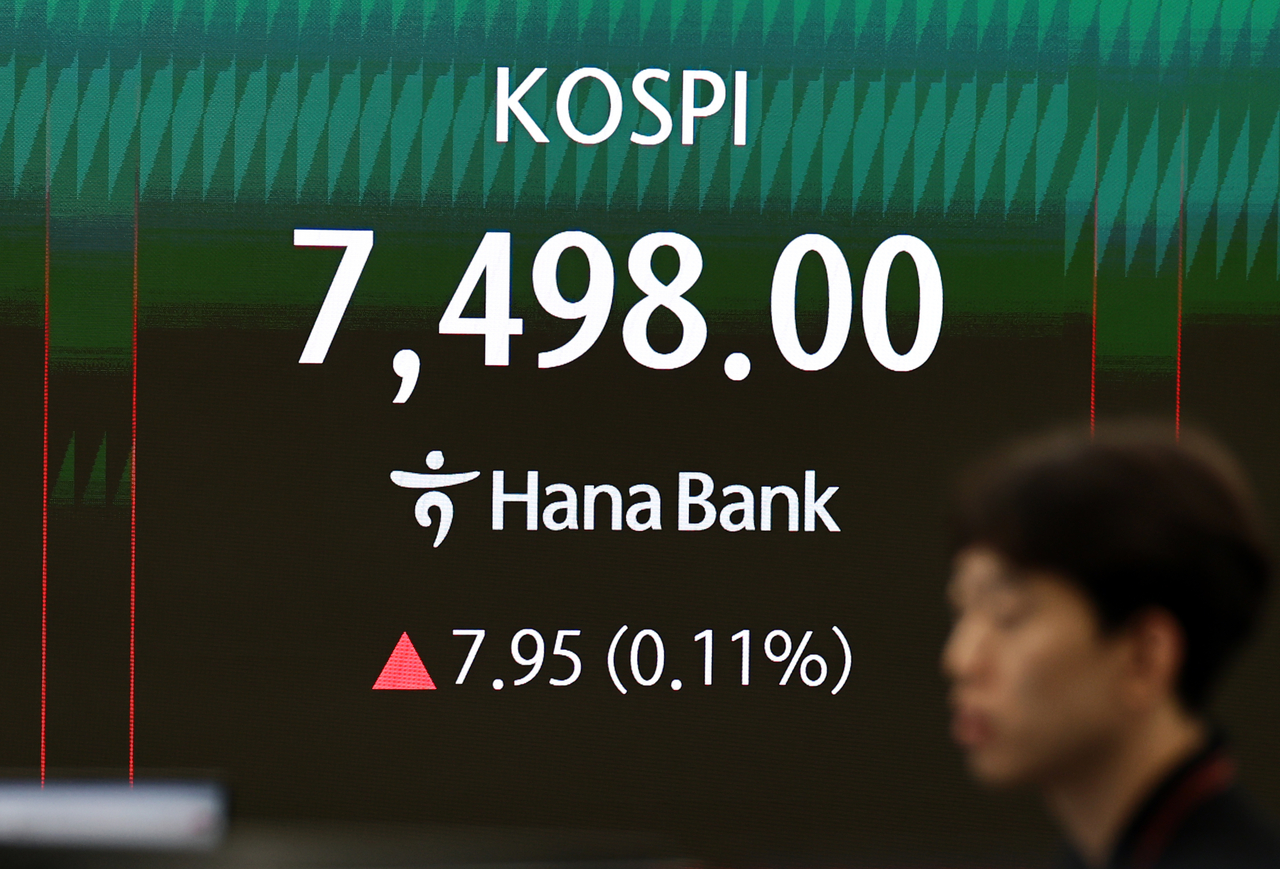
The rapid revision underscores how quickly expectations for Seoul's market have shifted as the Kospi keeps breaking records despite external risks. The index has gained 14 percent this month alone, rising from around 6,600 to a record close of 7,498 Friday. On Thursday, it touched an all-time intraday high of 7,531.88.
Goldman said Korea's rally is being driven by more than short-term momentum, pointing to the semiconductor memory cycle, artificial intelligence-related demand and the government's Value Up program as forces behind a broader market rerating.
The bank forecast Korean earnings to grow 300 percent this year, the strongest it has seen for any Asian market outside the 1999 rebound from the Asian financial crisis. That compares with a 45 percent growth estimate for Taiwan, another tech-heavy market Goldman also upgraded.
"The prospect of sustained high profits for the semiconductor memory sector suggests the market is mispricing the durability of earnings," Goldman said, adding that Korean chip stocks still trade at low single-digit forward price-to-earnings ratios despite the scale of the memory upcycle.
Goldman also pointed to balanced positioning among foreign, retail and domestic institutional investors, as well as potential inflows from relaxed foreign retail investment rules, as factors that could support further gains.
Korea and Taiwan have led the region's Iran-war recovery, helped by their heavy exposure to technology hardware and semiconductors, Goldman said. Korea has surged 62 percent from its March low and Taiwan 35 percent, putting both markets well above their pre-war highs.
Other global and domestic brokerages have also turned more bullish. Citi raised its Kospi target to 8,500 on Thursday from 7,000, while NH Investment & Securities lifted its projection to 9,000 from 7,300, both revising up forecasts made in February.
The rally is also pulling more money into Korea-focused funds. Net assets of domestic equity ETFs surpassed 200 trillion won ($136.5 billion), according to market data platform FnGuide on Sunday, as retail investors increasingly turned to ETFs to ride the Kosp's surge.
Assets in ETFs tracking locally listed shares more than doubled from 40 trillion won at the end of 2024 to 93 trillion won in December 2025. It more than doubled again in about four months as the rally accelerated. Their share of the Kospi's total market capitalization rose to 3.47 percent from 2.08 percent over the same period.
Domestic equity ETFs accounted for 46.64 percent of all Korea-listed ETF assets, up from 24.32 percent at the end of 2024, signaling a shift toward local shares after years in which ETFs were used more heavily for overseas exposure.
jwc@heraldcorp.com
![[Graphic News] S. Korea ranks 9th in noodle consumption](https://wimg.heraldcorp.com/news/cms/2026/09/29/news-p.v1.20260929.e3945338add94d57ab3f00f8e6781416_T1.gif?type=h&h=800)