Higher tariffs may widen price gap with European rivals, fueling US growth for Genesis, hybrid SUVs
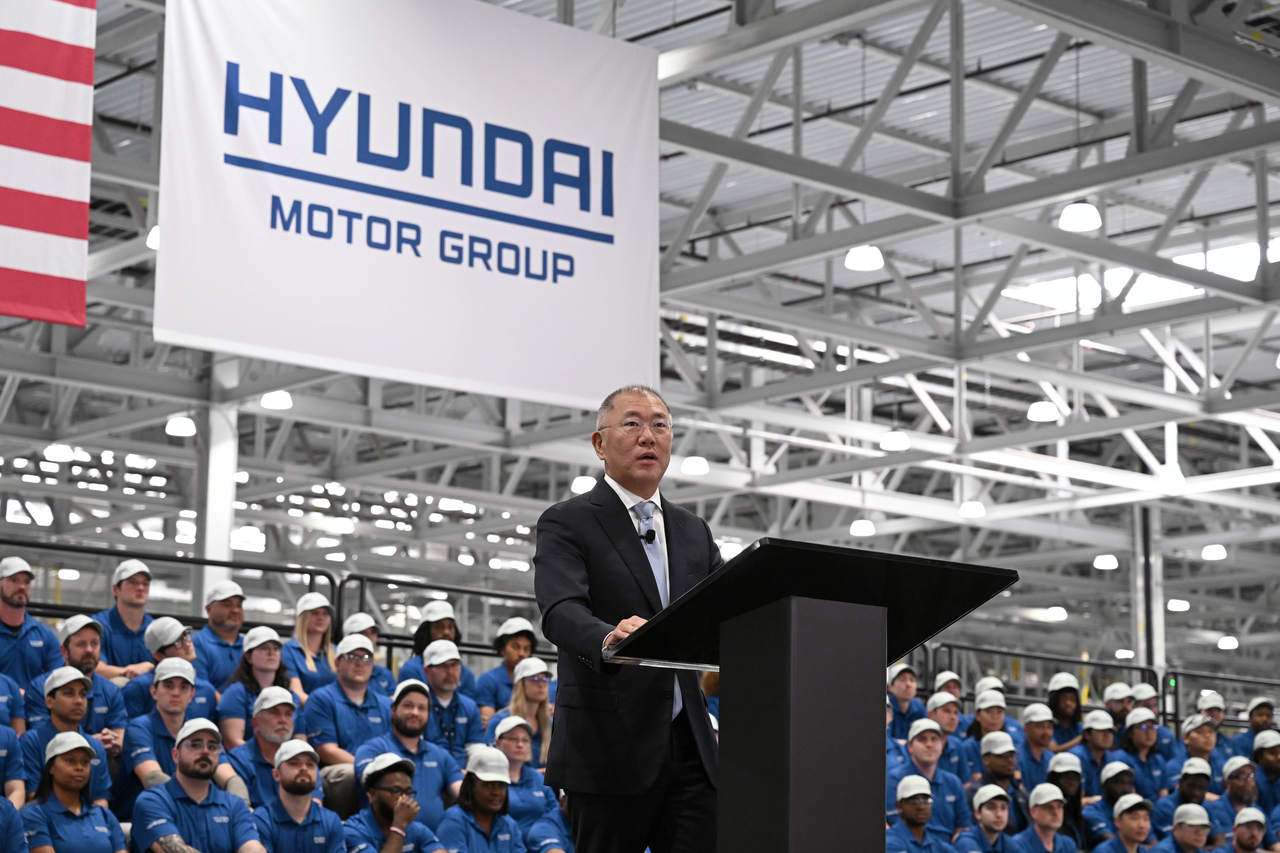
After navigating months of US tariff headwinds — often trading margin for market share — Hyundai Motor Group may now face a changing competitive landscape in the world’s second-largest auto market, as Washington moves to raise tariffs on European vehicles.
US President Donald Trump said Friday he plans to increase tariffs on European cars and trucks from 15 percent to 25 percent later this week, accusing the European Union of failing to comply with a previously agreed upon trade deal and urging the bloc to expand production in the US.
The move comes amid broader tensions between Washington and Brussels, including disputes over trade and US troop levels in Germany, adding to global uncertainty already heightened by the Middle East crisis.
The tariff shift is expected to alter pricing dynamics in the US auto market, potentially widening the gap between European imports and competitors already established in the market, including Hyundai Motor and Kia, which have steadily expanded their presence in recent years.
Korea-Europe gap widens
Hyundai Motor Group has strengthened its foothold in the US against Europe’s legacy automakers over the past decade.
In 2011, combined US sales of Hyundai and Kia surpassed 1 million units for the first time, edging ahead of five major European brands: Mercedes-Benz, BMW, Audi, Volkswagen and Volvo.
Despite a 15 percent tariff regime, Hyundai and Kia sold a combined 1.84 million vehicles in the US last year, up 7.5 percent from a year earlier, marking a record high and capturing 11.3 percent market share. The gap with the five European brands widened to some 488,000 vehicles.
The divergence is even more pronounced in imports. Korean-made vehicles accounted for 8.3 percent of US auto imports, or about 1.35 million, compared with roughly 5 percent, or 820,000, for European brands, led by Volkswagen, Mercedes-Benz and BMW, according to Korea Investment & Securities.
Limited but meaningful upside
Industry watchers say the proposed tariff hike is unlikely to trigger a sharp shift in demand away from European brands, given their relatively small share of US imports and strong positioning in the premium segment.
Still, the move is expected to enhance Hyundai Motor Group’s pricing power.
“While the direct impact on volumes may be limited, the shift is nonetheless positive from a pricing perspective,” said Kim Chang-ho, an analyst at Korea Investment & Securities.
The biggest potential upside lies in the luxury segment, where European brands dominate. Hyundai’s premium brand Genesis could gain ground as higher tariffs erode the price competitiveness of rivals such as Mercedes-Benz, BMW and Audi.
Genesis sold 82,332 vehicles in the US last year, up 9.8 percent, accounting for 8.4 percent of Hyundai Motor Group’s total US sales.
However, experts caution that brand strength remains a hurdle.
“Genesis could target Audi at best, but it is still difficult to challenge Mercedes-Benz and BMW, which have deeply entrenched customer bases,” said Lee Ho-geun, an automotive engineering professor.
Real battleground shifts
Lee noted that Hyundai and Kia’s most immediate competition is likely to intensify with midtier European brands such as Volkswagen and Volvo.
“If tariffs on European cars rise, Hyundai and Kia will gain a relative price edge over Volkswagen across both sedans and SUVs, which could support sales growth,” Lee said.
The group is also increasingly overlapping with Volvo in the SUV segment, leveraging improvements in safety and value positioning.
At the same time, Hyundai Motor Group holds a structural advantage in hybrid vehicles — a segment seeing rapid growth in the US — compared with European rivals, whose offerings remain limited and focused on plug-in models.
In the first quarter, Hyundai posted a record hybrid share of 17.8 percent, selling 173,977 vehicles, while Kia’s hybrid models accounted for 35 percent of its sales, totaling 49,593.
Hybrid momentum accelerated further in April, with combined sales by Hyundai and Kia surging 57.8 percent on-year to 41,239, led by models such as Hyundai’s Palisade, Santa Fe, Tucson and Sonata, as well as Kia’s Telluride, Sorento and Sportage.
hyejin2@heraldcorp.com