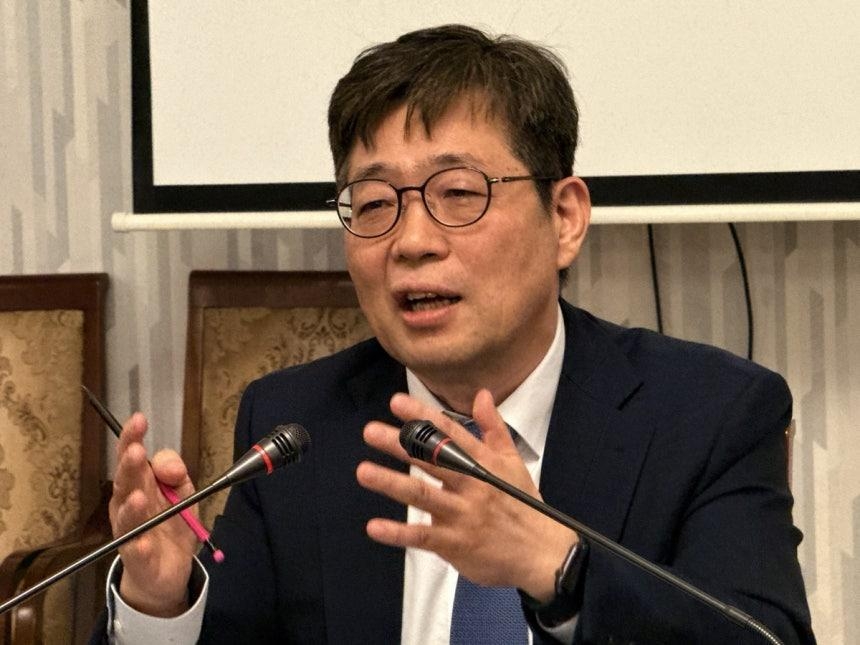
The Bank of Korea may begin considering a shift toward interest rate hikes, signaling a potential end to its easing cycle, as rising inflationary pressures and geopolitical risks cloud the economic outlook, a senior central bank official said Sunday.
“The time may have come to halt rate cuts and consider moving toward rate hikes,” BOK Senior Deputy Gov. Ryoo Sang-dai said at a press conference on the sidelines of the Asian Development Bank’s annual meeting in Samarkand, Uzbekistan.
“Given external shocks and broader economic conditions, I personally see the policy cycle shifting toward rate hikes rather than further cuts,” he said.
The BOK has kept its benchmark rate unchanged at 2.5 percent since May 2025, following a two-year easing cycle.
“Until the end of last year, there had been a view within the Monetary Policy Board that one additional cut might be possible if conditions remained stable,” Ryoo said. “However, the Middle East conflict earlier this year and other developments have complicated the outlook.”
While initial concerns centered on potential downside risks to growth, the economy has remained relatively resilient, even as inflationary pressures have intensified, he said.
“The semiconductor cycle has strengthened significantly, supporting exports, while government stimulus measures have helped revive consumer sentiment,” Ryoo said.
He also warned of the economy’s growing dependence on the semiconductor sector.
“Growth is currently being driven by strong chip demand, but the key question is what happens when the cycle turns,” he said, adding that the broader spillover effects to the rest of the economy have been weakening.
"The time may have come to consider halting rate cuts and shifting toward rate hikes," BOK Senior Deputy Gov. Ryoo Sang-dai said at a press conference held along the sidelines of Asian Development Bank annual meeting held in Samarkand, Uzbekistan, Sunday.
"Given external shocks and broader economic conditions, I personally view is that the policy cycle may shift toward rate hikes rather than further rate cuts," he said.
The BOK has kept its base rate unchanged at 2.5 percent since May 2025, following a two-year monetary easing cycle.
"Until the end of the last year, there had been a sense within the Monetary Policy Board that one additional cut could be made before ending the easing cycle if economic conditions remained stable. But the outbreak of the Middle East conflict earlier this year and other developments have complicated the policy outlook," he said.
Though the board had been concerned that the conflict could weigh on the country’s economic growth, the economy now appears relatively stable while inflationary pressures are mounting, the BOK viewed.
"The semiconductor cycle has strengthened significantly, boosting the economy through exports, while government stimulus measures have also helped revive consumer sentiment," Ryoo said.
Ryoo voiced concern over the country’s growing reliance on semiconductors, warning that the economy could become vulnerable when the chip cycle weakens.
"Growth is currently being supported by strong semiconductor conditions, but the question is what happens when the chip cycle turns down," he said, adding that the broader spillover effects on the overall economy have been weakening.
silverstar@heraldcorp.com