Structural slowdown deepens as rate is seen falling to fresh lows
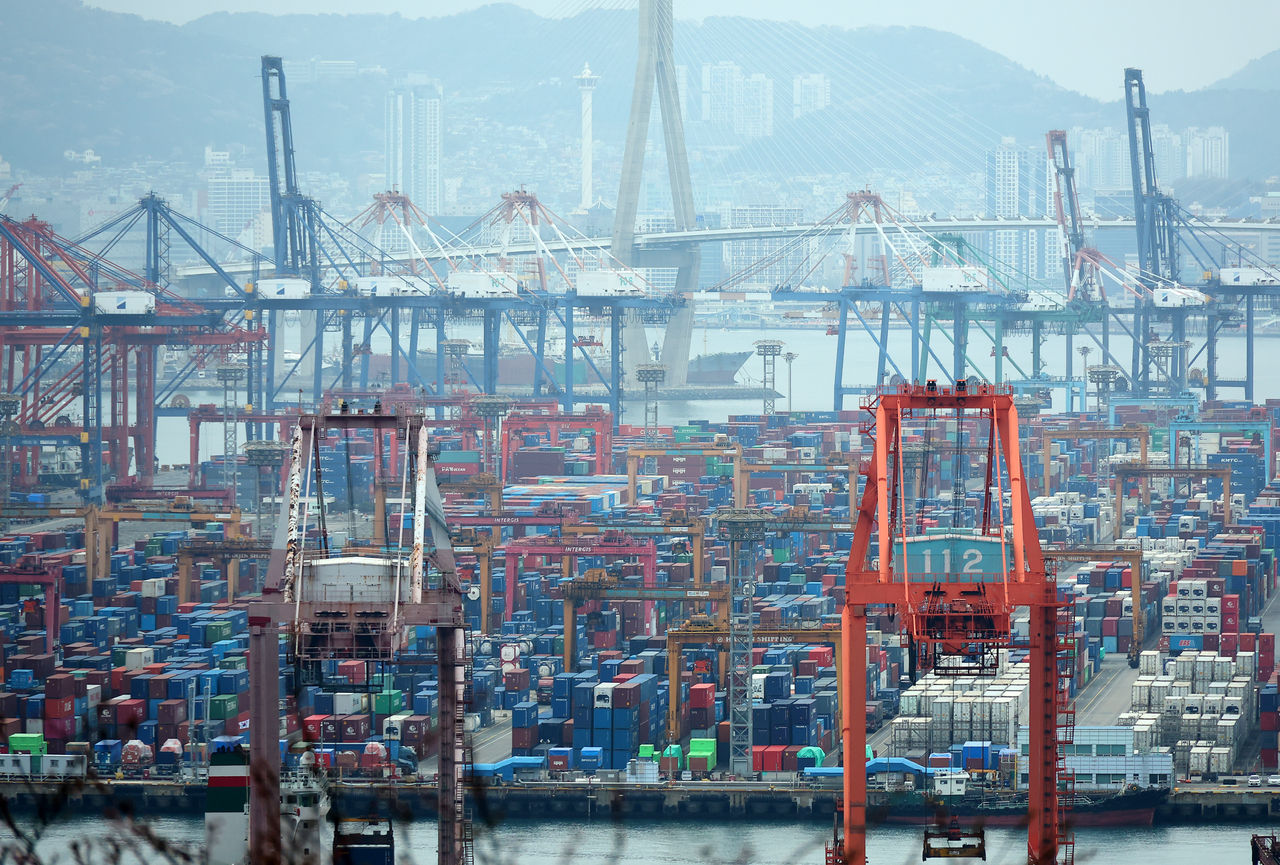
South Korea's potential growth rate is set to fall closer to 1.5 percent next year, reflecting a deepening structural slowdown in Asia's fourth-largest economy, according to the Organization for Economic Cooperation and Development's latest data on Sunday.
The country's potential output growth rate is projected to slip to 1.71 percent in 2026 from 1.92 percent in 2025, before sliding further to 1.57 percent in 2027, the OECD said.
Potential output refers to the maximum level of goods and services an economy can sustainably produce when using available labor, capital and technology without stoking inflationary pressure. It is widely used as a gauge of an economy's underlying long-term growth capacity.
Korea's potential growth rate has been falling steadily since 2011, when it stood at 3.75 percent. The decline has sharpened in recent years, from 2.41 percent in 2023 to 2.28 percent in 2024 and 1.92 percent in 2025, marking its first drop below the 2 percent threshold.
Despite the government's push to revive growth, the figure is expected to fall further this year. The OECD projection places Korea No. 20 among member economies by potential growth rate, down one notch from last year. It was overtaken by Slovakia, whose GDP per capita, estimated by the International Monetary Fund, remains more than $6,000 below Korea's $37,412.
The slowdown is expected to deepen in 2027, when Korea's potential growth rate is projected to fall to 1.57 percent. That would push the country down another notch to No. 21, behind Sweden, a welfare-heavy economy whose GDP per capita, at $70,680, is almost twice Korea's.
The outlook is even bleaker in quarterly projections. OECD data show Korea's potential growth rate falling from 1.81 percent in the fourth quarter of 2025 to 1.66 percent in the same period this year, before slipping further towards 1.5 percent to 1.52 percent a year later.
Adding to the concern, a separate estimate showed Korea's real GDP is expected to remain below its potential output. According to the IMF's latest data, Korea's output gap is estimated at minus 0.9 percent this year and minus 0.63 percent next year, marking five straight years in negative territory. A negative output gap means production factors, such as facilities and labor, are not being fully utilized.
The slowdown reflects deeper structural strains, from weakening productivity tied to rapid aging and a low birth rate to Korea's heavy dependence on chip manufacturing.
Nomura Securities economist Park Jeong-woo warned that reliance on a single industry could ultimately weaken Korea's fiscal base, as government finances become more exposed to swings in that sector.
"Exposure to cyclical volatility could make the economy vulnerable to external shocks, as seen in Finland's ‘Nokia shock,'" Park said. "A concentration in a specific industry could also give rise to Dutch disease, where sectors outside that industry become weaker."
Dutch disease refers to the Netherlands' experience in the 1960s, when the discovery and export of large natural gas reserves eroded the competitiveness of other industries.
The local government is trying to reverse the slide, putting a 3 percent potential growth target at the heart of its five-year economic agenda unveiled last year.
President Lee Jae Myung also said in November that "the most urgent task facing Korea now is reversing the decline in potential growth," calling for bold structural reforms in regulation, finance, the public sector, pensions, education and labor.
jwc@heraldcorp.com

![[Legal updates in Korea] New insurance mandate protects firefighters on the job](https://wimg.heraldcorp.com/news/cms/2026/10/01/news-p.v1.20261001.76835f19eb424f18814ac3bb65d896a9_T1.jpg?type=h&h=800)