Chung Ji-young's three-timeline drama about the Jeju uprising and massacre effectively diminishes the very history it sets out to honor
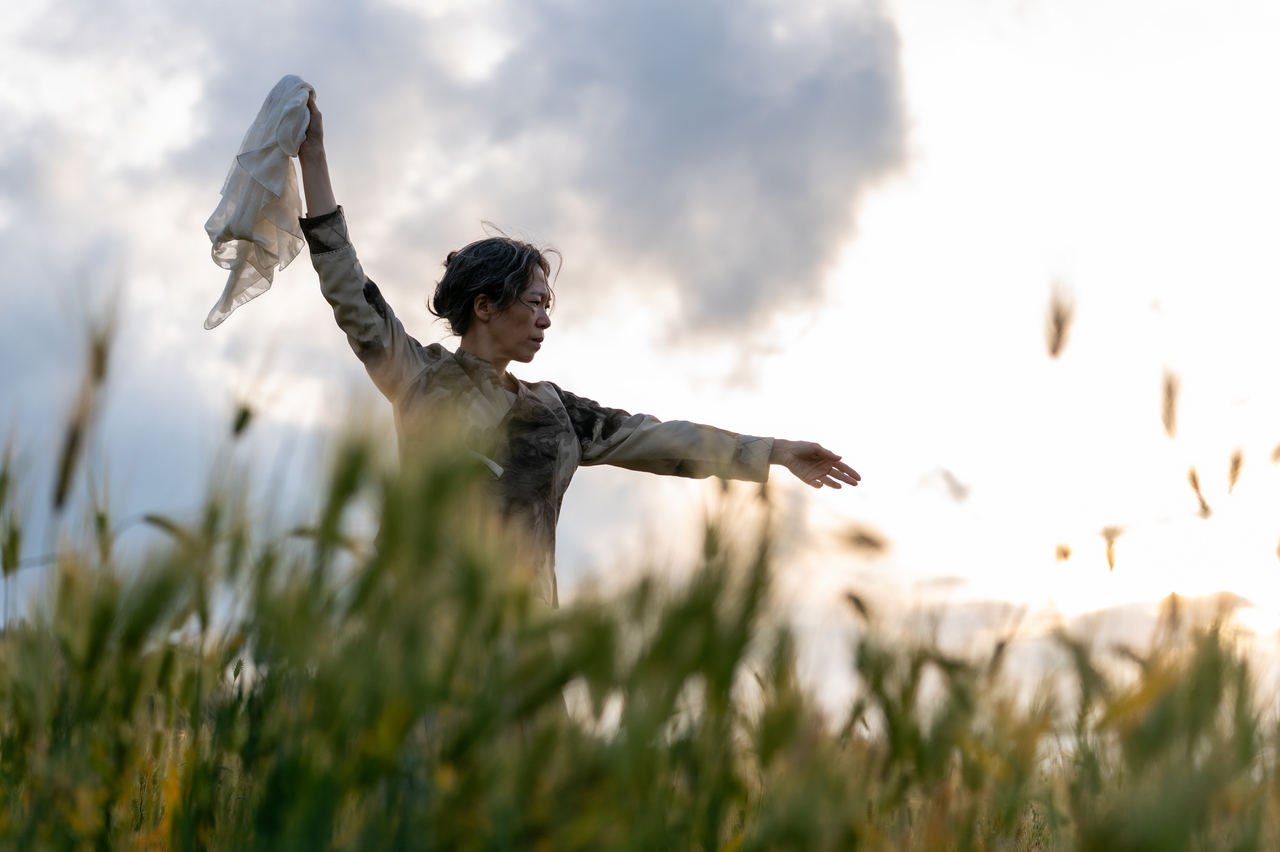
In the spring of 1948, on an island now mostly associated with cherry blossoms and honeymoon suites, South Korean troops and right-wing paramilitaries began a seven-year campaign that would kill as many as 30,000 civilians, most of them rounded up on suspicion of communist sympathies.
Through decades of authoritarian rule that followed, talking about it in public could get you jailed.
Veteran Chung Ji-young's "My Name," which premiered at the Berlinale's Forum sidebar in February and opened in local theaters last week, is the latest film to take up that history. Most of the chatter around it so far has had less to do with the film itself than with a visit from President Lee Jae Myung, who turned up at a screening and used the stage afterward to press, passionately, for abolishing the statute of limitations on crimes of the state.
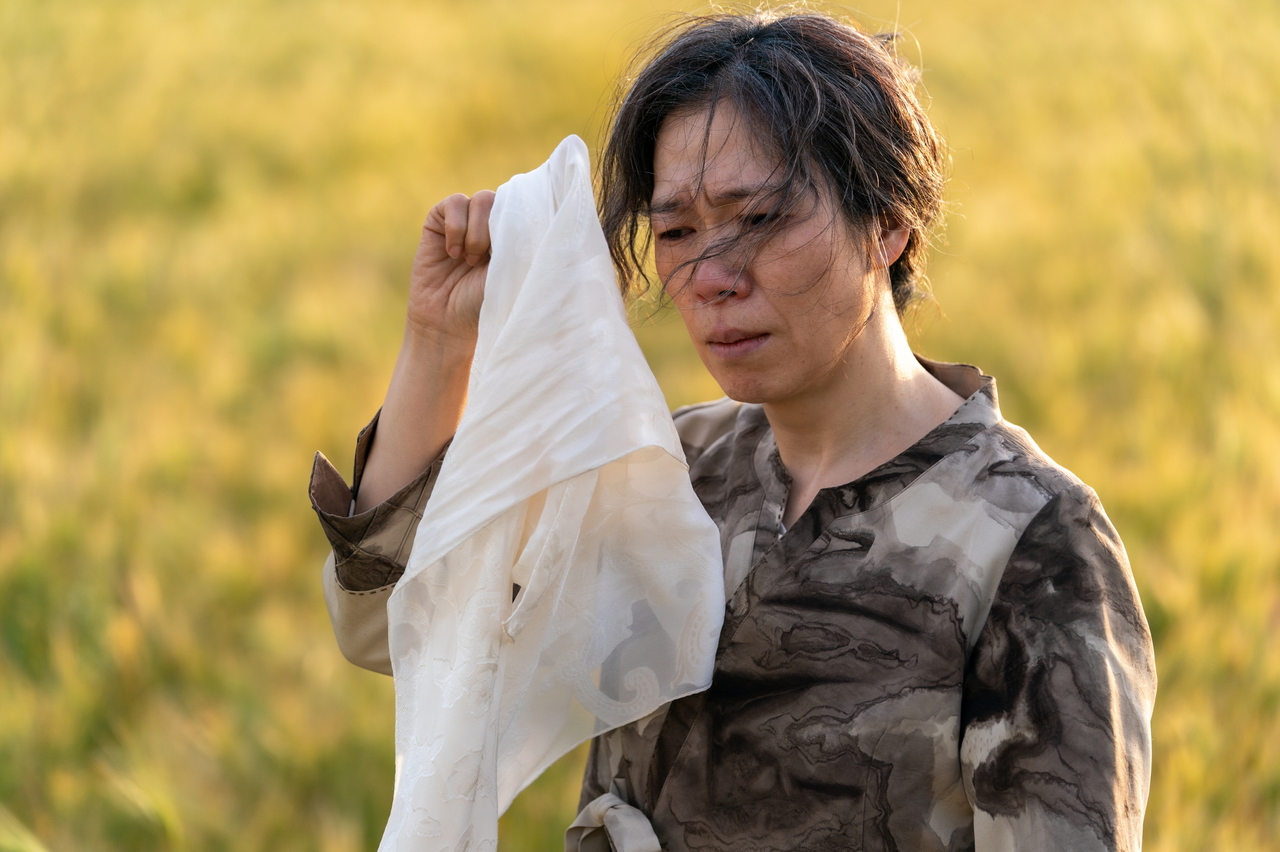
"My Name" opens in the present day. Young-ok (Yu Jun-sang), now a middle-aged human rights lawyer, returns to Jeju Island with his wife and daughter to visit his mother's grave. From there, the film drops back some twenty-odd years to the late 1990s, where the younger Young-ok (Shim Woo-bin) is a well-liked, goofy high schooler forever getting teased about his name, which reads to Korean ears as something closer to a grandma's than a teenage boy's. He lives with his mother Jeong-soon (Yeom Hye-ran), a traditional dance instructor noticeably older than the other mothers in town.
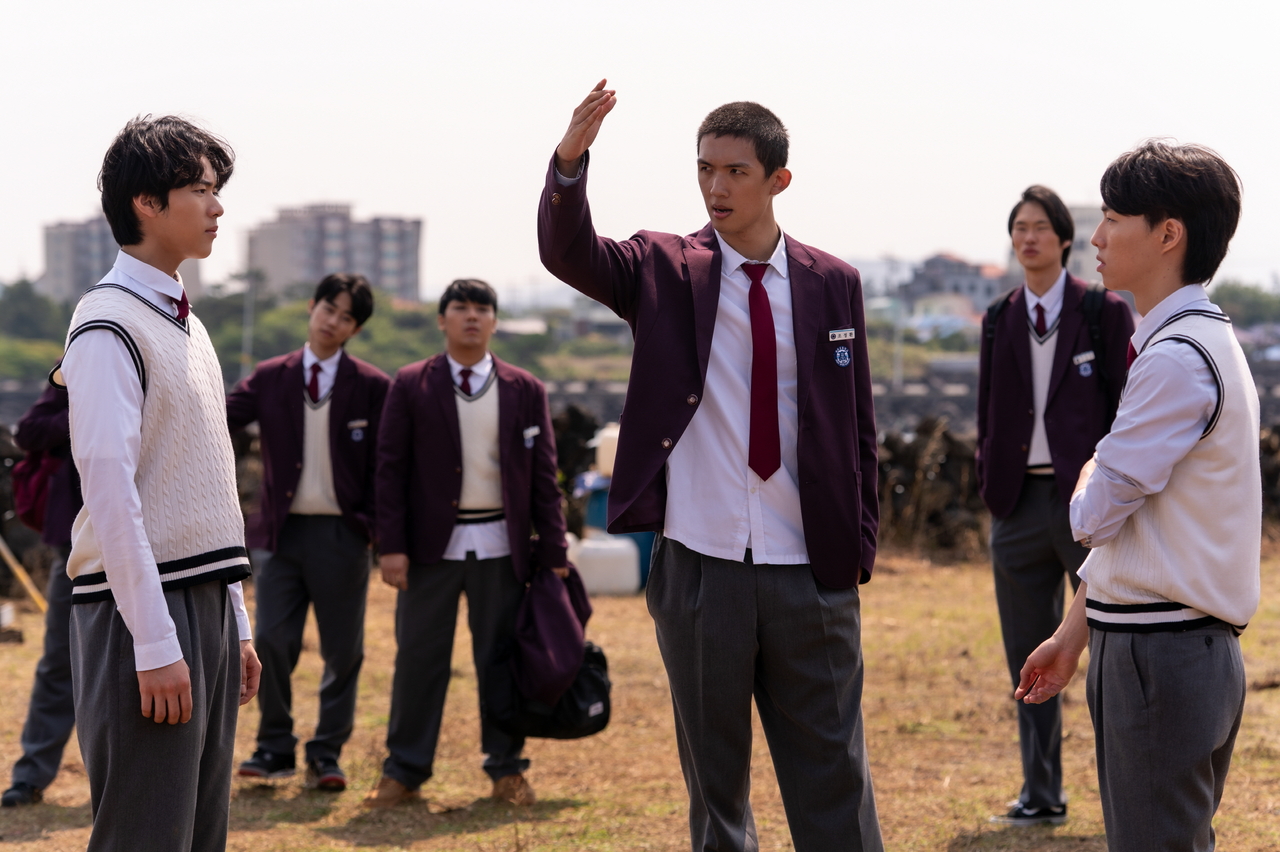
Jeong-soon has been carrying something her whole adult life: every April, she loses consciousness for minutes at a time. Her psychiatrist (Kim Kyu-ri) suggests that hypnosis might crack open whatever she's been sitting on. Meanwhile, Young-ok's world tips on its axis when a moneyed transfer student from Seoul, Kyung-tae (Park Ji-bin), shows up and crowns himself ringleader, pulling the friend group into bullying, extortion, and the usual starter kit of cigarettes and alcohol. Mother and son each go looking for who they really are, in parallel.
The intent is honorable and the scope rather unwieldy. The atrocities in Jeju and the trauma it left behind are a loaded subject on any day of the week, and Chung spreads it across timelines and registers that never quite find a common wavelength.
A few choices reach for the lyrical, with dreamy camerawork doing most of the signaling, but this is anything but an arthouse meditation. The goal here is to clearly incite and arouse, as is made plain by the closing stretch, which goes hard on drawn-out scenes of troops mowing down civilians. Jung treats the Jeju uprising and massacre less as a wound to sit with than as a puzzle for the living to solve together, the meaning behind one's given name serving as the chief metaphor.
It all comes down to setting priorities. When a film is reaching for this much, the question becomes what it chooses to foreground, and "My Name" gets it almost perfectly backwards. The thread meant to lend the enduring historical weight the subject deserves — the afterlives of state violence that ran through the decades after, revealed through Jeong-soon's buried family history — is delivered in a whiplash of lazy exposition and then shelved for good. The film also fails to properly dig into what drives Jeong-soon to explore her past. What gets the lavish treatment instead is all surface: the woozy blackout effects and the slow-motion imagery of Jeong-soon's unraveling, everyday vignettes of teenage life, none of it in organic conversation with the rest.
The most mind-boggling of all is how so much of the storytelling is channeled through the tired conventions of the Korean high-school-quasi-gangster flick, the kind that dates back to "Friend" (2001) and has lately been rebooted for streaming in dopamine hits like "Weak Hero" and "Study Group." What the dragged-out sight of teenagers flexing and doing stupid stuff has to do with the Cold War-era mass slaughter of Jeju is a question the film leaves hanging over the viewer for a while.
It does eventually answer, and that's where things get properly jarring. In one climactic sequence, a high-stakes flashback to 1948 — Jeong-soon's village rounded up, neighbors made to slap one another under the watch of sadistic thugs before the killing begins — is cross-cut with a grand slap-and-stomp showdown between Kyung-tae's crew and Young-ok's out on some empty lot. We get it: sadism, institutionally sanctioned and then picked up by ordinary people, gets handed down the generations. But a teenage brawl and a state-led mass killing obviously have nothing in common beyond the fact of violence itself, and by pushing the audience to see them as of a piece, Chung effectively trivializes the very event he's trying to honor.
One can only wonder why a well-meaning, seasoned filmmaker would stake his picture on an analogy this unserious. The best guess is this: Chung had two scripts in a drawer — a period drama on the Jeju incident and a teen coming-of-age picture — and at some late hour decided to jam them together.
"My Name" is now playing in theaters.
moonkihoon@heraldcorp.com








