This week's Auto China 2026 seen as pivotal to Hyundai's China reset
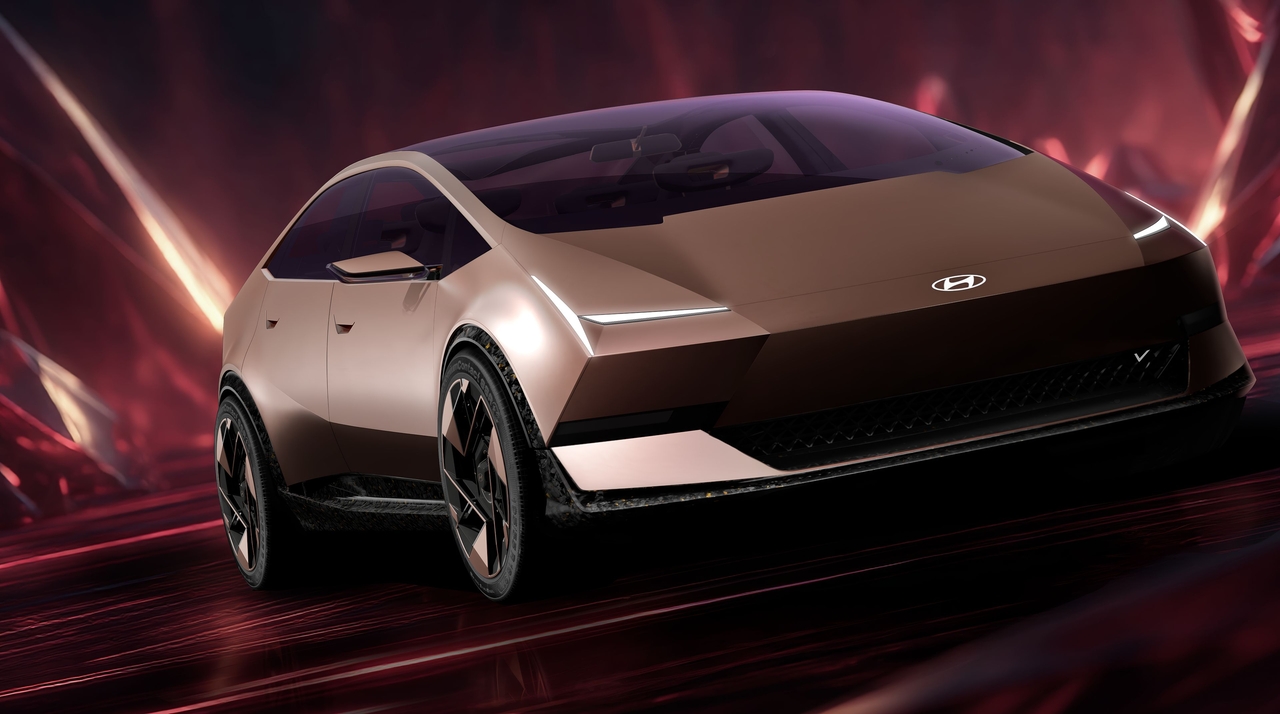
Gone are the days when Hyundai Motor Group was known in China primarily for affordable, gasoline-powered vehicles.
The South Korean auto giant is gearing up for its most ambitious transformation in more than two decades, seeking to reinvent itself as a maker of electric and software-driven vehicles in the world's largest automotive market.
Hyundai plans to use Auto China 2026, the world's largest auto show by scale, opening in Beijing on Friday, to formally launch its Ioniq brand in China and reposition its local joint venture Beijing Hyundai Motor as a new-energy vehicle brand.
The move marks Hyundai's most significant strategic shift since entering China in 2002 through a 50-50 venture with BAIC Motor.
Hyundai Motor and its sister brand Kia once ranked among China's top three foreign carmakers. In 2016, Beijing Hyundai and Dongfeng Yueda Kia — Kia's Chinese joint venture, now renamed to Jiangsu Yueda Kia Motors — together accounted for more than 10 percent of the Chinese passenger vehicle market.
From 2010 to 2016, the Hyundai brand alone sold over 1 million cars every year in China, peaking at 1.1 million in 2016, making China the carmaker's largest market — surpassing even South Korea.
But Hyundai's fortunes took a sharp turn after a diplomatic row between Seoul and Beijing over the 2017 deployment in Korea of THAAD, an advanced US antimissile system, triggered a consumer backlash against Korean brands.
At the same time, Hyundai struggled to keep pace with China's rapid transition to electric and software-driven vehicles, as the country's aggressive EV push fueled the rise of homegrown brands such as BYD and Geely. In 2025, new-energy vehicles, which include EVs and hybrid, accounted for more than half of new vehicle sales in China.
Hyundai's big EV bet
Now Hyundai is eyeing a reset.
At Auto China 2026, Hyundai will unveil the first mass-produced EV under the Ioniq brand designed specifically for the Chinese market.
Hyundai said localization will be at the center of its revamp, spanning everything from design, autonomous driving software and connected services to charging infrastructure.
The new model will feature autonomous driving technology developed by Chinese startup Momenta, with functions tailored to local road conditions — a key factor in competing with Chinese EV makers.
Hyundai also plans to introduce extended-range electric vehicles in China for the first time next year, targeting consumers who drive long distances and remain concerned about charging availability.
Extended-range electric vehicles pair an electric motor with a gasoline engine that recharges the battery on the go, and have become one of the fastest-growing powertrain segments in China.
Hyundai Motor CEO Jose Munoz also signaled that China is critical to the company's future at last month's shareholders meeting. Under the slogan "In China, For China, To Global," Munoz announced Hyundai plans to unveil six new EVs by 2030, and hit a sales goal of 500,000 units annually.
Kia is also accelerating its efforts for electrification. The company has begun mass production of its EV5 SUV at its Yangcheng plant in China, using the model both for the local market and for exports to markets including Australia and Latin America.
Hyundai Motor Group's renewed China strategy extends beyond vehicles.
In January, senior Hyundai executives met with major Chinese companies, including CATL, Sinopec and Yueda Group to discuss broader partnerships in batteries, hydrogen energy and future mobility.
Hyundai and battery manufacturer CATL discussed next-generation battery technologies, including cell-to-pack systems and ways to secure a more stable supply chain.
With energy giant Sinopec, Hyundai is expanding cooperation around hydrogen infrastructure through HTWO Guangzhou, Hyundai's hydrogen fuel-cell subsidiary in the southern Chinese city.
The group is also exploring broader cooperation with Yueda Group, Kia's Chinese joint venture partner, to build a long-term business model spanning vehicle batteries, hydrogen and future mobility services.
sahn@heraldcorp.com
![[Graphic News] S. Korea ranks 9th in noodle consumption](https://wimg.heraldcorp.com/news/cms/2026/09/29/news-p.v1.20260929.e3945338add94d57ab3f00f8e6781416_T1.gif?type=h&h=800)