iPhone demand, BOE setback shift orders to Korean panel suppliers
Samsung Display and LG Display are set to post resilient first-quarter earnings despite the seasonal slowdown, as the global memory chip shortage expected to pressure panel makers instead weakened their Chinese rivals, brokerage estimates show.
Samsung Display, the unlisted display arm of Samsung Electronics, is projected to report operating profit of up to 500 billion won ($340 million) for the January-March period, holding steady year-on-year despite earlier concerns that memory cost pressures and seasonal weakness would weigh on results.
LG Display's consensus forecast, compiled by financial data provider FnGuide, stands at 149.5 billion won in operating profit on revenue of 5.83 trillion won. While the top line would slip 3.9 percent, operating profit would jump 346 percent off a weak base.
The results reflect a supply chain paradox. A sharp run-up in DRAM and NAND prices since late 2025, driven by AI server demand, had raised concerns that smartphone brands would pressure component suppliers to protect margins. Instead, the burden fell on China's budget-focused handset makers, which lack the vertical integration and pricing power of Samsung Electronics and Apple.
Xiaomi, Oppo and Vivo all lost share in the first quarter, while Samsung and Apple together held 42 percent of global smartphone shipments, up 3 percentage points from a year earlier, according to Omdia.
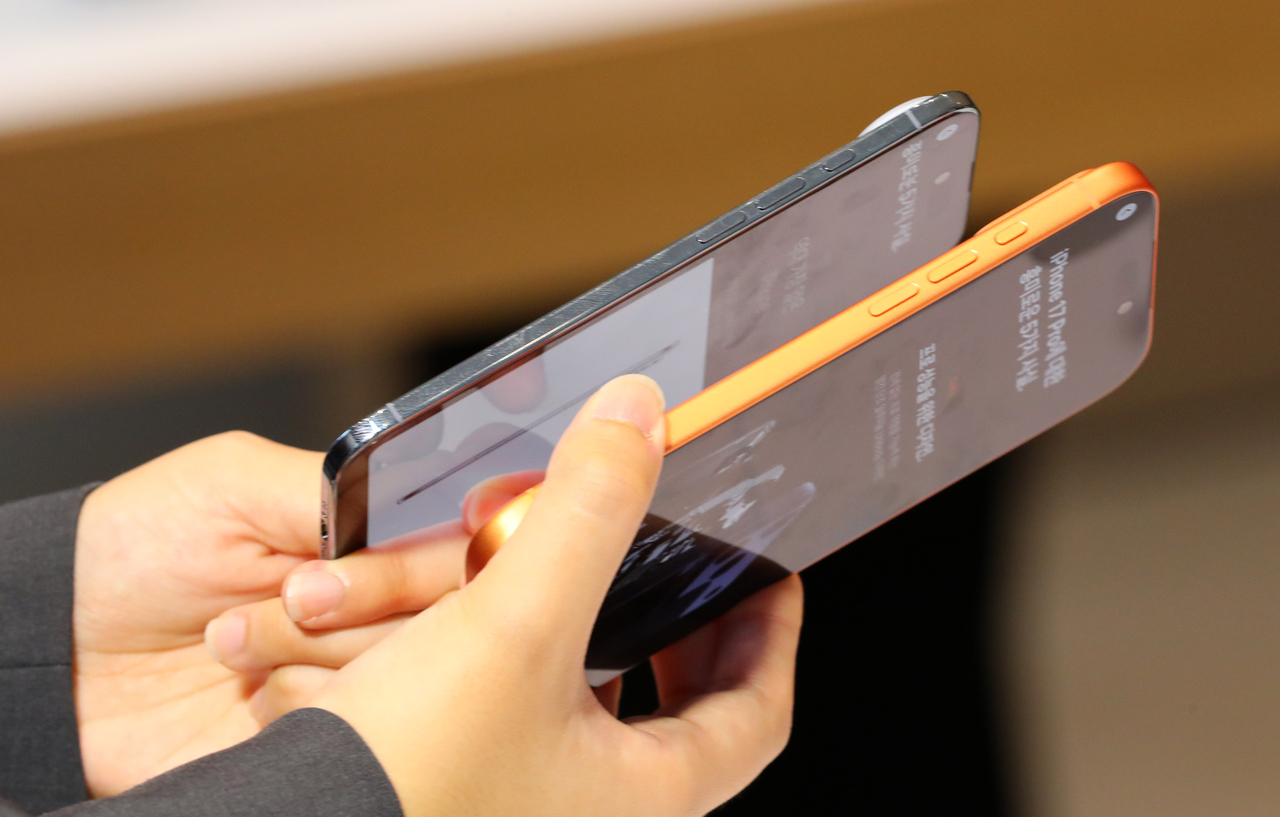
That premium-tier concentration has flowed directly to Korea's two OLED suppliers. Samsung Display benefited from sustained iPhone 17 demand alongside the Galaxy S26 series, which drew a record 1.35 million domestic preorders in seven days following its March launch.
LG Display's turnaround reflects a multi-year pivot away from large-sized LCDs, capped by last year's sale of its Guangzhou fab to China's CSOT for roughly 2 trillion won. OLED now accounts for 61 percent of revenue, a record high, after three straight years of operating losses through 2024.
Apple's supplier reshuffle has widened the gap further. Quality problems at China's BOE on iPhone 17 panels redirected volume to both Korean suppliers through the second half of 2025, with BOE's share of iPhone panels projected to slip to around 10 percent this year.
More upside is expected in the second half. Samsung Display plans to begin mass production of panels for Apple's first foldable iPhone in late June, targeting 8 million to 9 million units by year-end, according to supply chain reports. Foldable panels typically command roughly twice the unit price of conventional smartphone OLEDs.
"Chinese competitors have yet to close the technology gap in premium small and medium-sized OLED," a display industry official said. "The focus will be on deepening that lead."
mjh@heraldcorp.com