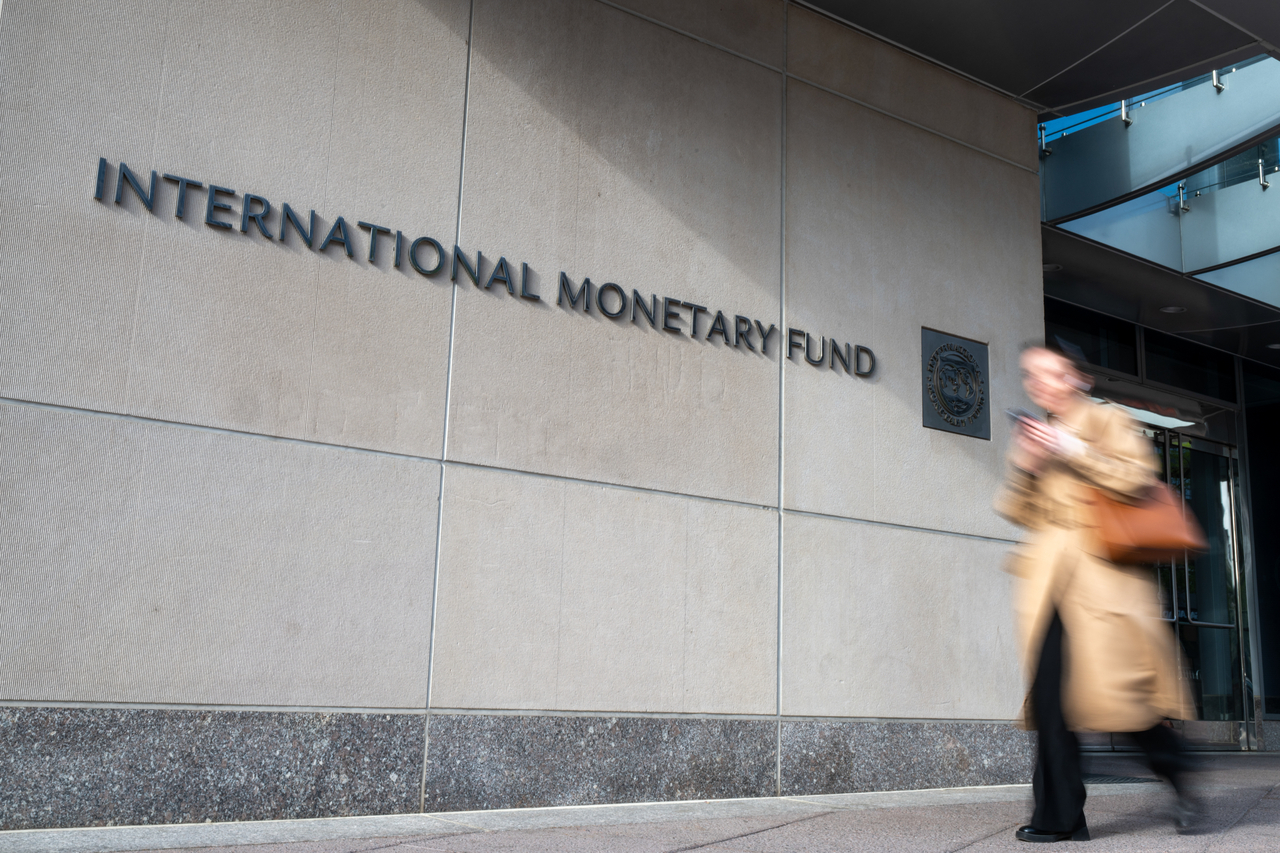
The International Monetary Fund on Tuesday left its 2026 growth forecast for South Korea unchanged at 1.9 percent, with the government saying a supplementary budget and other policy support helped cushion the economy against mounting external shocks.
In its April world economic outlook, the IMF maintained the same projection it gave in January, bucking a broader run of downward revisions by other institutions. The OECD in March cut its Korea forecast to 1.7 percent from 2.1 percent in December, while French bank Natixis slashed its estimate by 1 percentage point to 0.8 percent, the first sub-1 percent projection by any institution this year.
Korea’s forecast remained slightly above the 1.8 percent average for 41 advanced economies.
The Finance Ministry said the IMF's decision reflected swift policy action to offset fallout from the Middle East war.
"Although stronger exports had supported improved performance, the economy was also hit by negative spillovers from the Middle East war, and we assess that the supplementary budget helped offset part of that impact," a ministry official said. The official added that the roughly 26 trillion won ($17.6 billion) extra budget, passed Friday by the National Assembly, had already been reflected in the latest forecast.
The IMF cut its global growth forecast by 0.2 percentage point to 3.1 percent, saying the conflict was weighing on the world economy through higher energy prices, rising inflation expectations and a broader risk-off mood in financial markets.
Global inflation was projected at 4.4 percent, up 0.6 percentage point from January on surging energy and food prices. South Korea's inflation rate for this year was seen at 2.5 percent, below the 2.8 percent average for advanced economies. The IMF did not publish a January inflation forecast for Korea.
The IMF said its baseline forecasts assume the conflict gradually eases, allowing energy production and exports to normalize by mid-2026.
It also outlined downside scenarios for the global economy, with growth slowing to 2.5 percent under an adverse case in which oil averages about $100 a barrel in 2026 and $75 in 2027, and to about 2 percent under a severe case with oil at about $110 in 2026 and $125 in 2027.
In the ministry’s summary of the IMF’s April outlook, the fund was cited as saying "downside risks continue to dominate the global economy," pointing to the risk of further supply chain disruptions if the war drags on, the potential for financial market corrections as expectations for AI profitability are reassessed and the spread of protectionism as key threats.
jwc@heraldcorp.com